

A Boy Breaks a Promise to His Mother and Walks Into a Room Full of Noxian Soldiers
A forbidden building, a Noxian audience, and a father who sold his contract and left: the opening of Sett’s canon is also the opening of a business.
There is one building in occupied Navori that a half-Vastayan boy has been forbidden to go near, and it is the only building in the province where anyone will say his father’s name. He waits until his mother is asleep, then he goes.
What he finds is not a back-alley scrap. It is a venue with a paying audience, and our biography of  Sett is specific about who filled the seats.
Scores of Noxian soldiers, fresh to the shores of Ionia, roared with bloodlust from the stands around him. Down in the center of the arena, fighters from all backgrounds and martial disciplines clashed in gruesome duels with a variety of weapons.
Source: Sett, Biography
He asks after his father and gets an answer that reframes the room: “his father had bought out his contract and left to tour more profitable pits abroad. He had deserted his family, to seek fortune on the other side of the world.” The man was not killed by the war. He took a better offer.
Hold that detail, because it tells you what kind of institution this is. The pit has contracts you can buy out, a matchmaker who books a card, and winners paid in Noxian coin, and it is running inside a country the empire invaded twelve years ago. Then Noxus loses the war, and the arena does not close. Ionia expelled the empire and kept its arena, and the money at the door is Ionian now. The rest of this is an argument about who pays for that, and about what a game inherits when it has to build Navori as a place you can stand in.
Ionia Keeps No Standing Army, and Its Own Region Gallery Says So
A region full of martial schools and empty of any military had nothing to demobilize into when the fighting stopped.
Riot’s own art notes for the First Lands explain why nobody in Navori was in any position to stop him. The monastery plate states the problem outright.


Though the birthplace of many specialized forms of martial arts, Ionia maintains no standing armies. Rather, the ways of battle are tied to differing philosophies, passed on with reverence and care.
Source: Ionia: The Great Monasteries
So the region is full of trained fighters and empty of any body that employs them. The province keeps none, and that was survivable while nobody needed an army. The war ended that arrangement, and the gallery plate for the battle itself admits the bill.
But the cost of that day’s victory was immense, and some now question if fighting back was the right decision, since the harmonious balance of their homeland may have been lost forever.
Source: Ionia: The Great Stand
Our page for Navori records what winning at the Placidium actually took: Xan Irelia freed herself from Jericho Swain’s hostage trap, cut down a dozen of his veterans, and struck down the general. That is the province’s proudest day, and it was won by a teenage silk dancer improvising, because there was no regiment to send.
Because there was never an army, there was nothing to demobilize into. No garrison, no veterans’ hall, no state claiming a monopoly on organized violence. When the fighting stopped, Navori was holding a population that had just been taught to want a fight, and no institution with any right to hold that.
The Damning Line in This Canon Is Not About Sett. It Is About the Ticket Holders.
The war created the appetite, the Kinkou lost the standing to police it, and the Brotherhood conscripts where the pit merely sells.
Once Sett owns the place, his biography spends a single sentence on his customers, and it is the most quietly savage sentence Riot has written about the First Lands.
Ionians, who had only recently been conditioned for war, flocked to the arena, paying to satisfy an urge they only now knew they possessed.
— Sett, Biography, read it on RuneGrove
Read it slowly. The appetite is new, the war made it, and the thing that serves it is not a shrine or a militia. It is a business with a door charge, inherited intact from the people the province bled to expel.


Nobody was left to object. The Placidium plate calls it “one of Ionia’s most sacred places” and grants that “this was why it became such a tempting target for the invading armies of Noxus.” The Kinkou plate is worse: the “self-appointed keepers of Ionia’s sacred balance” were “ousted from its ancient temple by the followers of Zed, himself a former acolyte.” The referee got thrown out of his own building.
Source: Ionia: The Placidium of Navori, and Ionia: The Kinkou
What grew instead is two recruiters working the same villages. The Navori Brotherhood demands “a militarization of the land’s magic to forge a single unified nation that can take vengeance on Noxus,” and staffs that ambition by force: “To fill their ranks they raid village to village, seizing the young and able and forcing down any who object.” The Kinkou Order wants the old quiet back and cannot hold its own temple.
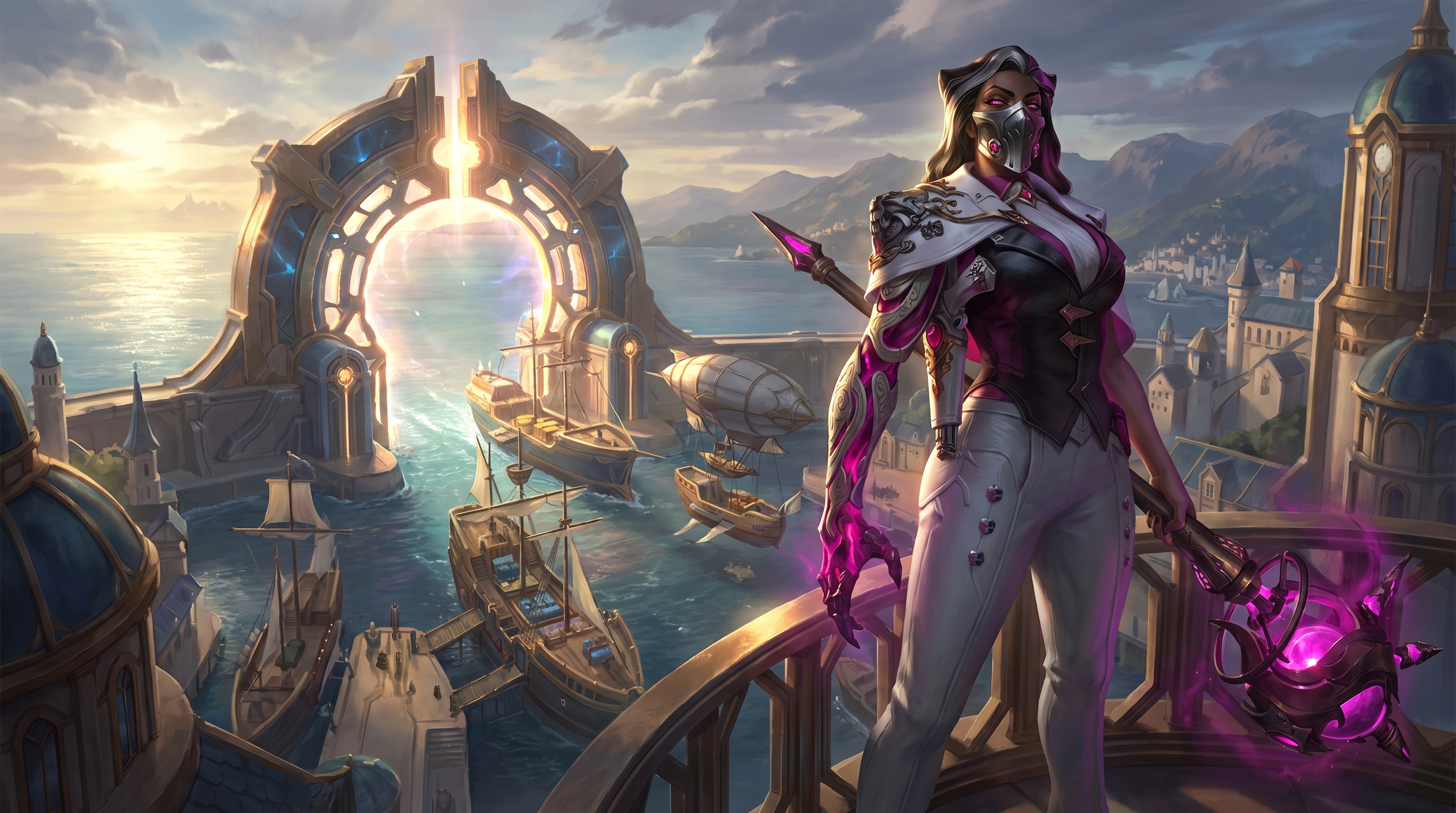
Navori’s underground fighting pits also gave rise to Sett, the half-Vastayan brawler who fought his way from their floors to become their champion and eventual owner.
Source: Navori, Encyclopedia of Runeterra
One recruiter takes your children at knifepoint for a cause. The other sells them a ticket and lets the queue form on its own. The second tells you far more about what Ionians want now, because nobody is making them come.
He Could Have Burned It Down. He Kept the Gate Receipts Instead.
Sett demanded the arena’s revenue instead of its closure, and Riot’s own spotlight calls him an entrepreneur before it calls him a fighter.
The night Sett takes the building is the hinge of the story, and what makes it a hinge is the thing he asks for. He does not tell the Noxian matchmaker to get out of Ionia. He asks for the revenue.
When they refused, Sett barred the doors. Minutes later, the doors re-opened, and the Noxians emerged, badly maimed, with a message on their bloodied lips: the half-beast was the new boss.
Source: Sett, Biography
The motive sits a paragraph earlier, in his own head: “Being the King of the Pit was good, but being the person who owned the pit… that was where the real money was.” A liberation story ends with the venue dark. This one ends with the venue under new management and the same lighting rig.
You Noxians may have started the fight pits, but I damn sure perfected ’em.
— Sett, on meeting a Noxian champion in League of Legends, Sett on RuneGrove
He says that to any Noxian he runs into on the Rift, and it is not a boast about fighting. It is a boast about operations. Riot’s own Sett Champion Spotlight files him the same way in its opening narration: “Sett is the Boss: a self-made, half-Vastayan, half-Noxian entrepreneur and fighter running Ionia’s underground fighting pits.” Entrepreneur comes before fighter in Riot’s own sentence.


Twelve years ago
Noxus attacks the First Lands
The invasion that ends centuries of Ionian plenty.
The Great Stand
Irelia breaks the hostage trap
A dozen of Swain’s veterans cut down, the general struck down, the province emboldened.
The occupation
Noxian pits sell tickets in Navori
Noxian promoters, Noxian coin, soldiers in the stands.
Before Sett fights
His father buys out his contract
He leaves to tour more profitable pits abroad.
His first card
The matchmaker books the boy as fodder
He becomes The Beast-Boy Bastard, then King of the Pit.
The takeover
The doors are barred
The promoters walk out maimed, and Sett owns the arena.
The peace
Ionians fill the seats
The paying crowd is local now, and the House keeps the margin.
Which makes the interesting question not how he won the room, but what he did with it the following morning.
Riot Printed That Arena a Payroll, One Card at a Time
The set prints a bookkeeper, a doorman, a bartender, a talent scout and a house edge: functions, not fighters.
The Legends of Runeterra set built around Sett is not a fight card. It is an org chart, and almost every seat in it is a business function rather than a fighter.
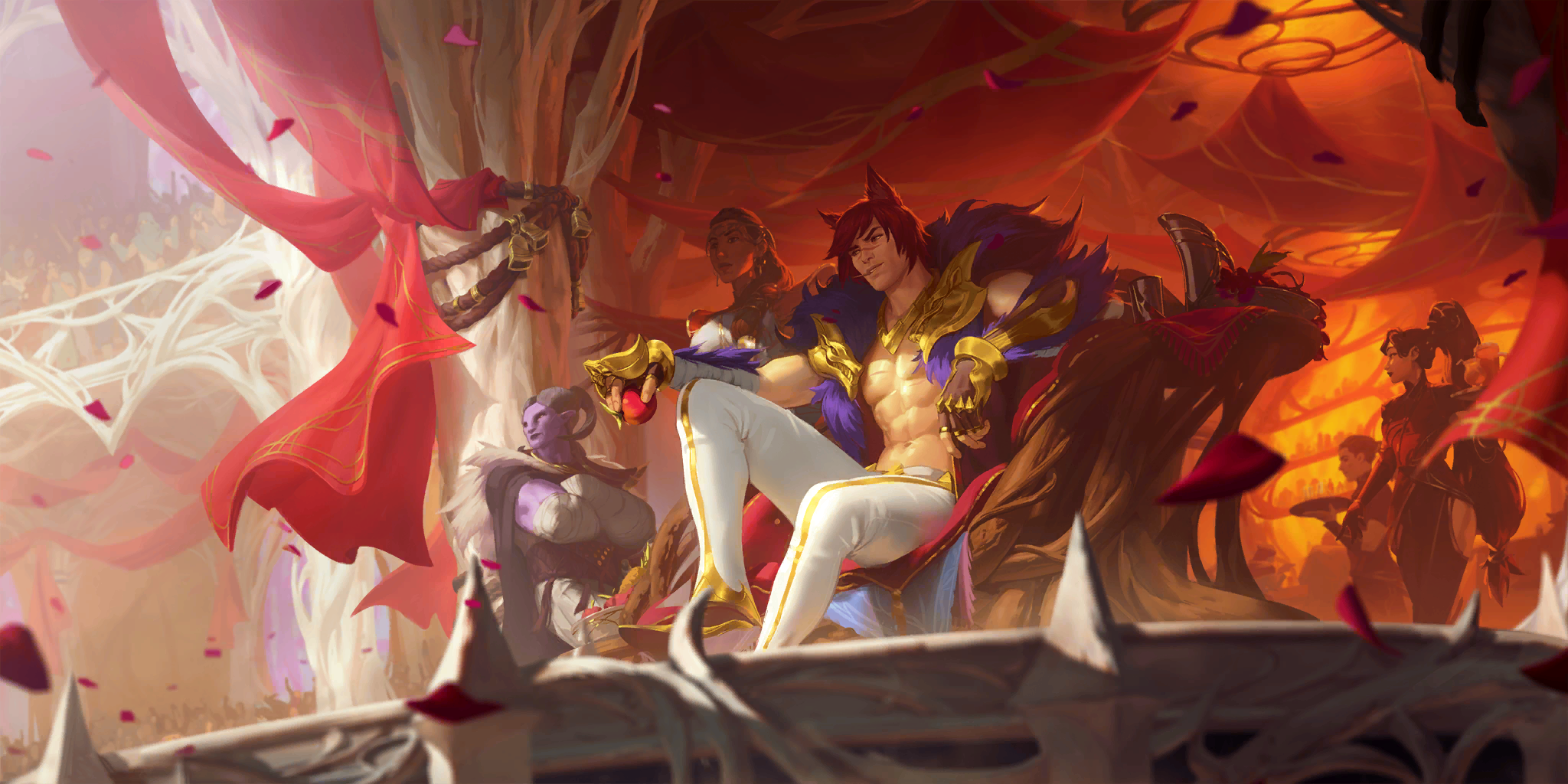
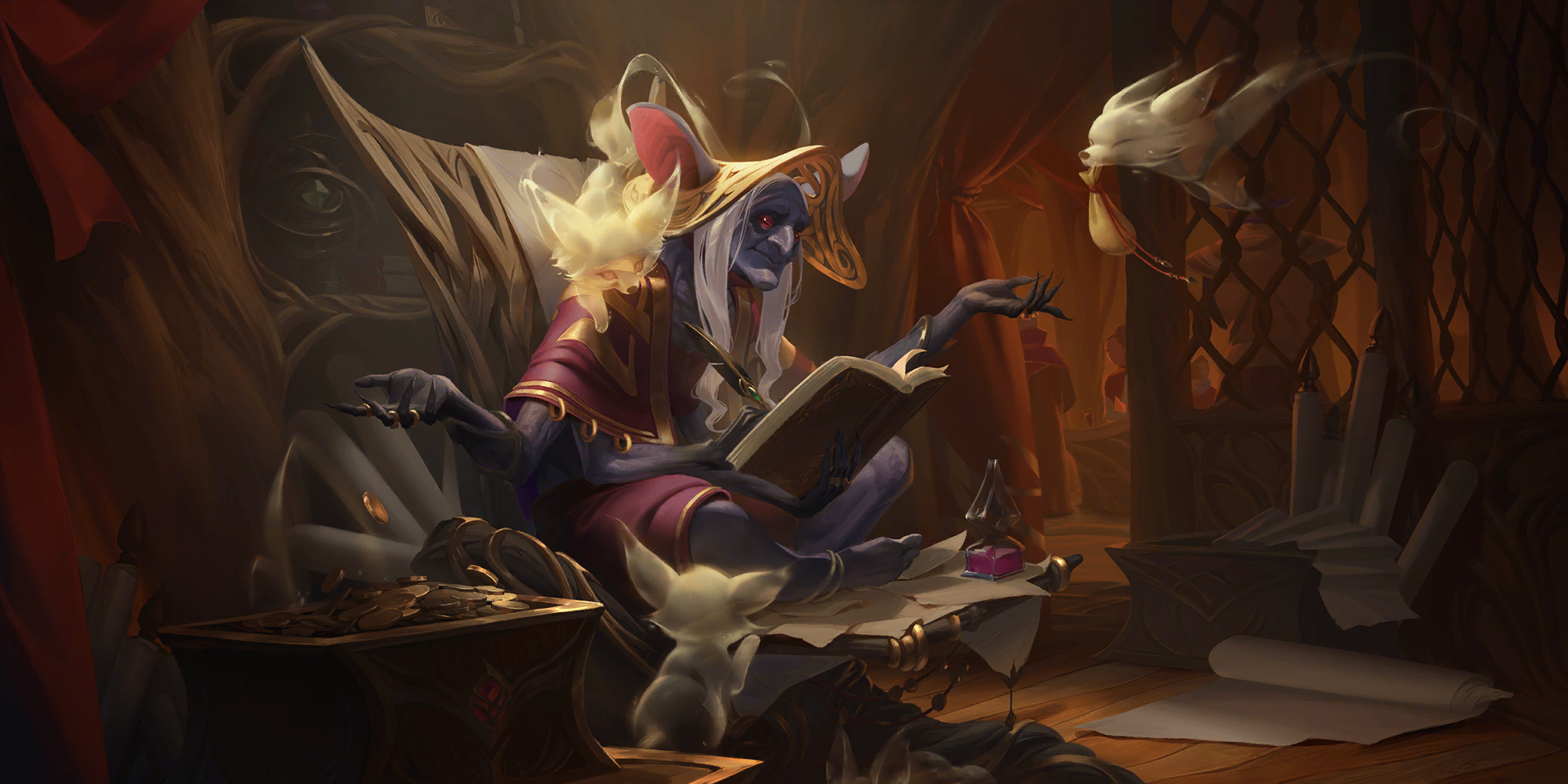
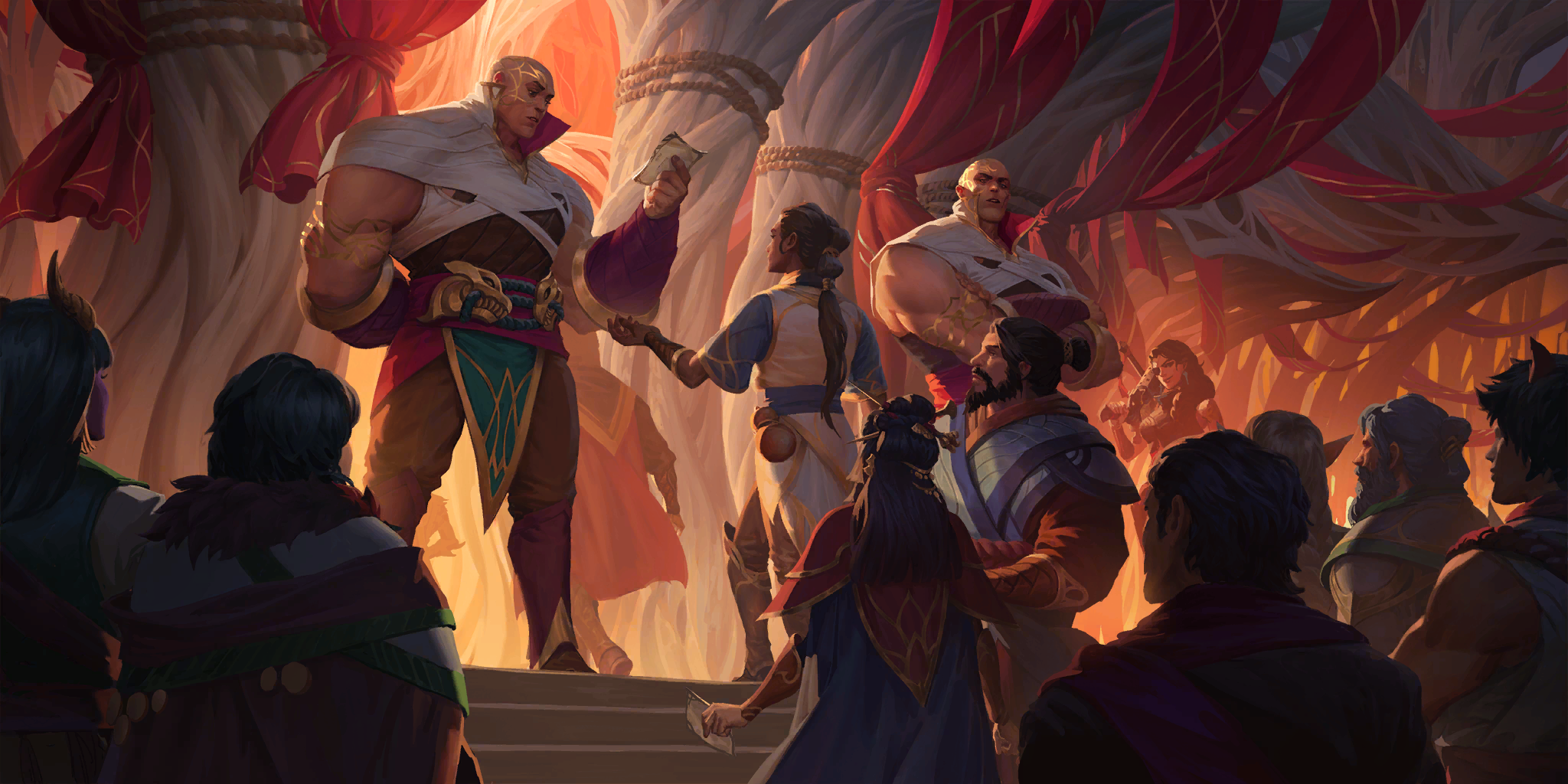
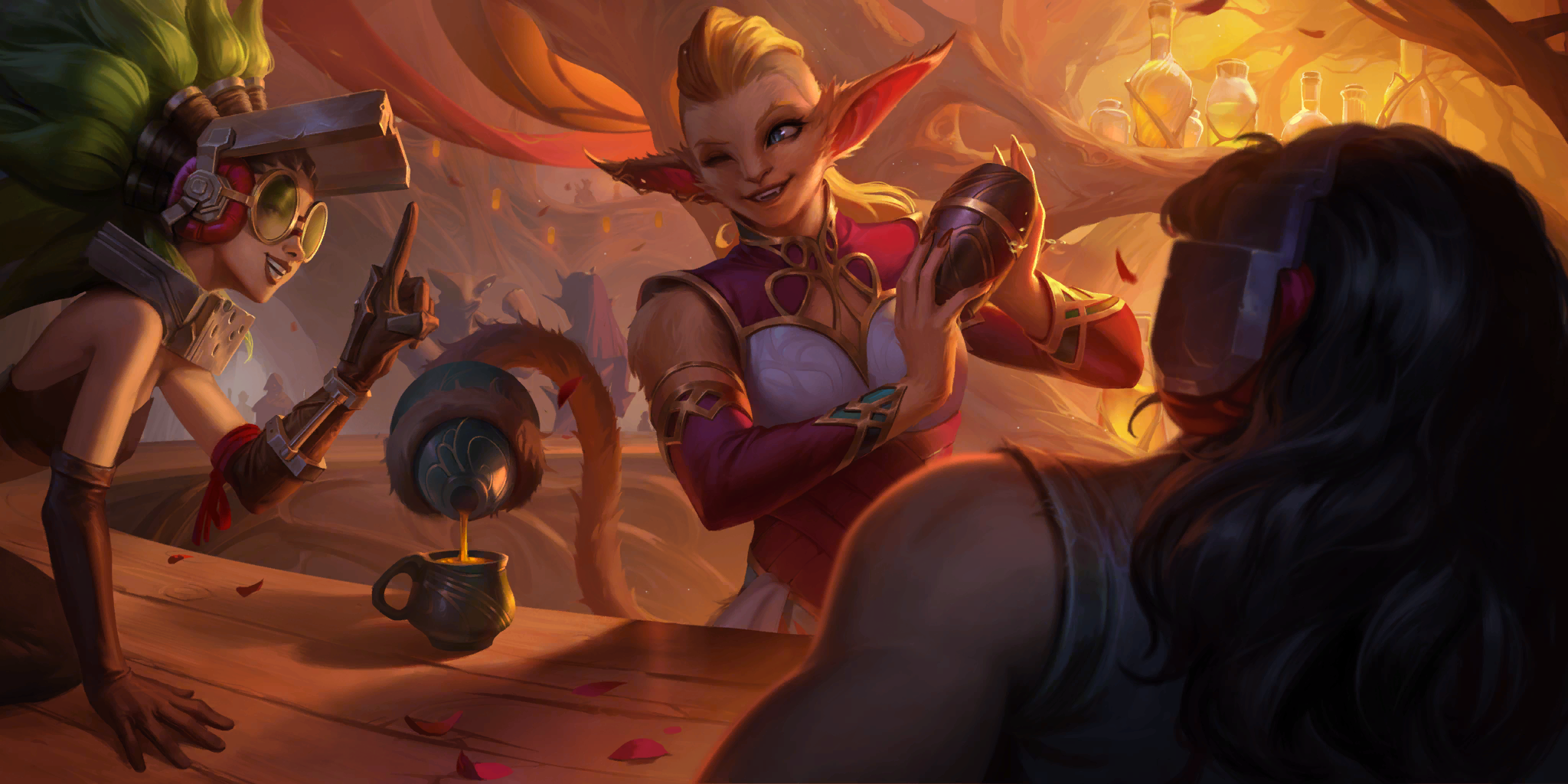
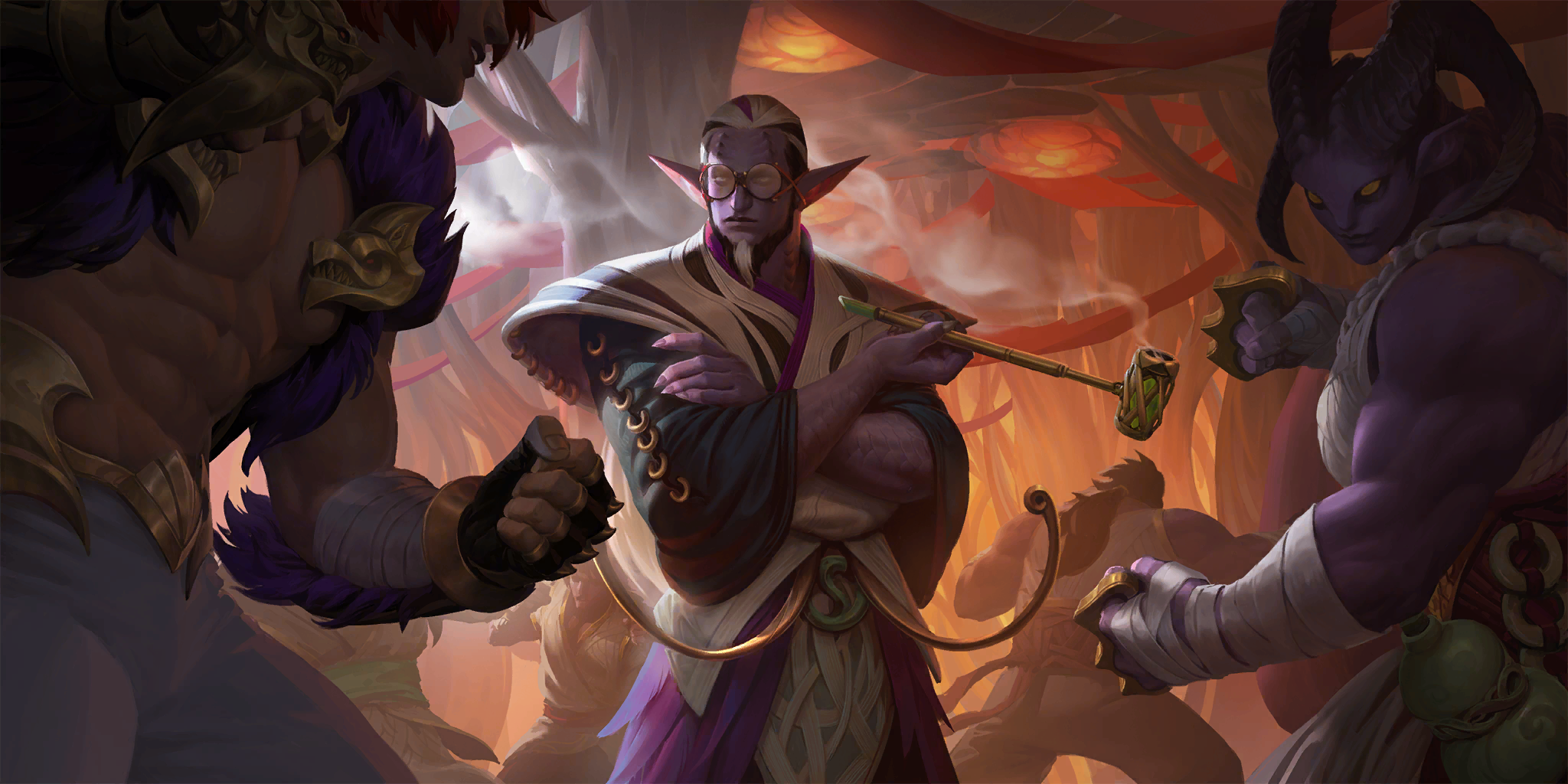
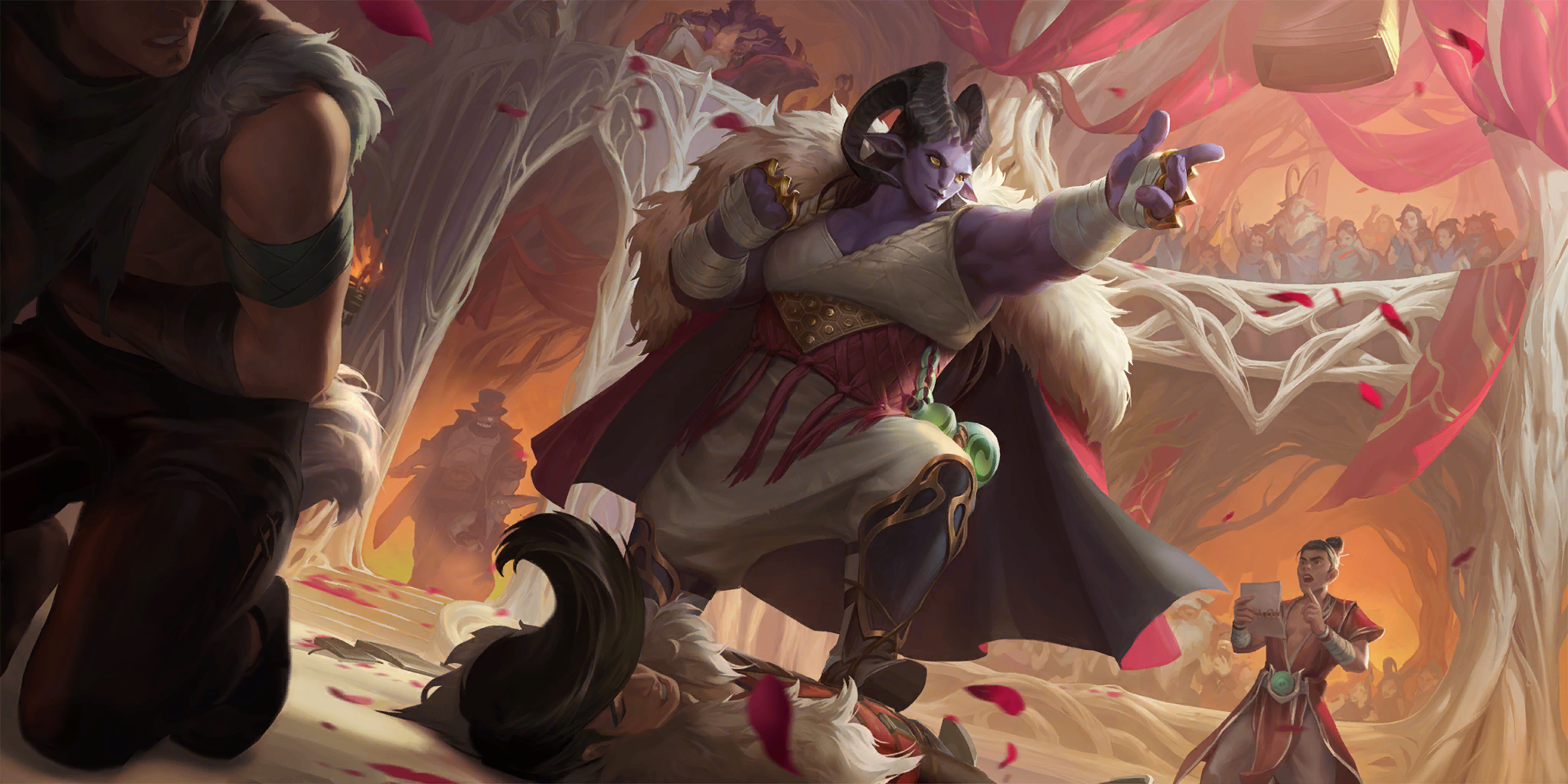
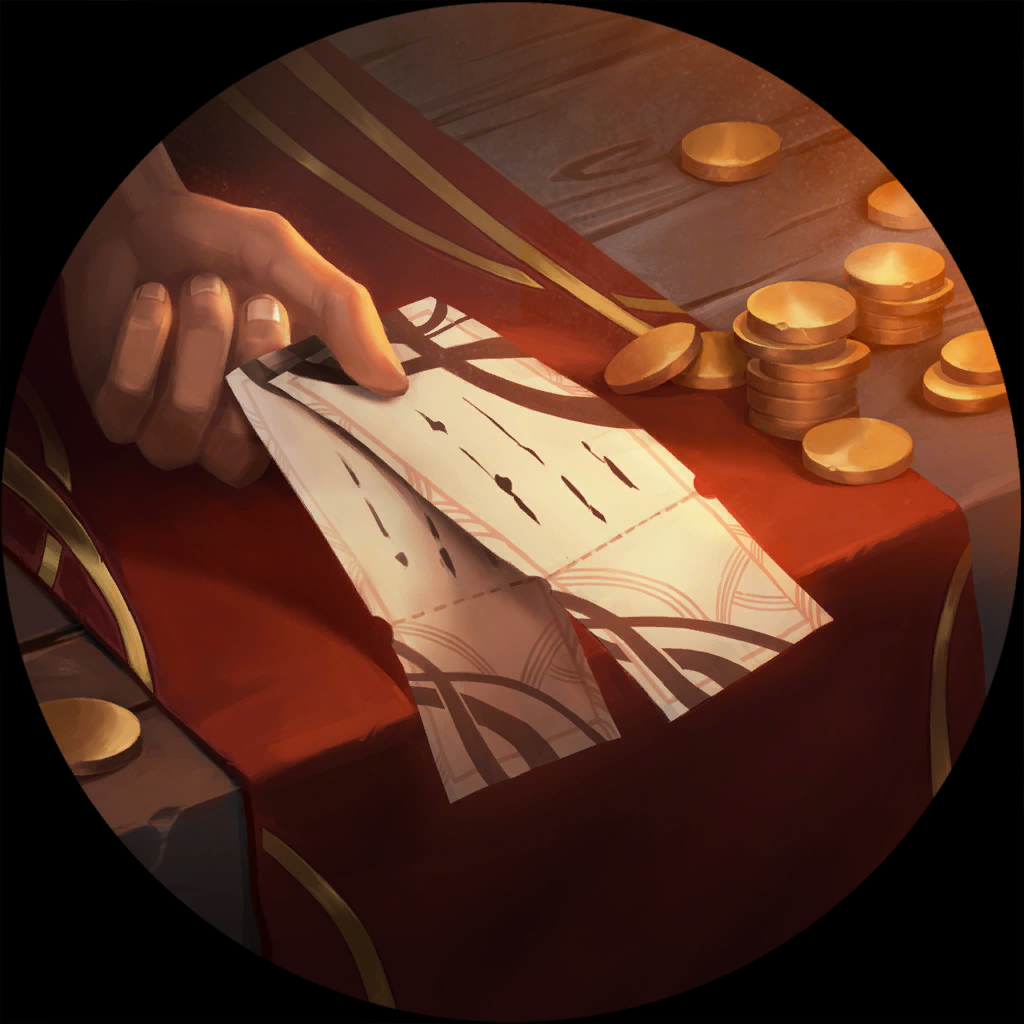
Start with the money. Attentive Accountant is a named employee, Lise, and her flavor text is a job reference: “Amid ambitious anglers and self-interested schemers, Lise has the one quality Sett prizes above all: reliability. She is never off, never short, and has never given Sett cause to wonder. This has granted Lise his backing and a warning to any seeking to stir up trouble: Bet against the House, and lose.” A bookkeeper with enforcement behind her is not color. That is a float, a ledger, and a collections policy.
The margin is written down too. Place Your Bets says the quiet part in Sett’s voice: “They give us real money, and we give them a chance. Heh… and some really wonder how the House always wins.” That is a house edge stated as policy, which means the pit’s revenue never depends on who wins a fight.
Then come the parts nobody bothers to write for a villain’s lair. Smooth Mixologist is an intelligence desk pretending to be a bar: “Problems come out by the third, and from the fourth on, the lips get real loose”. Master Bingwen, the Sieve is a retired fighter who now works talent, “using his keen eye and firm hand to separate the fine talent from the coarse”. Bout Security counts the door, and Pit Professional is the draw the door is counting for. That is five printed staff cards standing around one owner.
Bingwen is the detail that closes the circle. Ionia’s martial philosophy, the thing the monasteries pass on “with reverence and care”, now draws a wage at a gambling house, and its holder loses the argument to his employer nightly.
Sett and Lise, his bookkeeper
Sett: “Busy night, huh, Lise? Eh, that’s a good sign.”
Sett: “Don’t let anyone con you, Lise. We don’t do credit.”
Sett and Smeek, on the door
Bout Security: “Don’t worry, boss, we’re watchin’ the line.”
Sett: “Attaboy, Smeek.”
Sett and Meg, behind the bar
Sett: “’Ey, Meg. Whip up anything special for tonight?”
Smooth Mixologist: “I call it ‘pit grit’! It’s got cherries.”
Sett and the trainer he employs
Sett: “Who needs to train? I’ve got this in the bag.”
Bingwen: “So certain? Perhaps a demonstration.”
Recorded Legends of Runeterra lines, quoted verbatim from our voice-line database. Tap to play.
The Woman the Money Was For Is the One Person Kept Outside the Books
Expelled by her own community, lifted out of menial work by the arena she forbade, and lied to nightly in dialogue Riot recorded.
Every institution in this story is paid for by somebody who never sees the ledger. Riot never gave this one a name. She gets a role, a bill, and a son who lies to her about both.
Sett’s mother is vastaya, a mortal race our encyclopedia places in Ionia, Bilgewater, Ixtal and Shurima, and her own people threw her out for having him: “His birth appalled his mother’s vastayan community, which expelled the family for violating its tribal norms.” The taboo cost her a home before it cost him anything.

The arrangement they live in now is a nightly transaction: “Night after night, Sett brought money and comforts to his mother, always lying about how he had acquired them. It warmed his calloused heart to see her so proud of his success, no longer forced to toil at menial jobs.” She is out of the menial work because of the one place she made him swear off.
Source: Sett, Biography
Sett and Samira, on what their mothers do not know
Sett: “Oh, my ma would never approve if she knew what I got up to...”
Samira: “My māmān doesn’t either, but mostly of my tattoos.”
Samira, on what the two of them are
Samira: “A bastard and a refugee. We’re quite a pair, eh?”
Sett: “All I see is two successful entrepreneurs.”
What he says when he goes down
Sett: “Don’t tell... Ma...”
Sett: “Sorry... Ma...”
Recorded League of Legends and Legends of Runeterra lines, quoted verbatim from our voice-line database.
His death lines are a confession and an apology, in that order, and his joke line in League is “Love you, Ma. See ya tomorrow. Mwah.” The devotion is real. So is the fact that it runs on money she would refuse if anybody explained it to her. Riot even gave the sentiment a trailer: the launch spot for his Exalted skin has him say “Mom’s fought for me since I was born. It’s my turn now.”
Source: Exalted Skin: Radiant Serpent Sett, Launch Trailer
That is the paradox at domestic scale. The province tells itself the war is over and buys tickets anyway. He tells his mother the money is clean and keeps the House open. Both stories need somebody not to ask.
One Fighter in His Own Set Will Not Take His Mask Off
A masked veteran whose audio files Riot tagged “SettsNotDad” is the one fight the owner cannot book.
There is one thing in Navori the House cannot buy, and Riot printed it as a card in Sett’s own set.
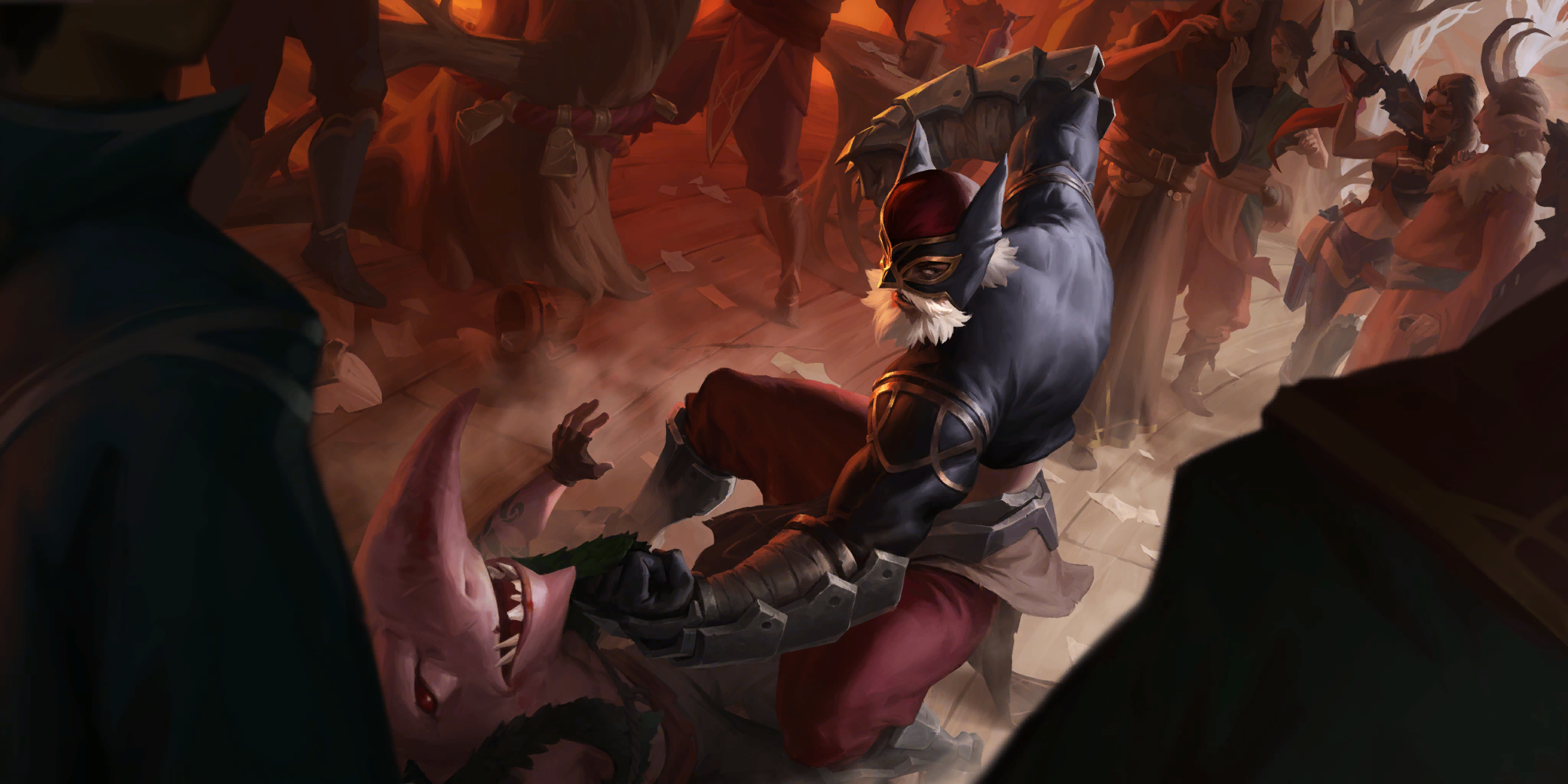
The Old Timer is an eight-cost masked veteran whose flavor text is a refusal: “The mask’s not comin’ off, girl. And unless you wanna end up looking like this thing, don’t ask again.” In his recorded lines he asks Sett why the boy ever let people call him The Beast-Boy Bastard, the ring name the biography gives him, and he warns the owner of the building that he does not know who he is talking to.
Sett and the masked fighter, on staying anonymous
Sett: “We don’t really do masks in the arena.”
The Old Timer: “Not here to be known. Just to win.”
And when Sett pushes it
Sett: “Careful you don’t break a hip in there, old man.”
The Old Timer: “You don’t know who you’re talking to, boy.”
On the prize money
The Old Timer: “Hope you’re ready to part with that grand prize.”
Sett: “You bust the heads to earn it, it’s yours.”
Recorded Legends of Runeterra lines, quoted verbatim from our voice-line database.
Riot is winking here, and the wink is in the file names. Every audio clip for that pairing on our servers carries the same tag: SettsNotDad. It is a joke and a denial in one word, which is the exact shape of a tease. The masked man is not his father. The point is that Sett cannot know that.
So the richest man in the province owns the ladder, the door, the books and the bar, and the one bout he built the entire apparatus to stage is the one bout no amount of coin can put on the card. His father is not in the game. He is in the accounts, as the reason the accounts exist. Which is why the appetite never settles, his or his customers’: the House sells a substitute for a person, and a substitute has to be bought again tomorrow night.
What This Hands a Game That Has to Build Navori
Not a class read: a ladder, a booking queue, a transfer market and a house edge Riot already wrote down, plus the question Navori puts to a player.
Nothing about the Riot MMO is announced, and it would be dishonest to pretend a pit boss implies a class. What the pit implies is a system, and it is already specified in more detail than most systems get in a design doc.
The biography is a progression loop with a named endgame. You take a fight for pay, you become the draw, then you buy the venue and keep the margin whoever wins. The verbs are all in the canon: a matchmaker “assigned the boy a fight on the next card”, his father “bought out his contract”, and the owner takes the gate. That is a ladder, a booking queue, a transfer market and a money sink, with Lise keeping score.
The reason this beats another dungeon is the moral load Riot has already bolted to it. A player standing in Navori is not being asked to pick a side in a war that ended. The Brotherhood wants it restarted and will seize your neighbors to staff it. The Kinkou want the balance back and cannot hold their own temple. The House sells the difference between those two and takes a cut.
Ionia expelled the empire and kept its arena, and the money at the door is Ionian now.
That is a better hook than one more Noxian camp to clear, because it asks a question with no clean answer in a province Riot has already furnished with art, a ledger, a payroll and a family that pays for all of it. If the First Lands are in the game, the arena under them is the most finished thing in the region.
Would You Take the House?
The pit pays whoever owns it, and owning it is the part Ionia never voted on.
Sett offers you the pit: the books, the door, the crowd and the margin. Do you take it, or close the place down?
Read Next
More grounded reads on the regions this game will have to build.


None of this is confirmed. Sources: Sett’s biography, our Ionia region gallery, the Navori and Placidium encyclopedia entries, the Navori Brotherhood and Kinkou Order faction pages, the Legends of Runeterra set built around Sett, and our voice-line database. A RuneGrove lore read.


