

Every Ionian Child Grows Up on the Tale of the Devoted Shrine Maiden
A foreign knight demands to know what is reaching into his head, and the Kinkou answer by taking apart Ionia’s best-loved bedtime story.
What if the gentle bedtime story a whole country tells its children is a cover story, and the woman in it is still alive? That is the question inside Trials of Twilight, a 2025 story arc Riot told through animated comics, character biographies and a trailer for League of Legends, its online battle game. The arc is set in Runeterra, the fantasy world Riot’s MMO is also set in.
It opens with  Xin Zhao, the sworn bodyguard of the king of Demacia, a kingdom of knights across the sea. He has come to Ionia, a vast continent where magic runs through the land itself, and he is already shaking when he reaches Koeshin. Koeshin is the mountain stronghold of the Kinkou, Ionia’s order of warrior monks who keep the balance between the spirit world and the material one. Xin Zhao has watched Demacia fall inside his own head more than once, and he will not take another step until somebody tells him who is doing it to him.
But I must know, what kind of enemy can reach inside my mind, and taunt me with scenes from my own worst nightmares? Speak now, or I shall go no further.
Xin Zhao, Trials of Twilight: The Truth, on RuneGrove
He is an outsider, and the Kinkou do not share their secrets with outsiders.  Yunara, the order’s ancient shrine guardian and the woman this story is about, vouches for him anyway. They fought demons together, she says, and his heart is good. So the order tells him what it has never told the country it protects.
Every Ionian child knows the Tale of the Devoted Shrine Maiden, a sweet fable about a young woman’s faith. It was never a fable. Yunara was the Shrine Maiden, she lived it, and the version Ionia recites has the ending cut off.

It is certain Ionia has a much longer and richer history than any living soul could claim to know. Indeed, in the more remote mountain passes, the landscape is still littered with evidence of great wars from ages past—but instead of clearing the ruins, the Ionians choose to respect what remains, even if they no longer fully understand what it represents.
Ionia: An Ancient And Respected History, on RuneGrove
That habit is why the cover story held. Ionians leave old battlefields standing and honor them without asking what happened there. A country trained to revere a ruin without interrogating it will let a story sit on top of a war for centuries. The truth under this one is about who actually won the war, what he asked for the moment it ended, and the one woman the Kinkou posted outside his cell while everyone else got the kinder version.
A country trained to revere a ruin without interrogating it will let a story sit on top of a war for centuries.
The Kinkou softened the story so a wounded country could heal. The record they left behind raises a harder question: who did the kind version actually protect, and who paid for it?
Koeshin Was the Last Kinkou Stronghold, and What Saved It Walked In Wearing a Darkin’s Face
The order was losing until an invader changed sides, and the magic that ended the war came out of Shurima with him.
Yunara tells the real account herself, and it starts with the order losing. The Darkin had come to Ionia, gathered followers and set the country against itself. They were god-warriors of Shurima, an ancient desert empire that has since fallen, and they had turned to blood magic to rule the world by force. Koeshin was the last stronghold the Kinkou still held, and it was close to falling.
This was no fairy tale. Our people were dying. We did not know why the Darkin came here, but they had amassed many followers, and set Ionia at war with itself. He told us his name was Zaahen. His kind were once praised as heroes, noble paragons of their sun-empire. And yet, he had witnessed their fall from the light, into darkness.
Yunara, Trials of Twilight: The Truth, on RuneGrove
 Zaahen, the Darkin named in that account, was one of those god-warriors, and what they had become sickened him. By the time he reached Koeshin he had already killed several of his own brothers and sisters. Yunara is blunt about what that cost him: “He would do so again, if needed, though each death broke his immortal heart a little more. There was something remarkably human in that.” He offered the order an alliance, and the Eye of Twilight, the title the Kinkou give their leader, sealed the pact.
For nearly three years the order fought god-warriors with a god-warrior at its side. Zaahen had carried arcane knowledge out of Shurima, and because of that knowledge the Darkin in Ionia ended up sealed inside their own weapons instead of dead. The magic that beat the enemy came from the enemy’s side of the war.

The Kinkou are the self-appointed keepers of Ionia’s sacred balance. Their acolytes walk both Runeterra and the spirit realm, mediating conflicts between them and, when necessary, intervening by force.
Ionia: The Kinkou, on RuneGrove
Self-appointed is the word that matters. Nobody chose the Kinkou to decide what Ionia gets to remember, and our encyclopedia entry for the order describes the same arrangement plainly: an ancient organization that appoints itself keeper of the balance and uses force when harmony can’t be restored any other way. An order with that job and a victory it couldn’t explain had one obvious move, and it made it. That move needed a guard, and Yunara’s journal shows why the order picked her.
Encyclopedia entry: the Kinkou Order
Master Lao Told Them the Fallen Ones Could Not Be Fought, Then Took Her Into the War Anyway
Her own journal records the kill that marked her master, and the warning about immortals he did not follow.
Yunara kept a journal through the war and long after it. What survives is a stack of damaged fragments, and two of them show why she, of everyone in the order, would later agree to stand guard for the rest of her life.
It is Master Lao I think of most—and he’d probably laugh at me for saying so. His teachings, though offered sparingly, punctuated our routine with deeper meaning.
He warned that confronting the Fallen Ones themselves was utterly futile. Even their mortal followers were not to be taken lightly.
Sadly, his words did little to dissuade those who heard not a warning, but a challenge—and in seeking victory, found only death. Zai tah’lo. I only wish he had followed his own advice.
Yunara, fragment #166, her biography on RuneGrove
Master Lao, the Kinkou’s Shadowmaster and the teacher who trained her himself, told his students that fighting the Fallen Ones, as her journal calls the Darkin, was hopeless. Fragment #98 is the night he ignored his own advice. She spots a servant of the Fallen in Lao’s blind spot, slips through the shadows and kills him, then turns to find her master proud of her for about one second.
As Lao turned, his face held a proud smile—one that shifted to horror when he spotted the symbol on the dead man’s tunic.
“The blood… She will come for us.”
He tore my gloves away, and wiped them on his tattered robes. His eyes told me to run.
And then I saw her. Lao stood to face our immortal foe, but was bound instantly.
Yunara, fragment #98, her biography on RuneGrove
The scroll is destroyed from there. A translator, whose notes in square brackets run all through her biography, picks up where the page stops. The translator won’t name the immortal woman but does name the magic, and seems pleased about who they are naming it to: “Rest of scroll damaged beyond legibility, but description above feels evocative of hemomancy, I’m certain you would agree.” Hemomancy is blood magic, and whoever reads these notes clearly knows the word.
What the fragment proves without any guessing is the lesson. Lao warned his students about immortals, ignored the warning himself, and was destroyed in front of the student he had trained. Everything Yunara agreed to afterward follows from that night.
Her Assignment During the Alliance Was to Learn How to Kill the Ally
She swore to serve no false gods, then spent three years fighting beside one and studying how to put him down.
The Kinkou didn’t trust Zaahen. They used him, and they built a backup plan out of a person. Yunara held the Fist of Shadow, one of the three seats that lead the order, and the seat came with a job.
Her vows as Fist of Shadow are in fragment #104. She could write them out in full because she had known them by heart since childhood: her parents gave her to the order when she was small.
- I will follow the Eye’s guidance and turn to the Heart for wisdom.
- I will vanquish all who disrupt balance.
- I will prune the tree of weakness and blight.
- I will serve no false gods, nor kanmei.
- I will not allow my feelings to prevent what must be done.
Yunara, the vows of the Fist of Shadow, fragment #104, on RuneGrove
The first vow answers to the Eye of Twilight.  Shen, the Kinkou’s leader today, holds that seat now. Legends of Runeterra, Riot’s digital card game set in the same world, prints the belief underneath it on the Shen card: “Like hands clasped, the mortal and spirit realms intertwine...” The fourth vow is the one that won’t sit still. She swore to serve no false gods, and the war she is remembered for was won standing beside one.
She still bristles at the name people gave that war.
The War of the False Kanmei—a name bestowed by those who know nothing of which they speak.
Yunara, in-game voice line, on RuneGrove
She never explains why. Our records show one reason the name would sting. It calls the enemy false kanmei, and her own oath uses that same word, promising to serve “no false gods, nor kanmei.” The order beat those false gods by making a pact with one of them. A war name like that falls apart the moment someone reads the archive, which may be exactly why the archive stopped being public.
He Asked for the Cell. She Volunteered for the Corridor.
Zaahen asked to be imprisoned, and both of their biographies describe the same door without either of them opening it.
This is the part the fable cuts. The war ends and the Darkin are sealed in their weapons. Then the ally who made that possible looks at what winning has done to him and asks to be locked away like the enemy.
When the war was won, Zaahen feared what he was becoming and asked to be bound like the rest, hidden away in the Temple of Twilight, which was cast into the spirit realm. Yunara pledged to stand watch over it for all time.
Trials of Twilight: The Truth, on RuneGrove
The Temple of Twilight is that prison, a temple that was cast out of the physical world and into the spirit realm, the hidden world of spirits that runs alongside ours. His guard volunteered to go with it.

Grand Master Bhinan, the head of the order who had raised Yunara to full acolyte, sent her off with a line that reads less like a blessing than a handover of responsibility. Yunara wrote it down because it never stopped bothering her.
“You go now into a place where few can follow. From here, it is you who must determine what is to be pruned. Deliver your judgments as if they were my own.”
I knew then that we would never speak again, in this realm or the next.
Yunara, fragment #104, on RuneGrove
Both biographies describe the same doorway from opposite sides, and neither character crosses it. It is the strongest scene Riot has written for either of them. Zaahen, sealed inside his glaive, spends his imprisonment listening to her walk past.
Beyond its confines, I sense movement: footsteps echoing through the temple halls. The tread of an ally… my old friend, ever vigilant. She often comes close, or so it seems, but never crosses the threshold.
Does she think to free me? She cannot, she must not. She knows as well as I that Darkin and divine battle within me.
Zaahen, his biography on RuneGrove
Her fragment #45 is the same moment written from the corridor. A fight with azakana, demon spirits that feed on human pain and regret, pushes her toward the entrance, and getting close to the door is what she thinks is worth logging: “the skirmish brought me perilously close to the temple’s entrance. Until that moment, I had avoided coming so near. I returned to my chambers to meditate.”
She often comes close, or so it seems, but never crosses the threshold.
— Zaahen, his RuneGrove biography, read it
Riot has drawn a building like this before. The Veiled Temple, a landmark card in Legends of Runeterra, is a temple inside the spirit realm that exists to pass weapons through the veil to someone on the other side: “It is here, in the Spirit Realm, that Alune communes with her brother Aphelios.” Yunara’s temple is the reverse. It sits in the same realm and also holds a weapon with a person inside, but this one exists so that nothing comes back out.
The Post Cannot Be Finished, Which Is Why It Became a Career
A sealed Darkin is not a dead one, so the watch has no end, and her journal records what that does to a person.
The posting has no end date because the thing inside the temple did not die. Zaahen is a Darkin, and our encyclopedia entry on his kind is blunt about what a defeated one is: every Darkin known to exist has been sealed inside a weapon, and there is no path back to the form each once wore. A weapon with a god-warrior inside is a thing someone can pick up. That is the whole reason the seal needs a guard, and the rest of her story, an enemy luring the guard away from the door, bears it out.
The realm around her post plays by its own rules. Our encyclopedia entry on the Spirit, the race of deathless beings native to the realm the Temple of Twilight now sits inside, describes the neighbourhood.
Death does not end a spirit. When the physical form a spirit inhabits is destroyed, that spirit passes back into the Spirit Realm and later returns, resuming whatever purpose it had been pursuing.
This makes their conflicts long-running affairs measured against a scale no mortal opponent can match.
Runeterra encyclopedia: Spirit, on RuneGrove
That is the neighbourhood, and it explains the traffic: the azakana at her perimeter are demons drawn to pain and regret, and her own journal blames the prisoner’s power for the rise in their numbers. The prisoner himself is a different case: a Darkin sealed in a weapon, not a spirit that comes back. That is why the Kinkou answer was one guard on permanent duty instead of a victory, and why Yunara’s days run in a loop.
Before the war
Given to the order
Her parents entrust her to the Kinkou as a child and she learns the vows by heart.
The war
Master Lao is bound
She kills a servant of the Fallen, Lao sees the symbol on the tunic and tells her to run.
Nearly three years
The Kinkou fight beside Zaahen
The Eye of Twilight seals a pact with an invader-god and the Darkin go into their weapons.
After the war
She gives up the Fist of Shadow
The role is relinquished to another and she swears to guard the Temple of Twilight.
Centuries
The perimeter circle
Thirteen azakana in one morning, and another full circle added to her daily duties.
Now
The trials open
Xin Zhao reaches Koeshin, and the Tale of the Devoted Shrine Maiden comes apart.
Her journal is the record of that loop, and it is the best writing in her story. Fragment #45 opens on a morning she mistakes for weather. Thirteen azakana were waiting outside the temple.
I mistook the scuttling of azakana across the roof for rain today. Leaving my quarters, thirteen awaited me outside the temple. Most were dispatched quickly, but two proved more difficult.
One clung to the temple’s side with its grotesque maw. Its teeth shattered against the Aion Er’na—I knocked its shriveled remains off the cliff.
But I do not fear the dark. It felt good to face a real challenge again.
Yunara, fragment #45, on RuneGrove
The Aion Er’na in that entry is her weapon, a legendary Kinkou relic she has trained with for centuries. The translator counts 207 recovered fragments in all.
Fragment #201 shows what the years do to her. She has started measuring herself in repetitions, the way anyone does when the work never changes. A fighting pattern that once took sixteen invocations of the Twilight Orison, a Kinkou prayer she recites through the movements, now takes eleven, and she can’t tell whether that’s the spirit waters or the cold. The entry ends on the only homesick line she allows herself, and it’s about a hot spring.
With endless time to train, I have begun experimenting with non-combat uses for the Aion Er’na. I can now dance with them in perfect synchronization, and use them as stepping stones between my chambers and the temple.
Still, I miss the hot springs of Koeshin.
Yunara, fragment #201, on RuneGrove

Magic suffuses every part of Ionia—its people, its history, and most of all the land itself. All aspects of life there hang in a balance, with still so much left to be discovered and explored.
Ionia: The First Lands, on RuneGrove
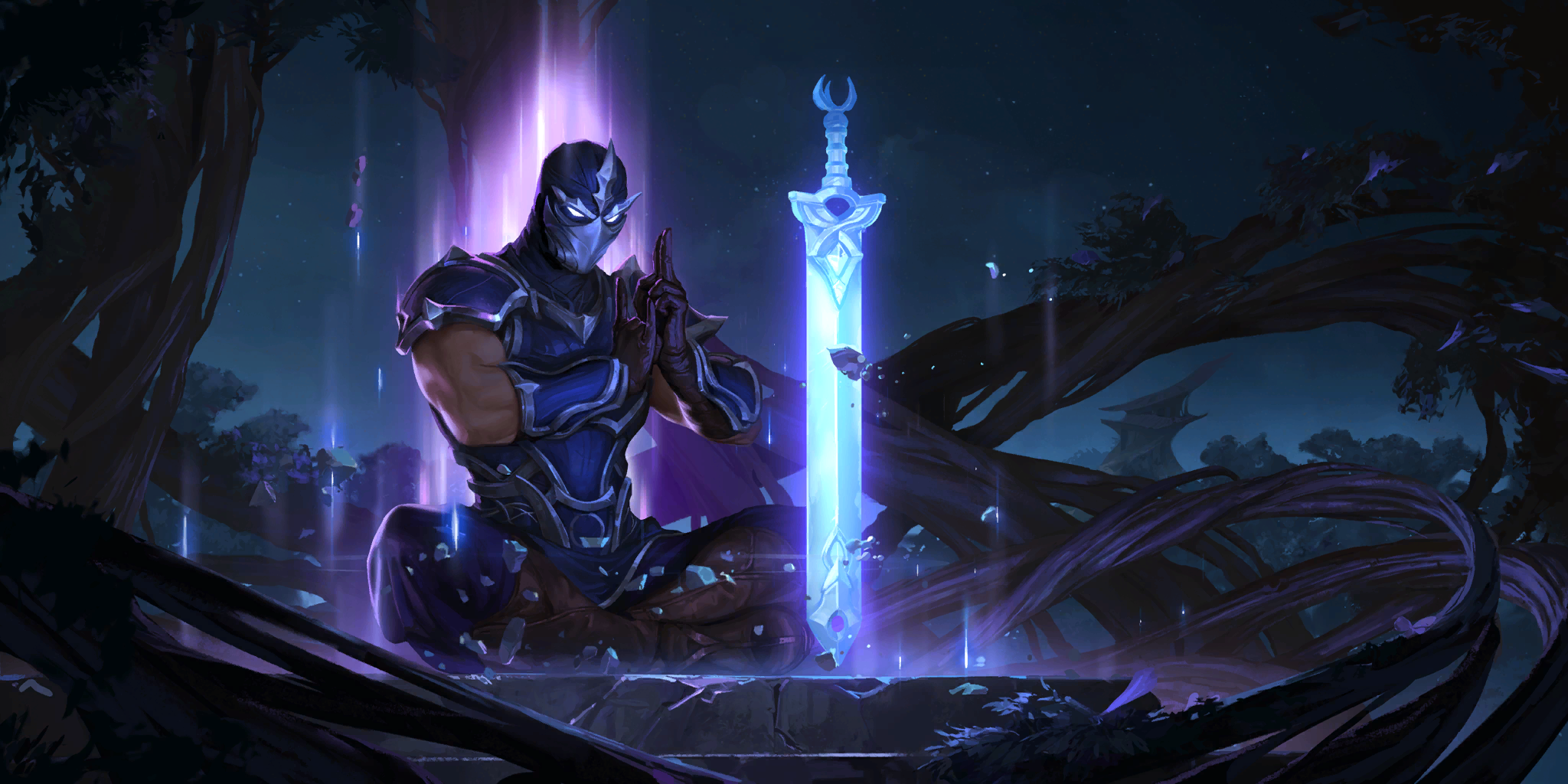
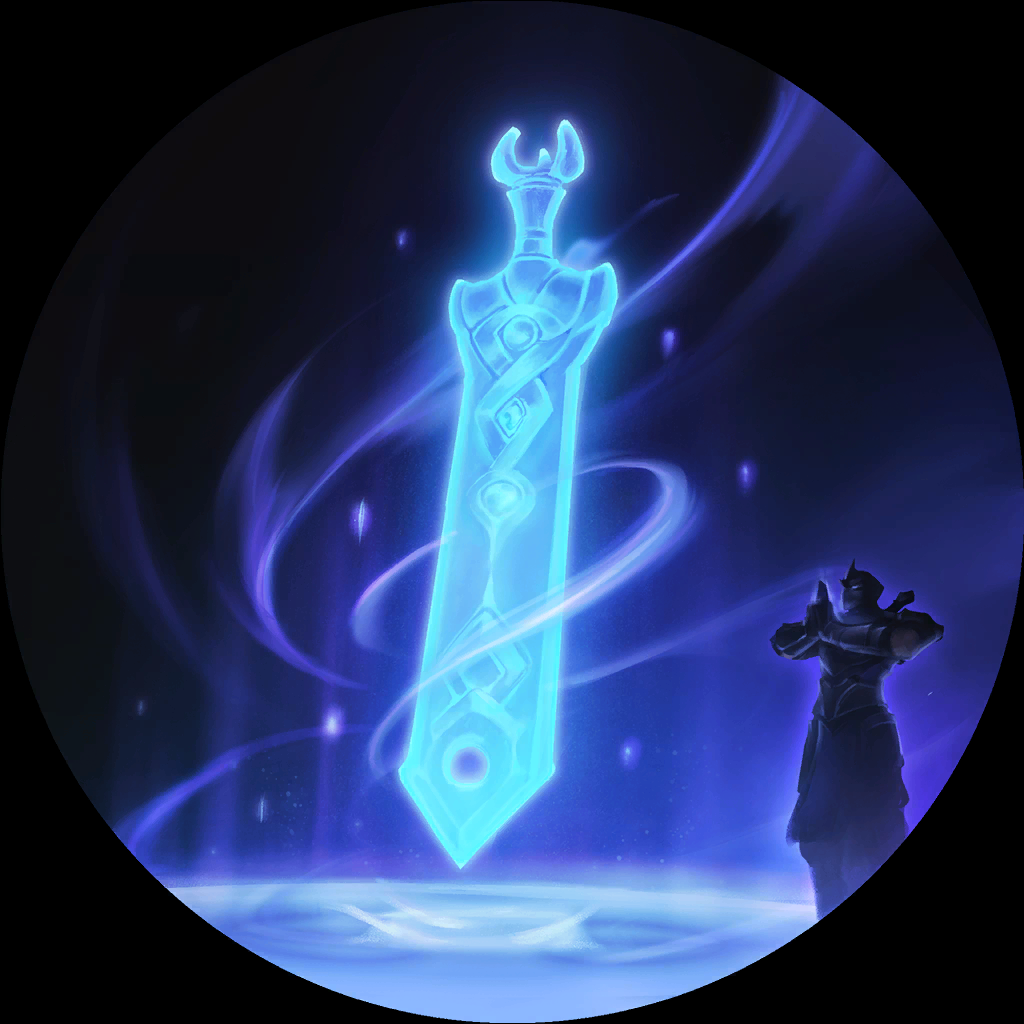
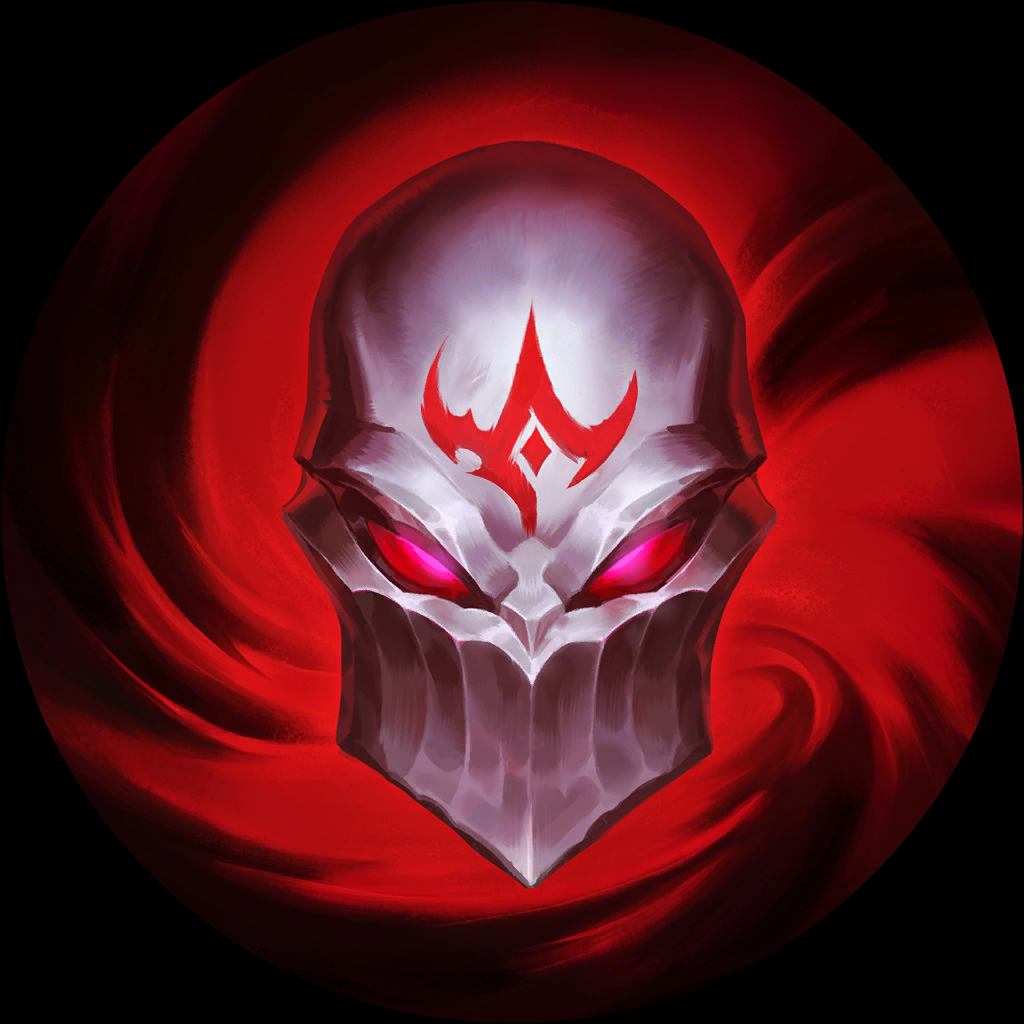
That balance needs somebody standing in it, and Legends of Runeterra has been printing the cost for years. Shadow Flare, an Ionian spell card, states what goes wrong: “When the flows of magic are diverted from their balanced state, they surge from the spirit world into the mortal realm--often with startling results.” Kalista, a card for a vengeful spirit from the Shadow Isles, Runeterra’s cursed islands of the dead, shows what happens when the person holding the line stops being a person: “In life, she was a general, a protector, a hero. But as flesh gave way, she was left with naught but the blazing fires of retribution--an undying spirit of vengeance.” The spirit cards below make the same point from other corners of the world.


The Azakana Were Bait, and She Filed the Evidence Herself
The demon surge was a planned lure, and her own journal recorded the buildup years before anyone understood it.
Someone sent the demons to her door. Beating her was never the plan. Their job was to get her to leave.
The azakana spirits were a distraction, to lure me away from my post. They mean to free Zaahen! This is not the Kinkou’s fight alone. The Darkin are a threat to all the peoples of this world.
Yunara, Trials of Twilight: The Truth, on RuneGrove
Go back to fragment #45 and the trap is already visible in her handwriting, years early. She noticed the demons multiplying and wrote it down, but she got the cause exactly backwards.
Of late, there has been far more akana activity in general, and I fear his power attracts the restless.
I have added another full circle of the perimeter to my daily duties.
Yunara, fragment #45, on RuneGrove
She read a planned operation as a side effect of her prisoner’s power leaking out, and she answered it by walking one more lap. The entry begins with her mistaking the demons for rain and ends with the extra lap. She had the intelligence that would have saved the post, and she filed it under weather.
She had the intelligence that would have saved the post, and she filed it under weather.
Fragment #206 is the other warning she couldn’t read. A vision comes to her in meditation, inside a temple she notes is protected against every intrusion, even dreams. In it she is chasing an enemy called the Fan and its followers up a snowy mountain while the Darkin shriek. Then the temple walls are around her, “alive and seething,” and where her companion stood there is a stranger in foreign robes. The translator’s note calls it the only vision in all 207 recovered fragments.
That makes two strange events, both written down and neither passed up the chain. A guard post looks like that when nobody above it is still reading the reports.
The Door Only Opens for Someone Who Puts Their Weapons Down
The trials make you take off your armor at the door, then play your own memories back with a lie stitched in.
Once he hears the truth, Xin Zhao decides the Darkin are everyone’s problem and asks to go in. The trials the arc is named after are the Kinkou’s test in the spirit realm, and their entry rule is the opposite of what games normally use: they reject anyone who arrives in force or with a dulled spirit. So the Seneschal of Demacia, as the king’s bodyguard is titled, takes off his armor and accepts a woodweaver’s sapling on the way in.

In the northeastern mountains, the monastery of Hirana has long been a sanctuary for those seeking to better understand their connection to the spirit realm.
Ionia: The Great Monasteries, on RuneGrove
Riot has written this kind of gate before. Arbiter of the Peak is a Legends of Runeterra card from Mount Targon, a sacred mountain whose guardians test the people who climb it, and its flavor text reads almost like a design note: “The Arbiter is the mountain’s final test, for only the guardian sees beyond the climber’s deeds, and into their spirit.” A gate that reads a player’s intent instead of their gear is hard to build and interesting to play.
Past the gate is his own history with a lie edited in. The trial puts him back aboard the Viscero, the Ionian fishing boat he worked on as a boy, and makes him fight Bo Yang, a crewmate he thought of as a brother. Noxus, the conquering empire whose raiders captured that crew, is where the boy became a famous arena fighter. Bo Yang tells him what he has spent his life not saying: the act of defiance that made his name got the rest of the crew, old fishermen and deckhands, sent to die in the Reckoning pits, Noxus’s fighting arenas. Then the trial tries a softer memory, of his king, and goes too far.
“You and I were worthless to them, cut loose as soon as we landed in the capital. But the rest of the crew were sent straight to the Reckoning pits. Old fishermen and deckhands. Your moment of defiance got them all killed.”
“No. This was not how it happened. He was never so unkind.”
Bo Yang and Xin Zhao, Trials of Twilight: The Warning, on RuneGrove
The illusion falls away and the real speaker steps forward, making no secret of who it is: “Who are you to defy the Sunborn god-warriors of Shurima!? We who vanquished the Void itself! This world was ours. We will take it back.” The trial then offers him a Darkin weapon as the answer, and a second voice cuts through the dark and tells him not to take it.
He and Yunara were each meant to face the trials alone. Both heard the same voice, and it was the prisoner’s. Zaahen didn’t guide anyone through the test. He warned a stranger away from the weapons, the same warning he has been giving about himself for centuries.
She Left the Corridor Chasing a Decoy and Walked Into a Century She Does Not Recognize
Her trailer is a guard coming off duty, the prisoner is out, and her voice lines are a verdict on the order that left her there.
Her champion trailer, the short video Riot released in July 2025 to introduce Yunara as a playable League of Legends character, sounds like a guard finally coming off duty. Its first line is her vow, not a greeting.


Watch it on our page for the Yunara Champion Trailer
She barely speaks in it, and the two lines at either end of the transcript carry it: “The time has come to prune the tree” at the start and “I mustn’t take a single breath for granted” at the end. Pruning the tree is one of the order’s founding teachings, and it means cutting away whatever throws the balance off. Between those lines, the woman who held a door for centuries walks out into a country she has to learn again. Her in-game line for that is flatter and sadder: “Much has changed, and I do not understand why. Not truly.”

Situated at the heart of the continent, the Placidium is one of Ionia’s most sacred places. Many have journeyed here to study at renowned schools, or meditate in its wild, magical gardens. Undoubtedly, this was why it became such a tempting target for the invading armies of Noxus…
Ionia: The Placidium of Navori, on RuneGrove
The Placidium of Navori, one of Ionia’s most sacred sites, is where Ionians finally fought back when Noxus invaded. Yunara learns about that war the way you would hear about a fire at a house you used to live in, and she reacts like an auditor. “The First Lands fought off the Darkin… so how did we nearly fall to your empire?!” she demands of a Noxian (the First Lands is Ionia’s older name). Her verdict on the order that posted her is shorter: “The Kinkou Order are paralyzed by indecision once more.”
The prisoner is out too. Zaahen’s own League of Legends profile says so in its second sentence: “Once willingly sealed within his glaive to stave off madness, he now walks free, noble in heart and vicious in purpose.” Her lines for meeting him in a match run both ways, because Riot wrote him as an ally and as an enemy.
When the prisoner she was assigned to kill is on her side
Yunara: “It’s you! There is much for us to discuss… but not here, not now.”
Yunara: “Some things stand the test of time.”
And when he is not
Yunara: “Your warning now rings true, Zaahen; you have become my enemy.”
Yunara: “Your fetid kin walk among us once more. I did not expect to see you walk beside them…!”
Yunara: “I pray you find the peace you longed for.”
Yunara: “I can weep for you no longer.”
Reporting back to the Heart of the Tempest, several centuries late
Yunara: “What providence that we have been reunited after— Kennen, how long have I been away…?”
Yunara: “What has become of the Kinkou? Why does the Heart of the Tempest now stand still?”
Yunara: “I promised I would stop you if you lost your way…”
Voice lines quoted verbatim from our own database, audio hosted on RuneGrove. Tap to play.
Shen gets “Perhaps your wayward protégé was right to call you a spineless coward.”  Akali, the student who quit the order and walked away from the Fist of Shadow seat Yunara once held, gets “To serve no one is to let your self-importance master you, Akali.”
  Kennen, the Heart of the Tempest and a Kinkou leader in Yunara’s day who is still serving, just gets asked how long she has been gone. She isn’t sentimental about any of them, and she isn’t sure about herself either.
I know not if I am still fit to prune the tree. If too much is cut, a tree weakens—nonetheless, my vow is unshakeable.
Yunara, in-game voice line, on RuneGrove
One of her lines sums up her own situation better than anyone else has, and she doesn’t seem to notice that it applies to her.
Myth is to culture, as conflict is to life. They reveal what people have deemed most important.
Yunara, in-game voice line, on RuneGrove
What a Game Would Have to Build Here
Six standard quest steps, each one already written and each one running backwards.
Yunara doesn’t point at a character class for an MMO. She points at a questline, a chain of story missions, and almost every step of it runs the usual shape in reverse.
| Quest beat | The usual MMO version | What Riot already wrote here |
|---|---|---|
| The hook | A stranger in the hub asks you to look into strange creatures near the shrine. | Thirteen azakana on a temple roof, logged by the guard for weeks as ordinary bad weather. |
| The escort | Walk the NPC to safety and collect their thanks. | She covers her master’s blind spot, and the kill she makes for him is what marks him for death. |
| The gate | An item level check on the instance portal. | A trial that rejects anyone who arrives in force, so the knight takes his armor off at the door. |
| The dungeon | A ruin full of things to kill. | Your own memories, replayed accurately until the moment somebody edits one. |
| The boss | Kill the thing sealed in the vault. | The thing sealed in the vault would like to stay there, and warns you off the weapon that would free it. |
| The reward | Loot and a title. | The truth, plus the discovery that somebody outside the country already has a copy. |
Read down the right column and the design problem is plain. A questline built this way can’t be farmed for loot, because the reward is information, and it can’t end in a kill, because the kill is how you lose. Zaahen asked for the cell, and freeing him is what the enemy wants. The only win on offer is that the door stays shut with somebody standing next to it. That works less like a chapter players finish and more like a place on the map they keep up, with a character whose whole personality is the upkeep.
Riot has also already written the loss. The guard left her post, and Zaahen walks free. A game built on this chain would have to decide whether players get to hold the door or only arrive after it has failed.
Ionia is the natural setting for it. The wall between the two worlds is thinnest there, our entry for the Spirit Realm lays out the Kinkou teaching plainly, and the order’s seat at the Temple of Koeshin is a building Riot has already described and drawn. Riot has announced nothing about questing, zones or systems in its MMO and has shown no gameplay. What it has done is write and voice a complete quest chain in one of the most fully drawn regions of its world.
Somebody Has Already Read All 207 Fragments, and He Is Not Ionian
The journal survives as a paid translation, and the margin notes are addressed to Lord Vladimir.
This is the evidence that turns the cover story from a mercy into a mistake. Yunara’s journal doesn’t survive in a Kinkou vault. It survives as a commissioned translation, and the cover note is addressed to a client.
[For your attention: a series of damaged manuscript fragments, recovered from the old ruins of Koeshin during restoration of the upper promontory. Please advise on how these should be archived.]
[Lord Vladimir—I have completed the re-translation as requested. Your suspicions regarding the previous translator’s incompetence were well-founded.]
The opening notes on Yunara’s biography on RuneGrove
That client is Vladimir, a blood mage who has shaped the affairs of Noxus since the empire’s earliest days, and his mastery of hemomancy lets him control other people’s minds and bodies. So he is who the aside about hemomancy in fragment #98 was written for. The bracketed notes in the biography come from someone working for him. The notes name the Kinkou leaders of the time, guess at the old language behind the name of her relic, point out that the custom of giving children to temples came back during a later war, and read her descriptions for signs of magic. The whole biography reads like a file on a target, and the last note in it is the translator giving advice.
If it is the being housed inside the temple, it appears you share a common enemy. I see nothing else to suggest it would retaliate against you for past actions against its brethren—in my view, your caution toward the host you were cultivating may have been… excessive.
The closing annotation on Yunara’s biography on RuneGrove
“Past actions against its brethren” means Vladimir has already hurt the Darkin, and our encyclopedia entry for the Darkin records one of them dying at his hands. The translator is telling him the being inside the temple probably won’t hold that against him, and that he may have been too careful with “the host you were cultivating.” Nothing in the file says who that host is.
Now set that against what the fable was for. The Kinkou softened the story so a hurt country could heal, and it worked: Ionia got a bedtime story and stopped asking who won the war. It didn’t stop anyone else. The fable worked on exactly one audience, and it was not the one that needed fooling.
The fable worked on exactly one audience, and it was not the one that needed fooling.
That answers the opening question. The kind story protected the order’s account at home, cost one guard her whole life at a door, and hid nothing from the one outsider who went looking. So the last stop on this questline is the archive. Someone paid for a new translation because the first one wasn’t good enough, has read every fragment the guard ever wrote, has been told her prisoner probably won’t hold a grudge, and is being advised that his caution went too far. The Kinkou spent centuries making sure Ionia couldn’t answer a question nobody in Ionia was asking. The one person we can confirm did ask didn’t need their permission, and he wasn’t standing in the corridor.
None of this is confirmed as anything for the MMO. Riot hasn’t said a word about how its MMO handles quests, and Trials of Twilight was written for League of Legends. It is still one of the most complete pieces of quest design Riot has published, and it sits in Ionia with the ending already written.
Would You Open It?
If a Runeterra MMO put the Temple of Twilight in front of you, with the guard’s own journal in your bag, would you open the door?
Read Next


Sources: Yunara’s, Zaahen’s and Xin Zhao’s biographies, the Trials of Twilight motion comics, the Yunara Champion Trailer, Zaahen’s and Vladimir’s League of Legends profiles, our Ionia region galleries, the Runeterra encyclopedia entries for the Spirit, the Darkin and the Kinkou Order, and our Legends of Runeterra card database. A RuneGrove lore read.


