

Bilgewater’s Only Law Is a List of Names With Prices. The Harpooner It Let Drown Keeps the Other One.
Riot’s bounty-board caption calls the board Bilgewater’s only law, the board prices Pyke at a thousand krakens, and Pyke keeps a crew manifest that no harbor record can trace to a ship.
Every pirate port has a wanted list nailed up somewhere. Bilgewater has nothing else. Bilgewater is the lawless pirate port of Runeterra, the world every Riot game is set in. Riot is the studio behind the team battle game League of Legends, and it means the word lawless literally. When it wrote the caption for the port’s bounty board, it said the board is the closest thing the city has to a law, and the board is a list of names with a price beside each one.
The closest you can get to laws and government in Bilgewater is the bounty board. Written on it are the names of the most wanted criminals of Bilgewater, ranked by how much would be paid for their heads.
Riot’s region text, Bilgewater: Bounty Board, shown below.

The board’s most famous entry belongs to 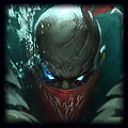 Pyke. Pyke was a harpooner on the port’s slaughter docks, the waterfront where sea monsters are hauled in and cut up for sale. He died on a hunt, because his own captain cut his lifeline to save the ship and left him in a monster’s mouth. Then he came back from the bottom of the sea as the Bloodharbor Ripper, an undead killer who works the docks at night, and the port answered the only way it knows how. It put a price on him.
A new name went up on the bounty boards: a thousand krakens for the infamous Bloodharbor Ripper.
From Pyke’s biography, on our Universe pages.
However, Pyke keeps a list of his own, and it is the same kind of list. His is the crew manifest of the Terror, the ship whose crew watched him drown, and he crosses its names out in red ink one killing at a time. So the port and the monster it is hunting run on the same rule, a name with a debt beside it, and that is the contradiction this piece exists to settle. Riot’s canon, the official stories it has written for this world, says the manifest is the city’s own justice turned back on the city. The same stories say that no harbor record can find a ship called the Terror, and that the list fills back up after the last name comes off. Both are true at once, and Beke Nidd, a midshipman on his first night in port, paid for it with his life. By the end of this piece you will know what the list is really for, and why a game that copies it has to let it be wrong.
Riot has shown nothing of the MMO, the massively multiplayer online game it is building in Runeterra, so this is a read of the stories, not a leak. What the stories show is a monster the city can’t disown, because each thing the port has instead of a government already has a place for him: the bounty board priced him, the slaughter docks made him, and the port’s own church claims his return as a gift from its god. Start with what the docks paid him.
The Docks Paid the Captain in Gold and the Cutter in Copper, and the Captain Who Cut the Line Wrote That He Had No Choice
Bloodharbor is named for blood the tide can’t clear, the biography has Pyke watching gold go to captains while cutters get copper, and the captain’s letter on his card calls cutting his line a necessity.
Bloodharbor is the stretch of the slaughter docks where Pyke started, and it is named for the blood that runs down its slips faster than the tide can wash it away.
As a youth, Pyke started out like many in Bilgewater: on the slaughter docks. All day, every day, monstrous creatures of the deep were hauled in for rendering in the butcheries that lined the waterfront. He found employment in a district known as Bloodharbor, as even the tide itself was not strong enough to wash away the red slick that ran constantly down its wooden slips.
From Pyke’s biography.

From MacGregan’s Killhouse to the renowned outfits at Bloodharbor, slaughter docks operate day and night to turn death into profit. Only the most successful captains can ever hope to run their own dock, so most are forced to haggle for the best deal before their prize begins to rot in the water.
Riot’s region text, Bilgewater: Carving Bays, shown above.
The money in that trade goes to the captains who bring the carcass in, not to the men who cut it up, and the biography has Pyke watching it go.
Over and over, Pyke watched heavy purses of gold being handed to captains and crews in exchange for the daunting carcasses that he and his fellows would hack into salable chunks. He became hungry for more than a few copper sprats in his pocket, and managed to talk his way onto a ship’s crew.
From Pyke’s biography.
A harpooner is the man who leaps onto a living sea monster to sink the tow-hooks by hand, which is the most dangerous job on the water, and that is the job Pyke got good at. Riot’s region text on harpooners says entire crews are built around one veteran and that few survive long enough for their reputation to become widely known. Pyke’s reputation did. The biography calls him the best harpooner a golden kraken could buy, a golden kraken being the port’s gold coin, and the catch he chased was the jaull-fish, a deep-sea leviathan so large our bestiary entry says it gets mistaken for an island.

For the hunters of Bilgewater, the jaull-fish is the most prized sea monster of all. Inside its cavernous gullet grow sacs of sapphilite, and the glowing blue oil rendered from them is coveted across Runeterra for sorcerous distillations. A single small flask can be worth a ship and its full crew ten times over. Harvesting it is lethal work: in the traditional manner of the Serpent Isles, harpooners hurl themselves at the beast to sink tow-hooks by hand, then cut into it while it still lives.
From our Jaull-fish entry in the Runeterra bestiary.


The Serpent Isles are the islands Bilgewater is built on, and the tow-hook method is theirs. Legends of Runeterra, Riot’s card game set in the same world, printed the beast as Jaull-fish with Pyke’s own verdict as its caption: “Ain’t nothin’ like a jaull-fish to show you who you can trust, and who you can kill.” The hunt that proved it is in the biography.
The captain lost his nerve, and cut Pyke’s lifeline. The last thing the doomed harpooner saw before the beast’s jaws snapped shut was the look of horror on his crewmates’ faces, as they watched him being swallowed alive. But this was not the end for Pyke.
From Pyke’s biography.
The card game printed the captain’s side of it too, as a letter on Pyke’s own card.
“...the visions are back again. I see his desperate eyes looking up at me whilst the jaull-fish closed its maw around him. We tried pulling, but the ship was too small, and the beast too big. I had no choice. I had to cut his line. I had to.”
- Blood-soaked letter
Flavor text on Pyke, Legends of Runeterra.
Read it the way a dock owner would. The ship was too small and the beast too big, so the man on the line was the cost of keeping the ship. Riot’s region text for the port’s uptown taverns states the rule outright: “the higher you climb, the less likely you are to drown.” The captain was the one standing higher, so the captain lived. Pyke’s recorded voice lines, spoken in Riot’s games, say the same thing from the side of the man in the water.
Pyke, on the docks’ rule
Pyke: “Captains always favor the ship over the crew.”
Pyke: “Nobody threw me a line.”
Pyke, when a Jaull-fish is played beside him
Pyke: “They won't see it comin'... I didn't.”
Recorded League of Legends and Legends of Runeterra lines, quoted as stored on RuneGrove. Tap a line to hear it.
It is not only captains who think this way. Bloodbait, a card printed alongside Pyke’s in the same card game, gives its caption to a Jagged Butcher, a member of the Jagged Hooks, one of the oldest of the dock gangs, and he assumes his own mates will finish him before a monster does.

“If it were up ta me, I’d have a jaull-fish take me afore them bloody things. Sooner go fast than be left screamin’ fer me mates to stick me while I’m eaten alive.” - Jagged Butcher
Flavor text on Bloodbait, Legends of Runeterra.
The transcript of Riot’s champion trailer for Pyke, The Ripper’s Revenge, is three lines long, and the first two are his accusation against the whole port: “The world saw me drowning... ...and did nothing!” The third is the warning the port already knew: “Never turn your back on the sea.”


The drowning was a transaction the port’s rules approve of, and everyone from the captain to the gang butcher knows the terms. Pyke’s answer was to keep the rules and change who pays.
Pyke Runs the Docks’ Ledger Backwards: a Name, a Price, and a Cut for Whoever Helps
The biography widens the list from captains to caulkers, first mates and bankers, The List card prices a name against a price, and Death From Below pays gold to the ally who assists, the docks’ economy in one button.
The card game’s card for the Slaughter Docks ends its caption on the joke the port lives inside: “The beasts are usually dead. Usually.” Pyke is the beast that wasn’t, and he came back to the docks on foot. Nobody noticed at first, because the biography says that “for so dangerous a place, the occasional red tide was nothing new.” Then the bodies started to form a pattern.

Captains from many ships were found carved up and left out for the dawn. Bar-room patrons whispered it was a supernatural killer, wronged at sea, gutting his way through the crew manifest of some damned ship called the Terror. Once a mark of respect and celebrity, the question “You a captain?” became a cause for alarm.
Soon it was the caulkers, too, and the first mates, merchant officers, bankers… indeed, anyone associated with the bloody business of the slaughter docks.
From Pyke’s biography.
The list widened in the direction the money goes, from the captains to the officers and bankers who share the purse. That is the bounty board’s logic with the columns swapped: the board prices a name by what its head will fetch, and Pyke’s manifest prices one by what its owner was paid. Legends of Runeterra put the rule on a card called The List, and its caption is a receipt: “You’ve got a name, and I’ve got a list.” Riot recorded the same exchange between Pyke and Sivir, a Shuriman mercenary who sells her blade by the job, and it is the whole argument in two lines.

He even kept the docks’ habit of paying whoever helps. In League of Legends, Pyke’s signature ability is Death From Below, the execution that lets him blink to a weakened enemy and kill them outright, and Riot’s own description of it ends with a clause no other executioner carries.
Pyke blinks to and executes low health enemies, allowing him to cast this spell again and granting additional gold to an ally who assists.
Riot’s ability description for Death From Below, on Pyke’s champion page.
A kill that hands a purse to whoever stood nearest is the slaughter docks’ economy in one button. The captain got the heavy purse for the carcass; the ally gets a cut for the corpse.  Nautilus, the drowned iron giant who walks the same seabed, is promised his cut in so many words. Pyke did not reject the port’s law. He is the only person in Bilgewater enforcing it against captains.
Pyke did not reject the port’s law. He is the only person in Bilgewater enforcing it against captains.
If that were the whole canon, the MMO would have an easy villain: a vigilante with a ledger, hunted by the board and hunting the board’s customers. Riot’s stories do not stop there. They say the list itself cannot be trusted.
No Harbor Record Has the Terror, and the Night the Last Name Came Off the List, Pyke Found a Midshipman on His First Night in Port
The biography says nobody can find the Terror in any harbor record, THEN, TEETH crosses off the last name and then finds Beke Nidd uncrossed, and Pyke’s level-two card says the manifest now describes him, not his crew.
Here is the first crack. The biography closes its account of the Ripper with a clause that says the ship on his manifest may never have existed.
Driven by memories twisted by the deep, Pyke has succeeded where many have failed—striking fear into the hearts of unscrupulous businessmen, killers, and seafaring scoundrels alike, even though no one can find any mention of a ship named the Terror ever docking in Bilgewater.
From Pyke’s biography.
There is no record of the Terror. The only account of that ship is the one Pyke carries, and the biography has already told you what the deep did to the man carrying it: the deep showed him “visions of all he had lost whilst others grew fat.” Riot’s short story THEN, TEETH, one night on the docks told from inside Pyke’s head, shows what a list written by that memory does when it runs out.
The story opens with one name left on the manifest. Mazier, the last name on the Terror’s manifest and an able-bodied sailor by trade, is already bleeding out on the planks, and Pyke is studying her face and matching it to the faces he remembers on the deck the day he drowned.
Long hair in high-sea wind. Dozens of faces on deck. Watching. Blue eyes. Mazier’s blue eyes, wide in disbelief.
Then, teeth.
An able-bodied sailor. Aye. She was there. She cut my line.
From THEN, TEETH, on our Universe pages.
Gulls shriek, their warbled cries caught on the wind, as Pyke finds Mazier, abled-bodied sailor, on the list. Red ink strikes her name from the parchment.
The last name on the Terror’s crew manifest.
That’s it. No more names, just a lot of red crosses. Where did I get all that ink...?
From THEN, TEETH.
The list is finished. Pyke is not, and the story gives him the thought in his own words.
A feeling gnaws at Pyke. Restless, unsettled, unsatisfied. The churning lurch of bile in his belly. He can’t be done. There were too many of them there, on the decks. Maybe he got the wrong manifest. Maybe it doesn’t even matter.
They let me die. So many hands. So many times.
From THEN, TEETH.
A heavyset man comes down the stairs to the moored ships with a flintlock, a white beard and cauliflowered ears, and Pyke’s assessment of him runs three lines: “Looks like a captain.” “Smells like a captain.” “Pyke needs to be sure.” He makes the man say his name, and gets Beke Nidd, a midshipman who says it is his first night in Bilgewater. Then Pyke checks the paper.
Pyke pauses to consult the manifest, one step from the bottom. All the red marks. All the crossed out names.
There. Beke Nidd. Midshipman.
Uncrossed. Clear as day. Must have had the paper folded wrong.
Beke Nidd. Yeah, I remember you. You were there.
The man gets half a sentence out.
“I’ve never seen you before! It’s my first night in Bilge—”
From THEN, TEETH.
The paper was not folded wrong. A page earlier the manifest had no names left on it. Now it has Beke Nidd’s, and the story shows the memory being rewritten to fit him: the same drowning replays, and where Mazier’s blue eyes were, the deck now holds “Beke Nidd’s crap-brown eyes, wide in disbelief.” The face on the dock becomes the face on the ship. Riot printed the verdict on the upgraded second version of Pyke’s card.

First he came for his old crew, then other captains, then cheaters, gamblers, and drunkards. Pyke’s craving for revenge slowly gave way to a newfound lust for murder. Now, instead of only listing those who once wronged him, his growing manifest only illustrates what Pyke has become.
Flavor text on Pyke (level 2), Legends of Runeterra.
The card game’s reveal video for him ends on the same line his victory bark uses: “More names off the list! More names on it!” Ekko, a kid from the undercity of Zaun who can rewind time, asks him the obvious question across the board, and the answer is the closest Pyke comes to admitting what the list is for.
Ekko, facing Pyke across the board
Ekko: “There's gotta be more to you than just killing, Pyke.”
Pyke: “They cut the rest of it loose, like they did to me.”
Pyke, winning and losing a game
Pyke: “More names off the list. More names on it!”
Pyke: “This list just keeps getting longer...”
Pyke, to an ally and to himself
Pyke: “You're not on my list yet, keep it that way… Oh, wait, I wrote it on the back.”
Pyke: “The crew on The Terror watched me get swallowed by a monster.”
Recorded Legends of Runeterra and League of Legends lines, quoted as stored on RuneGrove. Tap a line to hear it.
So both halves of the contradiction stand in the same canon. The manifest is the port’s own ledger, price for price. And the manifest cannot be trusted, because the hand that keeps it is the memory the deep twisted, and it fills in names to keep the account open. Beke Nidd is the cost of that: a midshipman who paid for a ship he was never on, on his first night in port.
Bilgewater’s Own Priestess Calls the Ripper a Gift From Her God of Motion. He Says Her Sermons Damned Him.
The Will of the Dead has Illaoi credit Pyke’s return to Nagakabouros, the god of perpetual motion, while Pyke’s recorded line says her sermons damned him, so the port’s church and its bounty board both claim him.
The second crack is stranger, because the port’s own church claims him.  Illaoi is a priestess of Nagakabouros, the god of life and motion worshipped by the Buhru, the native people of the Serpent Isles. Her rank is Truth Bearer, the priest who leads that faith. Riot’s region text defines the god in one line.

Central to Buhru culture is Nagakabouros—god of life, growth, and perpetual motion. Also known as the Mother Serpent, the Great Kraken, or the Bearded Lady, she is commonly depicted as an enormous, monstrous head with many spiraling tentacles.
Riot’s region text, Bilgewater: Nagakabouros, shown above.
Illaoi’s creed, in Riot’s short story The Will of the Dead, is four sentences long: “Life is motion. To live fully is to change; to change is strength. The living can change. The dead cannot.” In the same story, looking out over a graveyard on the Shadow Isles, Runeterra’s haunted islands of the restless dead, she remembers having brought motion to the dead before, and names him.
She’d brought motion to beings trapped between life and death before. The Bloodharbor Ripper, Pyke, was one of them. But his grace had been given to him by Nagakabouros, and the Goddess had no part in Yorick’s domain.
From The Will of the Dead, on our Universe pages.
Read that against the manifest. The god of perpetual motion, whose priestess says the Goddess “had no sympathy for those who carried on as before,” is credited with returning a man who replays one drowning on a loop and keeps a ledger that cannot close. Riot recorded Pyke’s reply to her.
Pyke, attacking Illaoi
Pyke: “Your sermons damned me, Illaoi.”
Pyke, when an Abyssal Eye is played beside him, and when he comes back
Pyke: “I remember those eyes... watching me die.”
Pyke: “Death keeps spitting me right back out.”
Recorded League of Legends and Legends of Runeterra lines, quoted as stored on RuneGrove. Tap a line to hear it.
Riot’s region text for the port’s floating graveyards says the dead in Bilgewater are given back to the ocean. Pyke is the one the ocean gave back, and the port has filed him under both of the categories it owns: a price on the board, and a grace from the god. Neither file says he is wrong. That is the tension the canon leaves standing, and it is the one a game has to build on.

In Bilgewater, the dead are not buried - they are given back to the ocean. The port’s graveyards consist of innumerable floating buoys, below which are sunk the corpses of the dead.
Riot’s region text, Bilgewater: A Watery Grave, shown above.
The Ripper an MMO Can Use Is Not a Bounty You Collect. He Is a List That Adds Your Name for the Purse You Took.
Riot has shown nothing of the MMO; the canon rules out a collectable bounty, supports a manifest you join by taking a captain’s purse, and insists the list is sometimes wrong.
Nothing here is announced. Riot has never shown a zone, a boss or a system from its MMO, and what follows is a read of what the canon would force on one. What it forces is a Pyke who is not a bounty.
The obvious version writes itself: a thousand-kraken contract on the board, a hunt through the Bloodharbor slips at night, a kill and a purse. Riot’s stories have already tried that. The port put the price on him, the biography says he “has no intention of stopping,” and his own respawn line in League of Legends is “I ain’t finished yet.” A bounty you can complete is the one thing the source refuses.
The version the canon supports has two ledgers, and a player’s name can move between them. The public board is the law of the hub, the city where players gather between adventures, and it is the thing we have already argued a Bilgewater hub would be built around. The manifest is the private one, and the trigger for landing on it is the purse. Run a hunt as the captain, cut a line to save the ship, take the dock’s cut on a carcass you didn’t bleed for, and the canon says that is exactly the profile the Ripper hunts: captains, first mates, bankers, “anyone associated with the bloody business of the slaughter docks.”

There is a commonly accepted truth in Bilgewater: the higher you climb, the less likely you are to drown. Those with money in their pocket will frequent the uptown taverns, enjoying fine drinks and merry conversation—even though, in a day or two, they will be back down at the wharf, wrangling a crew for their next dismal voyage.
Riot’s region text, Bilgewater: High And Dry, shown above.
That gives the docks a real economy with a real cost, which is what the region text describes anyway: the higher you climb, the less likely you drown, until the thing climbing after you is the one you left in the water. A stalker keyed to profit instead of a quest flag can’t be farmed, because the way you would farm him is the way you get on the list.
A stalker keyed to profit instead of a quest flag can’t be farmed, because the way you would farm him is the way you get on the list.
Then build in the part the canon insists on: the list is sometimes wrong. Beke Nidd’s death is the horror the stories keep returning to, and a system that only ever hunts the guilty would be kinder than its source. A name can land on the manifest because someone else’s memory put it there, and a player who never went to sea still hears “You a captain?” in a tavern. Killing him hands the assist a cut, which is how Death From Below already pays out, and taking that cut is the transaction that writes the next name. That is the loop, and it closes on the player the way it closed on the port.
That answers the contradiction this piece opened on. Bilgewater’s law is a list of names with prices. Pyke is that law with the prices reversed, kept by a memory that adds names to stay open, and blessed by the port’s own god. He can’t be a monster the city hunts, because the canon already shows what happens when it tries: the board gets one more name, and so does the manifest. The Ripper an MMO can use is the list. The trick is letting it be wrong.
A city that prides itself on hunting monsters now finds a monster hunting them, and Pyke has no intention of stopping.
— Pyke’s biography, League of Legends, the biography
Would You Take the Captain’s Purse?
If Riot’s MMO put a Pyke on the docks whose list you can only join by taking a captain’s purse, would you take the purse?
Read Next


None of this is confirmed. Sources: Pyke’s biography; the short stories THEN, TEETH and The Will of the Dead; the Bilgewater region galleries; our bestiary and Atlas entries; Legends of Runeterra cards and recorded lines; and Riot’s Pyke trailer and reveal video, all Riot canon. A RuneGrove lore read.


