
The Ships Break the Horizon at Sunrise and the Only Weapon in the House Is a Rake
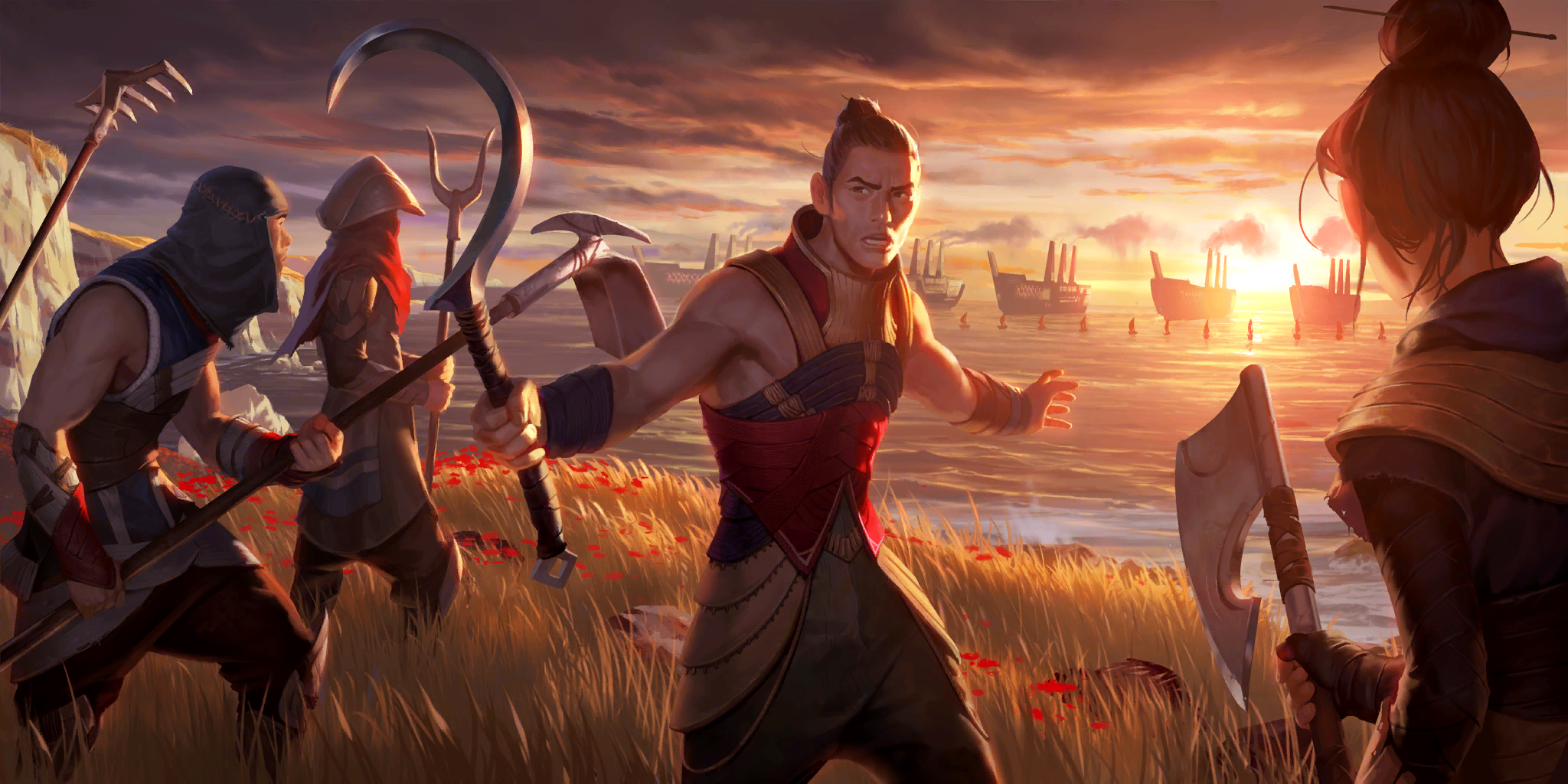
Coastal Defender is a farmer's burned letter home, and the card under it models a village levy rather than a soldier.
The clearest thing Riot has ever written about living on Ionia's shoreline is printed in small type on the back of a common card. It is not a legend or a proclamation. It is a farm letter, and it was recovered burned.
My dearest Kay,
They arrived this morning in a line of ships that broke the horizon and blotted out the sunrise. Their machines set fire to the Silver Plains, and now a thick smoke crawls through the summer air. We can stand by no longer. Rake or shovel, scythe or sword, today we must go to meet our destiny.
Know that I love you and our home more than I have words to write.
Charred letter, flavor text on Coastal Defender, illustrated by SIXMOREVODKA.
The card underneath the letter is a 4-cost common with a 2|6 body and one line of rules: when you summon another ally, give me +2|+0 this round. That is a levy, written as a game mechanic. The farmer does not get better at fighting. The farmer gets braver every time a neighbor shows up beside them, and the body is built to absorb a charge rather than to win a trade.


The rake is not a poetic touch. It is policy. Riot's own gallery copy is blunt about why a farmer is the one holding the line:
Though the birthplace of many specialized forms of martial arts, Ionia maintains no standing armies. Rather, the ways of battle are tied to differing philosophies, passed on with reverence and care.
Ionia: The Great Monasteries, official region gallery.
So here is the question this card leaves sitting on the beach. Every open world you have ever played fills a coastline like this with things you kill for parts. Ionia's coastline is already fully written, down to the animals, and almost none of it is stock.
Nothing Out There Is Wildlife. It All Has a Job.
The region gallery calls the arrangement interdependence, and the cards agree: a village bearer, kept river otters, and a glade that checks where you are from.

The people of Ionia's many provinces have always seen themselves as part of the natural world, and adapted their ways to live alongside all manner of fantastical flora and fauna. To outsiders, such a close relationship may appear strange, but it is through this interdependence that both the land and its inhabitants have thrived for countless generations.
Ionia: Life As One, official region gallery.
Interdependence is a load-bearing word. It means the animals are not scenery you walk past on the way to the quest giver, and it means they are not a resource node either. They are the other half of the arrangement.
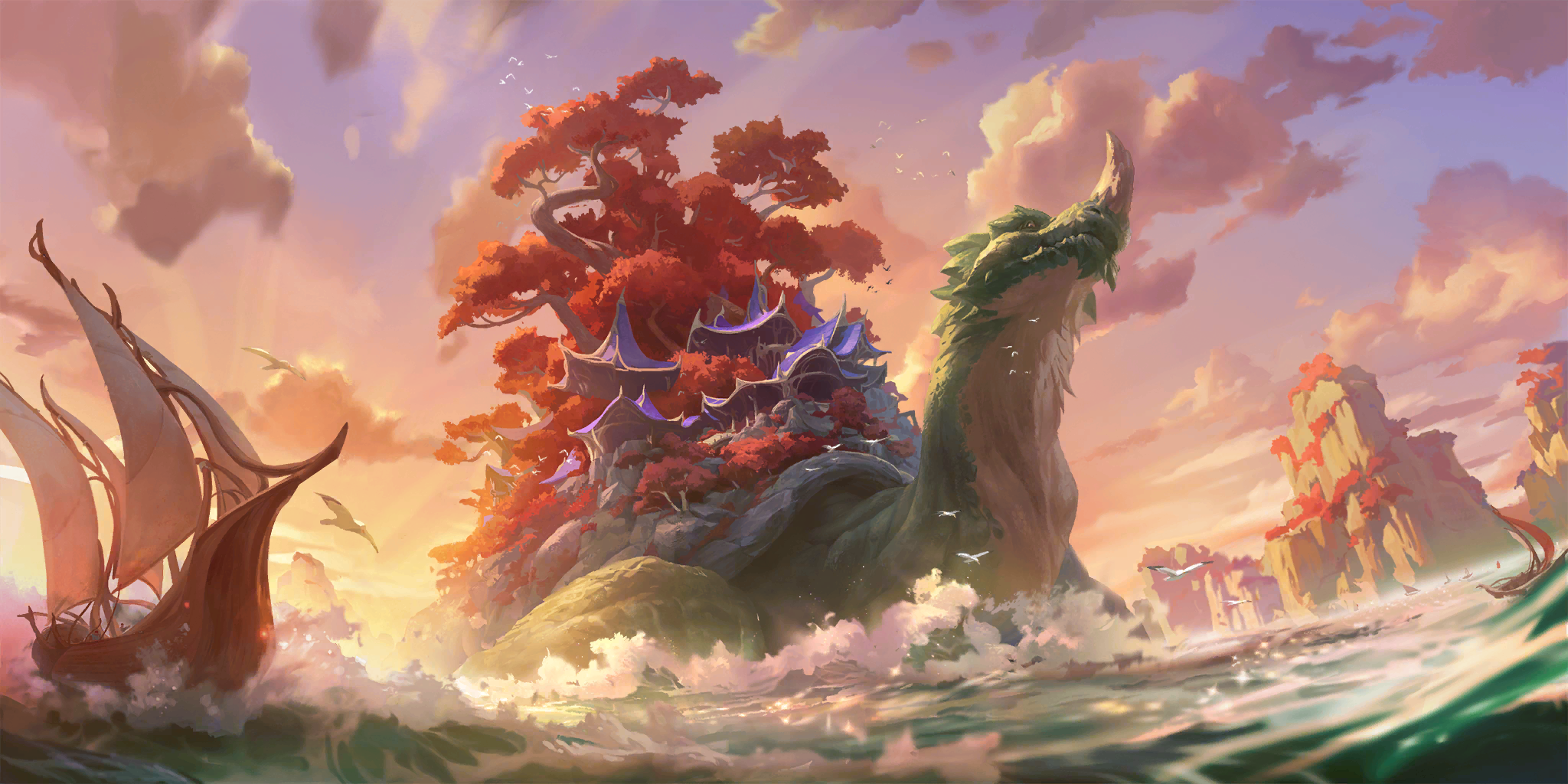
The most expensive collectible unit Ionia has makes that concrete. Heisho costs 10 mana, more than anything else the region can field, and he is not a boss. He is infrastructure.
For the inhabitants of this Ionian village, Heisho is both honored caretaker and friend. Having carried their homes on his back from time immemorial, they can trust their village bearer to seek peaceful shores in times of trouble.
Flavor text on Heisho, Shell of the World.
Read that against the letter and it stops being cute. "Times of trouble" is the morning the ships came, and the village bearer is the evacuation. If the family the farmer was writing to got out, this is how.
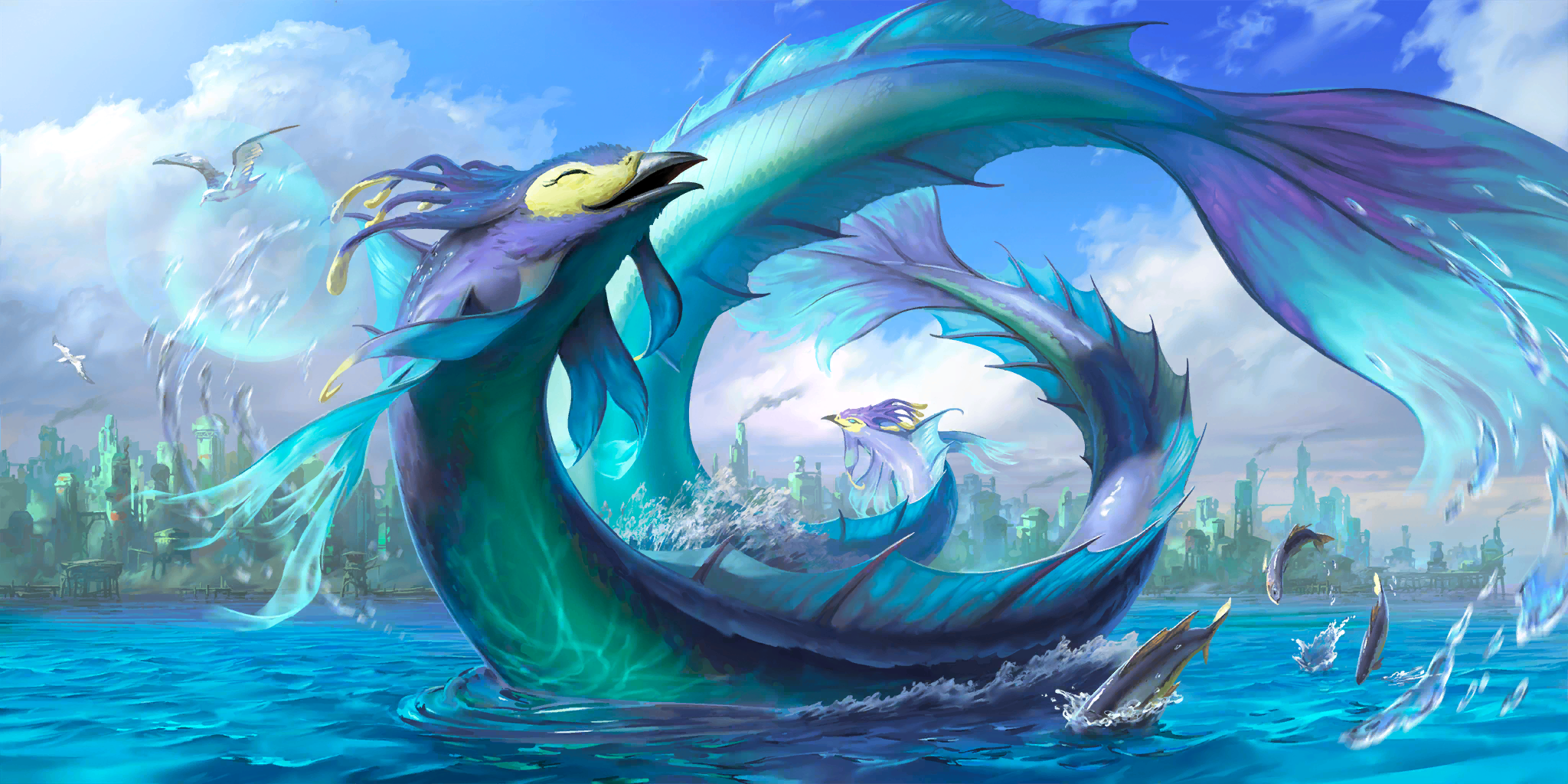
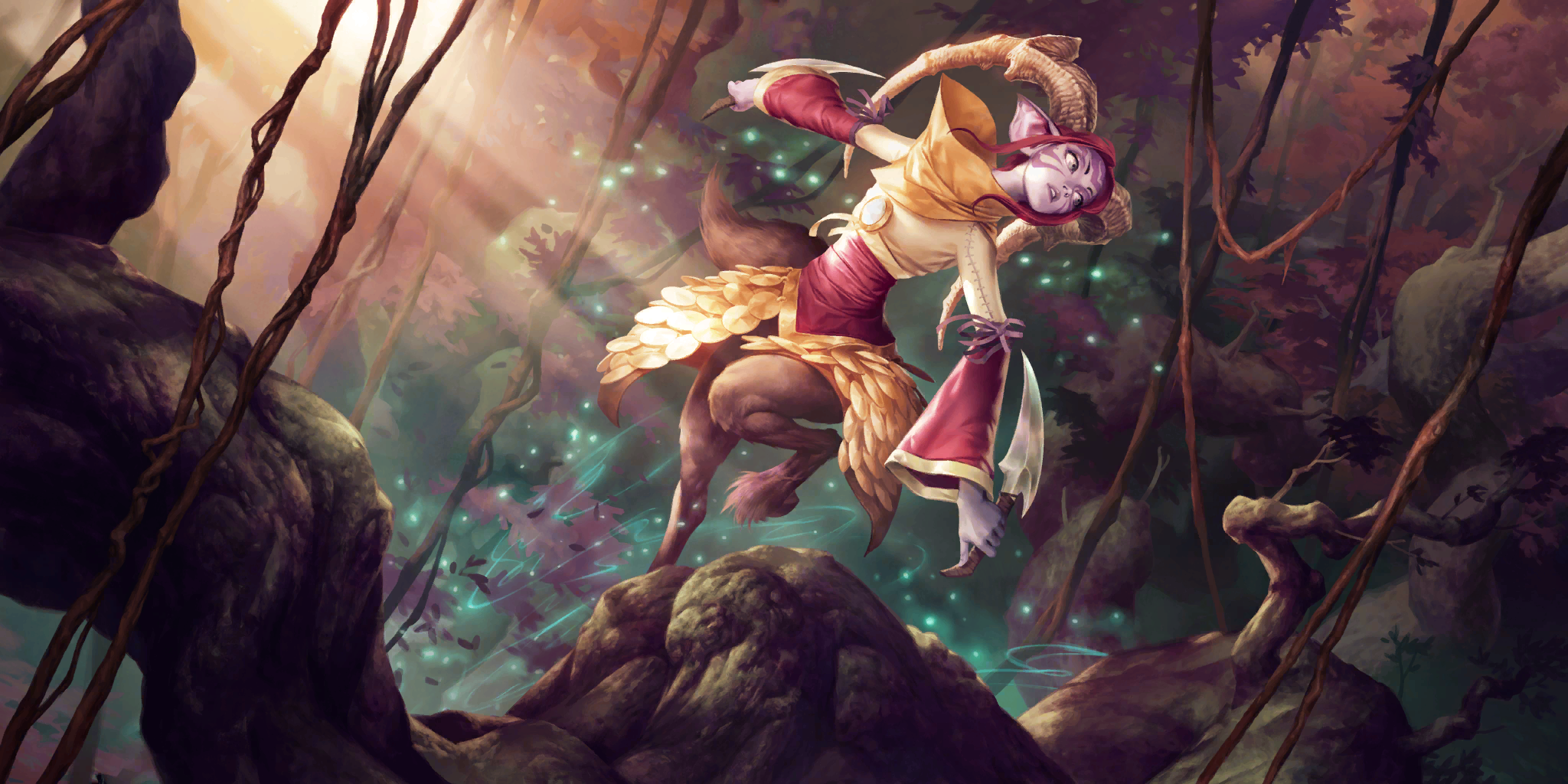
The pattern holds all the way down the size chart. Our bestiary entry for the ottrani, the otter-like animal that lives along Ionia's rivers, records that they are "well loved by the people of Ionia" and that "some Ionians keep them as companions, drawn to the same easy temperament that defines the creatures in the wild." That is a pet, not a pelt.
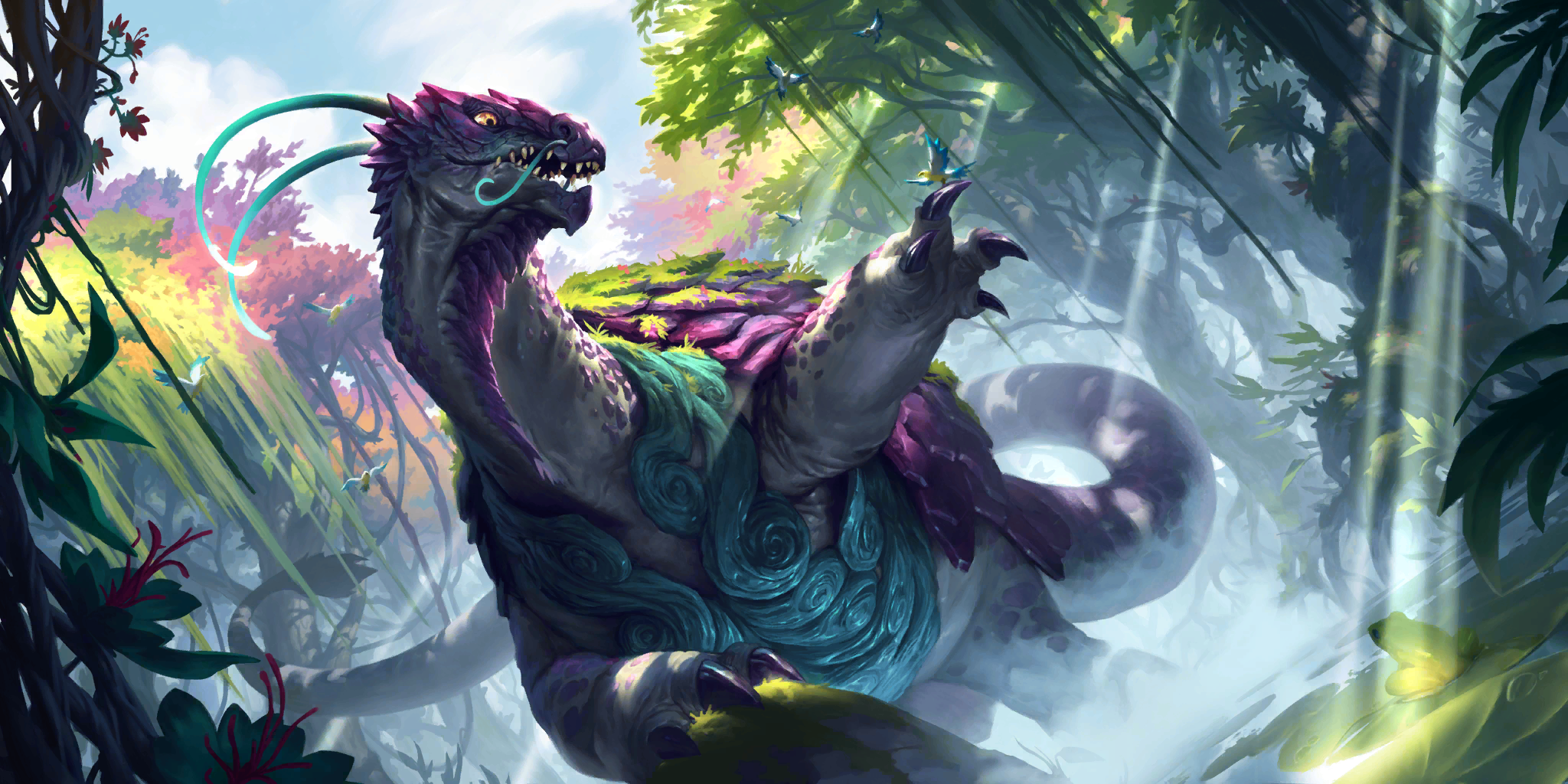
And the glade has an immune system. The Greenglade Caretaker greets an unfamiliar face with a line Riot chose to end mid-thought: "The glade protects its own. And you--you are not from here..." Her recorded lines say the rest.
The Greenglade Caretaker, recorded for Legends of Runeterra. Nothing here is a war cry. It is a landowner establishing who you are.
Greenglade Caretaker: “These woods protect their own.”
Greenglade Caretaker: “Who would trespass here?”
Greenglade Caretaker: “My life for these lands!”
Greenglade Caretaker: “My grove...”
Voice lines quoted verbatim from our Legends of Runeterra audio records. Tap to play.
The Only People Riot Wrote Putting a Price on Ionian Animals Arrived by Boat
Two flavor lines and one duelist put a value on Ionian wildlife. All three speakers came from somewhere else, and the animals decline the transaction.
If Ionia had a hunting economy, its canon would be full of Ionians appraising Ionian animals. It is not. Search the flavor text and you find the appraisals, but every one of them is signed by a visitor. Riot has written three outsiders who looked at Ionian wildlife and saw stock, and not one of them was Ionian.
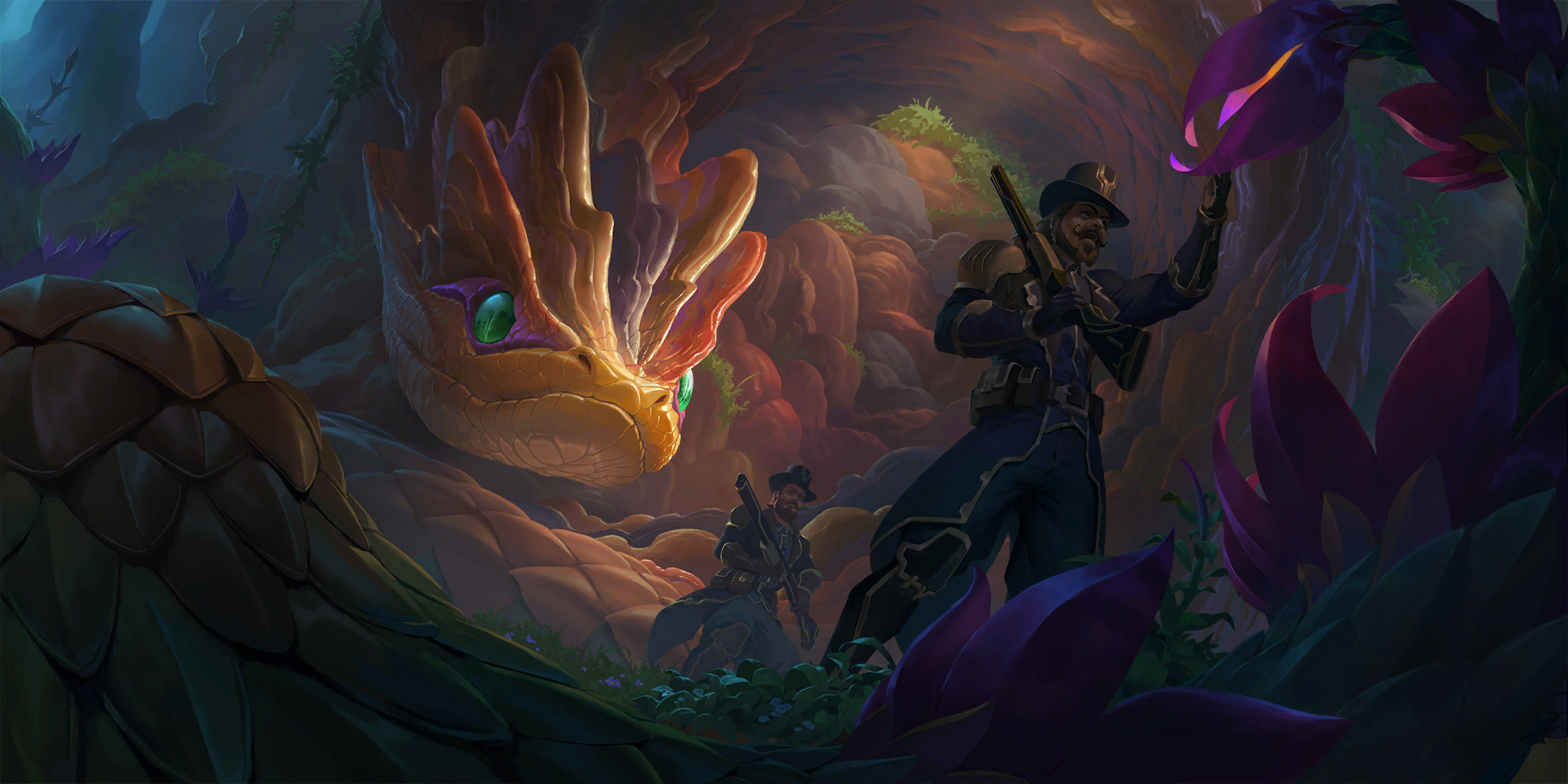
The line on Beguiling Cobra belongs to someone Riot labels only as a Piltovan Poacher: "Think these flowers are worth anything? And don't call me crazy, but do they look like they're... dancing?" He is standing in front of a seven-cost epic snake that is pretending to be a flowerbed, and he is doing arithmetic.
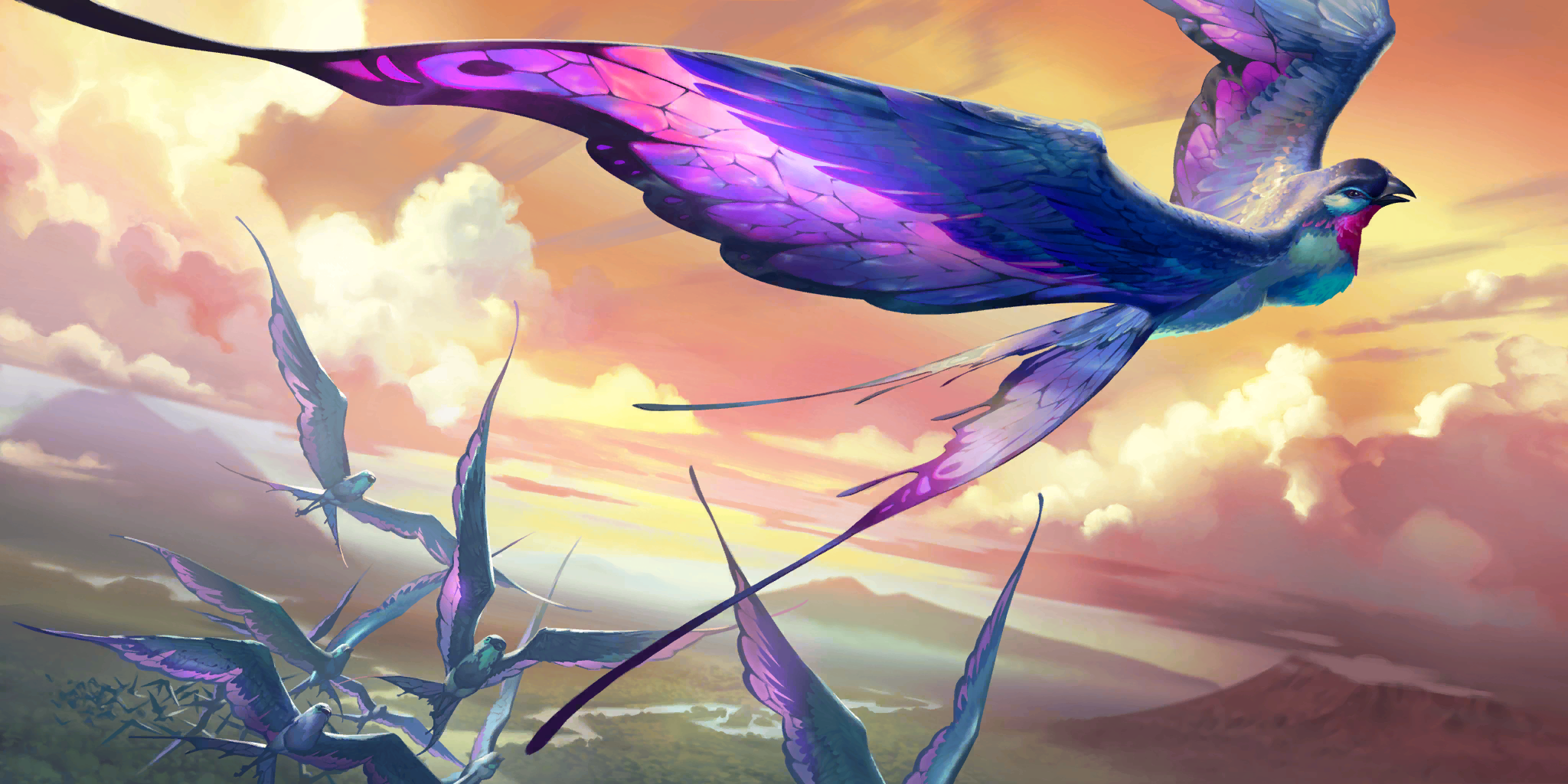
Royal Shimmerwing is quoted by someone called Anura: "In these jungles, I've consistently found the most beautiful specimens to be the deadliest predators." Note the noun. Specimens. That is collector's language, and it is the vocabulary a loot table runs on.
Riot has written three outsiders who looked at Ionian wildlife and saw stock, and not one of them was Ionian.
The third one gets his own section, because he came with a fleet. Before that, look at what happens when a genuine duelist walks up to the biggest predator on the water and asks it politely to be a monster.
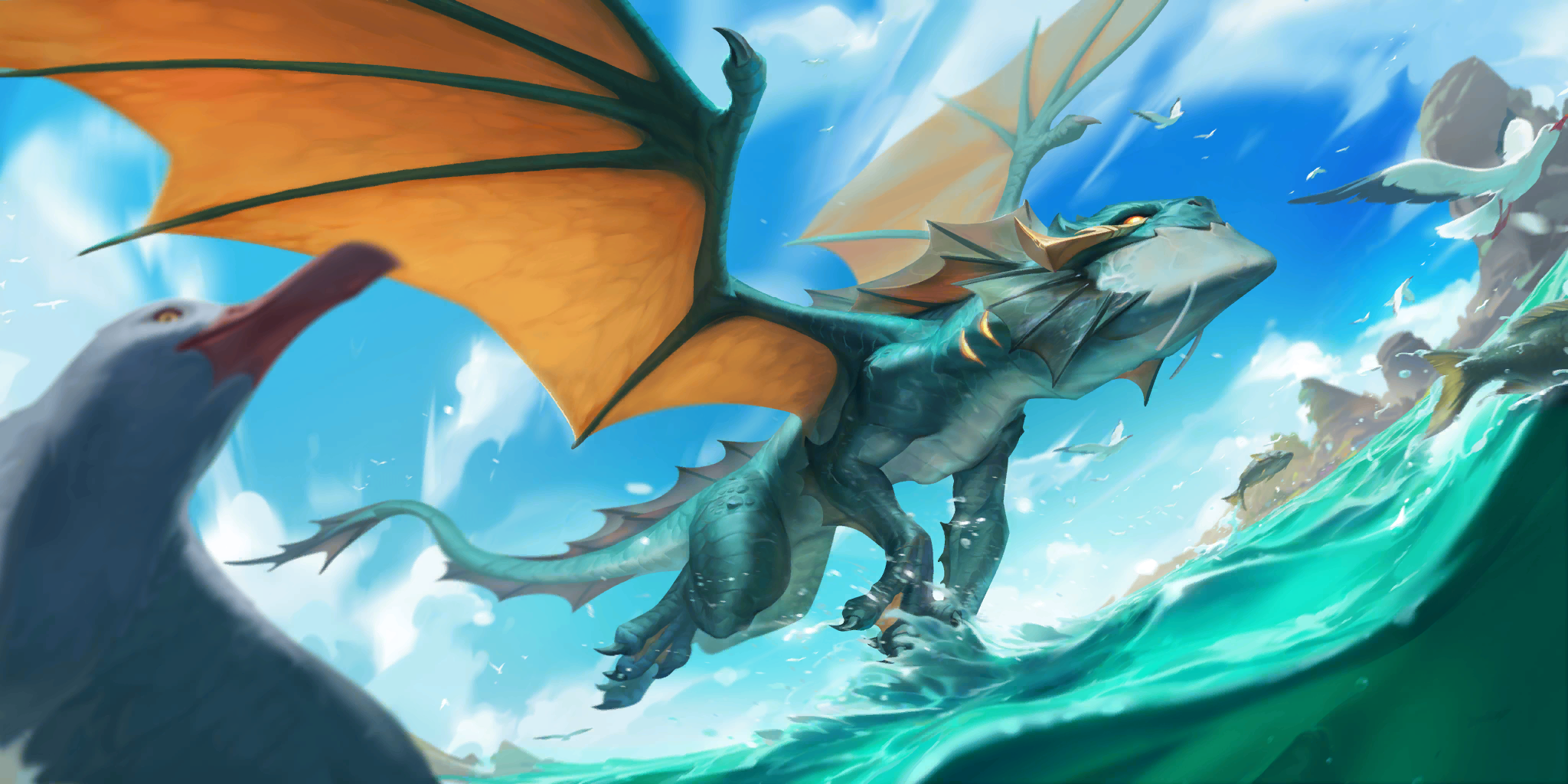
A grand beast you are! There is joy in the skim of your claws over the waves. Should you ever decide to prey on more than fish and seabirds, I would be delighted to face you.
Nilah, flavor text on Ocean Drake. Our profile of her is at Nilah Isn't From Bilgewater.
The drake declines. It eats fish and seabirds, and the invitation to escalate goes nowhere. Riot wrote a fight into that card and then had the animal not take it, which is the most Ionian thing on the board.
Long Before Noxus, Another Fleet Landed on This Coast to Take Something
Ivern the Cruel sailed east for the source of magic, cut through a dozen coastal settlements, felled the God-Willow, and was rewritten by it on the spot.

All aspects of life there hang in a balance, with still so much left to be discovered and explored. Those who call this vast continent home strive to find harmony among the diverse races and habitats, far older than most others on Runeterra.
Ionia: The First Lands, official region gallery.
Someone came a very long way for that. Ivern the Cruel was, in his biography's words, a fierce warrior of the ancient Vorrijaard, and he put a fleet to sea heading east in search of the land where the sun first rose, "from where it was said that all magic flowed into the world." If he could seize that, he could break any enemy. His ships passed out of memory back home. They did not sink.
In truth, Ivern the Cruel landed on the shores of Ionia. After cleaving through a dozen coastal settlements, he and his warriors discovered a sacred grove known as Omikayalan, "the Heart of the World".
From Ivern's biography on RuneGrove.
What met him in the grove was the ecology. The biography describes chimeric beings, half human and half beast, coming at his warriors again and again beneath the branches. Those are the vastaya, whose ancestors the Vastayashai'rei were "enlightened mortals who drew the power of the spirit realm into themselves." He pushed through them anyway and found the God-Willow, and the biography is precise about what he understood in that moment: "It was magic like nothing he had ever felt before, and it was clear these inhuman creatures would die to protect it."
So he swung an axe at it until it came down.
The great tree fell. In a riot of life-energy, Ivern the Cruel was instantly undone.
Ivern - Biography, RuneGrove.
He did not die and he did not loot the corpse. He woke up taller, with bark on his limbs, carrying the tree's magic in place of his own, and spent the rest of a very long life apologizing to the forest. Our encyclopedia entry for the God-Willow keeps the ledger short: "The tree was felled by a cruel warrior who cut it down, and as the God-Willow died its magic remade him." The only thing anyone has ever successfully taken off an Ionian living thing is a new body.
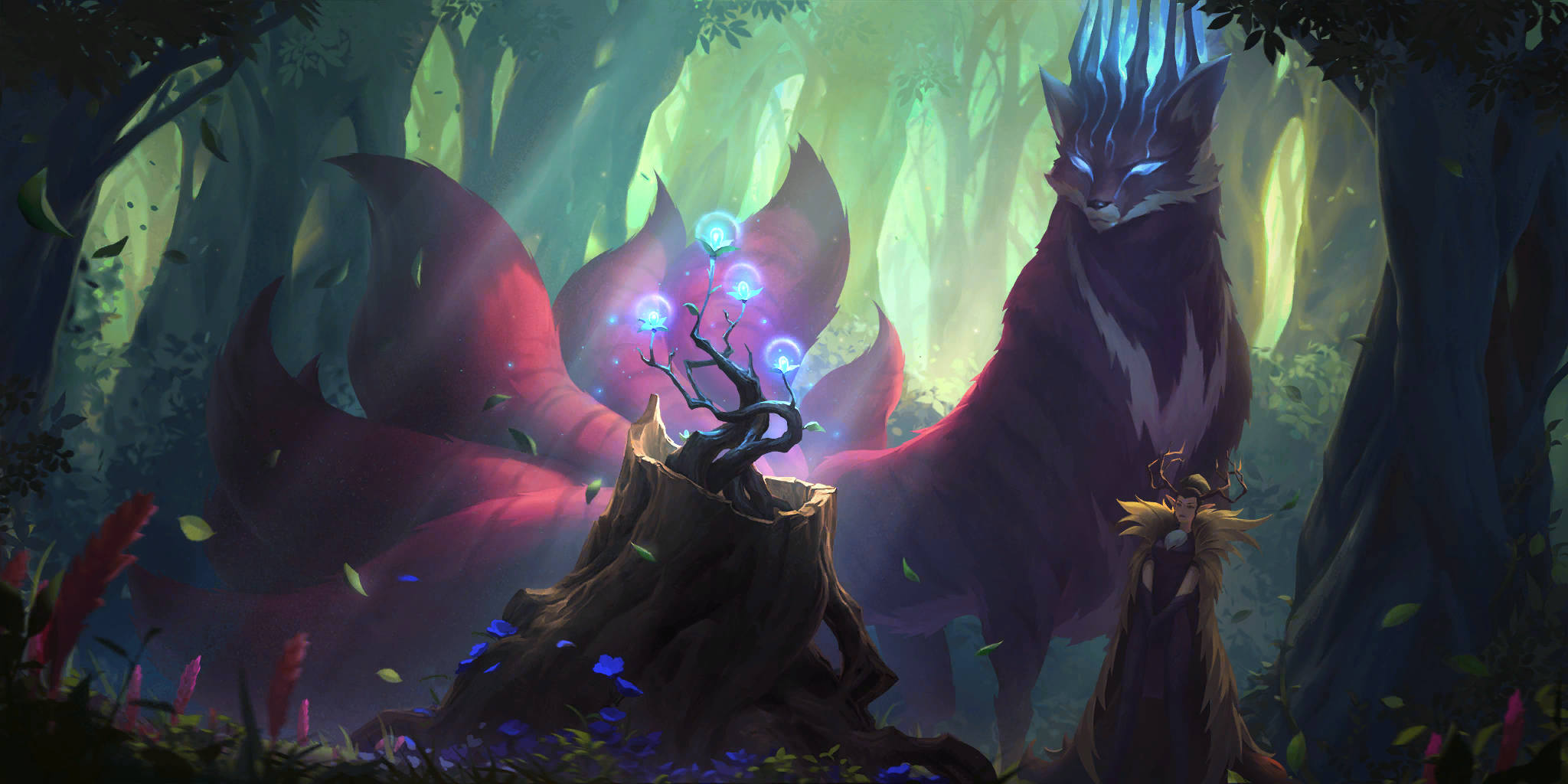
Legends of Runeterra put the aftermath on a landmark card. God-Willow Seedling reads: "Once, the God-Willow grew within Omikayalan. What springs forth from that place now may be stronger, may be weaker. What matters is that it is new." The tree Riot let a player cut down is the one tree in the setting that regrows into something the player does not control.
The only thing anyone has ever successfully taken off an Ionian living thing is a new body.
The Wildlife Has a Combat Record, and a Noxian General Filed Part of It
A Legion general logged an Ionian wind dragon flattening his brigade, the blastcones added an attack state to a retreat instinct, and Ionia's oldest magic fought a war wearing animal shapes.
The reason this matters for an open world is that Ionia's fauna is not passive about any of it. Riot has been quietly building a service record for these animals across three card sets, and the most useful entry in it was written by the losing side.
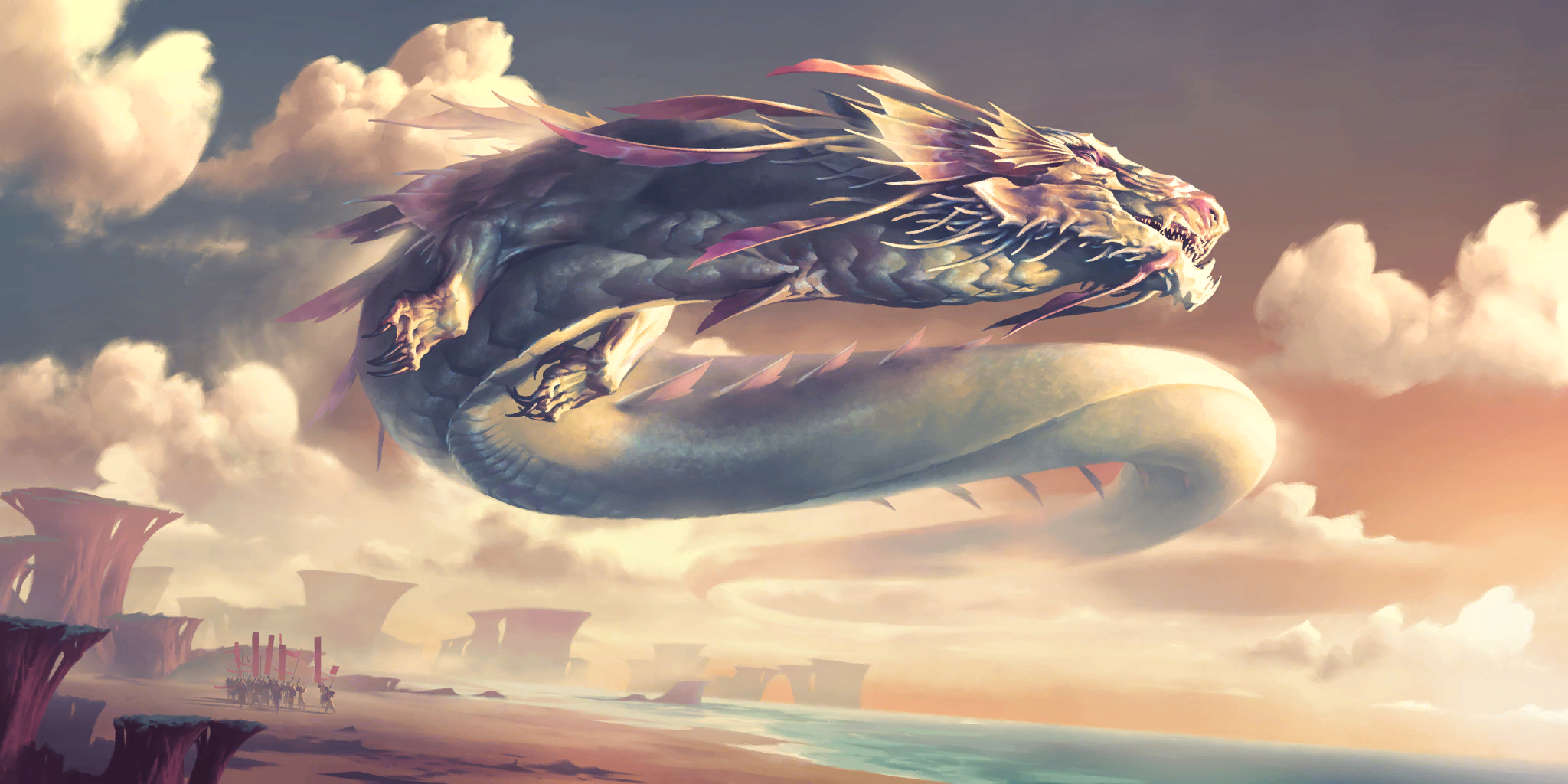

The sky itself heaved as coils of clouds and powerful winds flattened our brigade. We tried to follow it, but who can chase the wind?
A Legion General, flavor text on The Empyrean.
A Noxian officer wrote that. Not a monk, not a mystic, an invader filing a report on an animal that took a brigade off the board and could not be pursued. Ionia does not need to field a standing army in the sky because it has one.
Lower down, the flora learned. Blastcone Seedling is written as an escalation ladder in three pieces: "The Blastcone Seedlings are shy creatures, and while they will retreat first and foremost, if threatened..." and then the card splits into two states, one that stands its ground and one that attacks. The default is still retreat. The other options were added.
And the oldest version of this is a shapeshift. Our bestiary entry for the scaled snapper records a vision granted to the swordsman Yi in which the Vastayashai'rei "bent low and sprang forward into the shapes of scaled snappers, vulkodalks, and wolves to make war on a charging host of giants." When Ionia's oldest magic went to war, it did not summon animals. It became them.
Ionia Won at the Placidium, and Its Own Gallery Admits What That Bought
The stand that saved the First Lands is also the moment Ionians started asking whether the balance survived it, and the gallery caption says so out loud.

The letter never names who is on the ships. Noxus is the only power that ever reached Ionia in a line of vessels with war machines, and our entry on the Placidium of Navori records the inland version of the same morning: this is where "rumors of foreign invaders sighted off the coast first began to unsettle the people." Xan Irelia had left her village to study silk dances there.
Then the entry records what the victory did: "word of the great stand taken at the Placidium inspired villages across Ionia to send their able-bodied to the fight." That sentence is the rules text on Coastal Defender. When another ally shows up, the farmer gets stronger. Riot wrote the mechanic and the history to say the same thing.

It was at the Placidium that the people of Ionia finally took up arms against their Noxian enemies. But the cost of that day's victory was immense, and some now question if fighting back was the right decision, since the harmonious balance of their homeland may have been lost forever.
Ionia: The Great Stand, official region gallery.
That is the admission the whole piece turns on, and it is Riot's own copy, not a fan reading. Ionia beat the invasion by learning to kill, and its own canon is not sure the trade was worth it. Noxus answered the defeat by grinding the war down into attrition and, as our Placidium entry puts it, exploiting "Ionian compassion through conscripted child soldiers such as Shieda Kayn."
Ancient Ionia
The first fleet
Ivern the Cruel lands on the shores and cuts through a dozen coastal settlements.
The same day
The tree falls
He fells the God-Willow and is instantly undone by it.
Generations later
The letter
Ships break the horizon, machines burn the Silver Plains, and a farmer writes to Kay.
The Great Stand
Ionia takes up arms
The people finally fight back at the Placidium of Navori, and win.
After
The question
Some now ask whether fighting back was the right decision at all.
Riot has a trailer for what Ionian protection is supposed to look like before it curdles into that. Our page on Protectors of Ionia describes it as a celebration of Karma and Shen, and of "a vision of protection that isn't about military might or political power, but about the vigilant maintenance of harmony."


Watch where it ends up anyway. Two guardians, a stand of red trees, and a line of shapes walking in across the stone.
What a Hunt on This Coast Would Have to Be
Reputation instead of respawns, a hub that sails away from trouble, and a grind pointed at the people holding the price list.
None of this makes Ionia unplayable. It makes one specific loop unplayable, and the loop it breaks is the cheap one.
| The default coastal zone | Ionia as Riot already wrote it | |
|---|---|---|
| The fauna | Respawning packs sorted into level bands. | Named residents with jobs: a village bearer, kept river otters, a territorial glade guard. |
| Who is hostile | Everything, on sight, forever. | The glade asks first. "Who would trespass here?" |
| The drop | Hides, meat, crafting reagents. | Nothing canon puts a price on. The one recorded harvest rewrote the harvester. |
| The apex encounter | A world boss on a timer. | A creature who carries a village and leaves when the fighting starts. |
| What you grind | Kill count. | Standing with a place that already has an opinion about where you are from. |
| What Riot has said about any of this | Not revealed | Not revealed |
The interesting version is already sitting in the canon. Standing replaces kill count: the Greenglade Caretaker opens with a question about where you are from, so let the answer change over a hundred hours instead of never. Hubs move: a village riding Heisho relocates when the fighting reaches it, which turns "the quest hub moved" from a bug into the setting's oldest survival habit.
And there is an obvious target for anyone who wants something to kill. Riot has already stocked the coast with people who came to appraise it. The poacher in front of the cobra is doing exactly what a player farming a spawn does, and the card is drawn from the snake's point of view.
Ivern, in League of Legends, several thousand years after the axe. He is the only person in this story who has been on both sides of it.
Ivern: “Hunters overrun the forest.”
Ivern: “Hunters on the prowl, run and hide!”
Ivern: “Harm revisits those who harm.”
Voice lines quoted verbatim from our League of Legends audio records. Tap to play.

Which brings it back to the letter. The farmer picks up a rake because Ionia has no army, walks toward ships that are already burning the fields, and signs off by saying they love their home more than they have words for. That is the emotional contract of the place. A game that hands you a skinning knife on the same beach is not adding content to Ionia. It is arriving in the same boat.
Would You Hunt Here?
The coast is written as a neighborhood. Vote on whether a game should let you farm it anyway.
Should a Runeterra MMO let you hunt Ionia's animals for drops at all?
Read Next
Two more pieces on how Runeterra already prices a hunt, and one on the duelist who asked the drake for a fight.


Nothing here is confirmed. Sources: the flavor text of Coastal Defender, Heisho, Beguiling Cobra, Royal Shimmerwing, Ocean Drake, The Empyrean, Blastcone Seedling and God-Willow Seedling in Legends of Runeterra; Ivern's biography; our Ionia region galleries and bestiary entries. A RuneGrove lore read.


