

Why Locke Is the Blueprint
Every MMO needs a class that hunts the things other classes run from. Runeterra just handed Riot a ready-made one. His “Back from the Brink” cinematic is a two-minute pitch for the fantasy: track a demon through a cursed town, trap it, and put it down — even when the demon is wearing the face of a possessed  Vayne.

Runeterra Runs on Demons
The reason a Demon Hunter feels inevitable isn’t really Locke — it’s that Runeterra is built on demons. They’re immortal spirits from the spirit realm, each one feeding on a single negative emotion, and they wear whatever face gets them closest to their prey. You can’t truly kill one, either: beat a demon in the physical world and it just slips back to the spirit realm. To put one down you need a spirit-realm weapon — or Demacian petricite, the magic-dampening stone that’s one of the only things able to actually wound them.
We went deep on where demons come from, how they rank up, and how you kill one in our full breakdown — worth a watch for the whole picture:


Here are a few of the full demons already prowling Runeterra — exactly the kind of quarry a hunter class would exist to face:

Evelynn
Wears the beautiful façade of a human woman to lure victims close — then unleashes her lashing true form and savors their suffering. The exact demon Locke corners in his debut story.
Feeds on Agony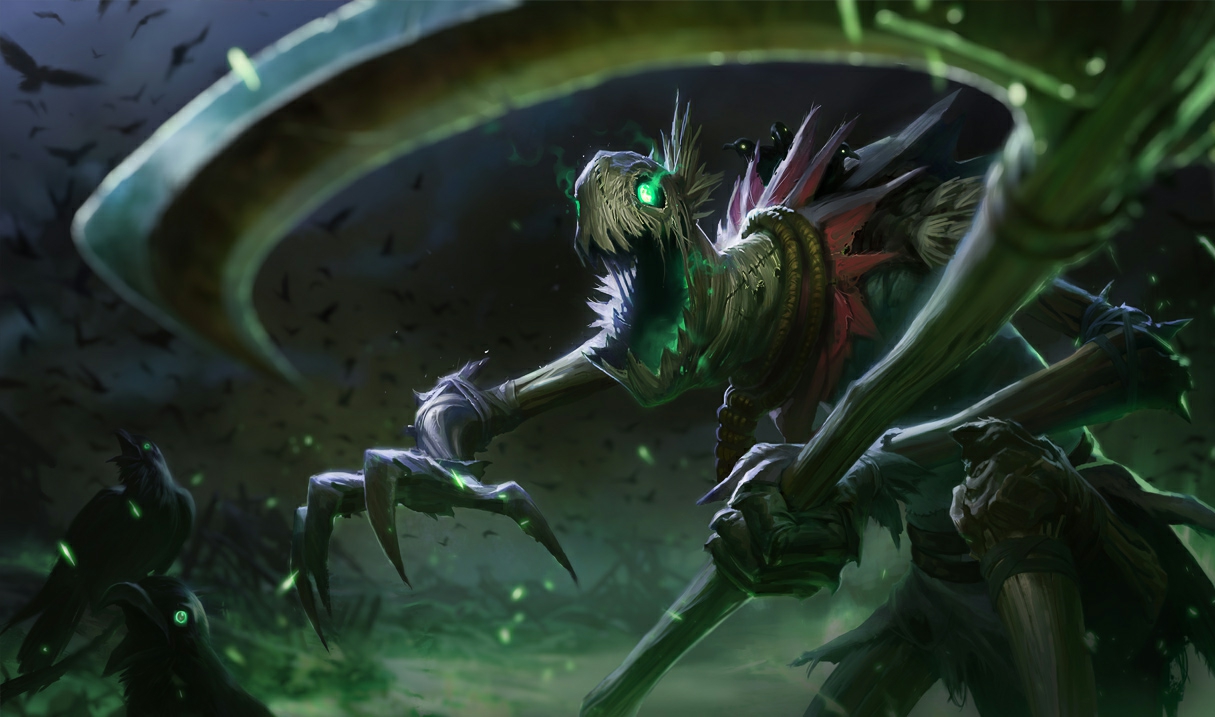
Fiddlesticks
The first of the Ten and fear itself given form — an ageless horror that wears a different nightmare in every region, growing stronger on every terror it harvests.
Feeds on Fear
Tahm Kench
A demon of greed and indulgence who travels Runeterra's waterways, all charm and appetite, feeding on the misery of everyone he tempts into a bad bargain.
Feeds on Greed
Nocturne
A formless dread pulled from the nightmares of every sentient mind — a primordial force of pure malice that drowns the world in darkness before it strikes.
Feeds on NightmaresBeneath these sit the azakana: lesser, parasitic demons that latch onto one specific fear or regret and feed until they kill the host, then graduate into full demons. Above them sits something far worse.
The Ten Demon Kings
According to Kathiri myth, the first demonic entities were ten ferocious siblings — the Ten, remembered in an old Demacian verse as the Ten Kings: “ten great Kings took ten great Thrones.” They are the primordial demons, and nearly all of them are locked away.
We know exactly two. Fiddlesticks is the first of the Ten — fear itself — and the only King still walking free; the other nine were sealed (“nine crowns adorned nine heads”). The second is the Lord of Joy, struck down by the gods and chained in the seventh layer of the underworld — until Nilah reached its prison and claimed its power, and its name, for herself.
Do the math and eight Demon Kings remain unaccounted for — sealed, forgotten, or waiting. And Fiddlesticks’ entire purpose is to free them and bring about the end of the world.

Demon Hunters in Other Games
The archetype is one of gaming’s most beloved, and every studio builds it a little differently. Three takes show the range of playstyles Riot could pull from:

Illidari Demon Hunter
Elves who consumed demon hearts to fight fire with fire. Hyper-mobile melee with double jumps, fel-charged dashes, Spectral Sight to spot hidden enemies, and a winged Metamorphosis. Specs split into Havoc (DPS) and Vengeance (tank).
Mobile fel melee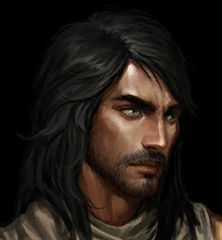
Demon Hunter
Ranged specialists who wield twin hand-crossbows and a kit of traps, caltrops, and shadow vaults. A glass-cannon kiter that balances Hatred and Discipline, raining vengeance from a distance and rolling out of danger.
Ranged trapper
Dante
The stylish half-demon. Switches between a demon sword and the pistols Ebony & Ivory mid-combo, transforms with Devil Trigger, and is graded on style. The flashy, expressive, combo-driven end of the spectrum.
Stylish hybridWoW says “mobile, aggressive, see-the-unseen.” Diablo says “ranged, trap-heavy, prepared.” Devil May Cry says “expressive and combo-driven.” The interesting thing is that Locke’s own League kit borrows from all three.
Why It’s Coming, Not If
Start from what’s certain: the MMO is set in Runeterra, and Runeterra has a demon problem that is actively getting worse. In Ionia the parasitic azakana are multiplying — Riot’s own narrative team wrote that the region “could be overrun with demons,” and that “if only there was someone who would” deal with them. Studios don’t plant a hook like that without intending to pull it.
And the demon-hunter role already exists in the fiction. Yone hunts azakana and seals them in masks. The Kinkou banish demons with spirit-realm blades. Demacia forges petricite specifically to fight magic and the unnatural. And now Locke, a literal exorcist with a possessed-Vayne to slay, is walking onto the Rift.
So we’re confident on the big swing: you will hunt demons in the Riot MMO. The only genuine unknown is the packaging — a dedicated “Demon Hunter” class versus a hunter/occultist path that leans into it. Given that Riot just built an entire champion — kit, cinematic, and region — around the fantasy, our money is firmly on a class of its own.
Reading Locke’s Kit Into the MMO
His League abilities are the best tea leaves we have. Here’s how each could translate into an MMO demon-hunter toolkit:


P Silver Stake → Executioner’s Mark
His passive hits harder the lower a target’s health. In an MMO that’s an execute mechanic — bonus damage and finishers against weakened or “corrupted” enemies, the demon-slayer’s signature payoff.
Q Ritual Nails → Binding Stacks
Throw nails that mark, slow, and then detonate. Read it as a stacking debuff you build on a target before unleashing it — a ramp-and-burst rotation with skill-shot placement and zone control.
W Soul Ignition → Blood Price Sprint
A speed buff that burns his own health, then heals it back based on the carnage. A high-risk resource gamble — the kind of “spend health to win the fight” mechanic that makes a hunter feel reckless and skilled at once.
E Ashen Pursuit → Hunter’s Blink
A blink that resets on a takedown. Classic demon-hunter mobility: chain dashes across a fight as long as you keep slaying, the WoW Fel Rush feeling translated to a kill-fueled reset.
R Purgatory → Soul Cage
A totem that snares an area and executes low targets, trapping their souls. In group content that’s a banishing-rite ultimate — a zone you set, then force enemies to survive or be claimed.


The Playstyle
Put it together and Locke points at a specific MMO fantasy: a mobile, bursty control-DPS, not a tank and not a turret. You’d build marks on a target, blink in, spend your own health to commit, and either reset off the kill or cage the survivors. Against demon content you’d be a dedicated slayer; in a group you’d bring the detection (those see-in-the-dark lenses) and the lockdown.
It rewards preparation and positioning over raw reflexes — closer to WoW’s Havoc and Devil May Cry’s aggression than Diablo’s safe kiting. The hunter who wins the fight before it starts.
Where You’d Play It
There are two obvious cradles for it. Locke comes with Brookhollow and the Wyldwoods — a fog-bound gothic frontier that’s a starter demon-hunting zone in everything but name: infestation events, missing-villager hunts, a town that needs an exorcist on retainer. And Ionia is primed for a Spirit Blossom-style outbreak, azakana spilling out of the spirit realm with only Yone and the Kinkou holding the line. Either one is a ready-made region — pick your flavor of horror.
Would You Main a Demon Hunter?
If Riot added a Demon Hunter class to the MMO, would you play it?
None of this is confirmed — but Locke proves the appetite and the design language are there. Want the source material? Read Locke’s full biography and our first-look breakdown of his debut.


