
The Team That Made You Someone
The first real choice World of Warcraft ever asked you to make was not your class or your race. It was your side. Horde or Alliance. You picked one, and the moment you did, you belonged to something with a flag, an anthem, a capital city, and an enemy. Twenty years of players still introduce themselves that way. For the Horde is not a slogan. It is an identity people wore for most of their adult lives.
Blizzard made that identity stick by building a wall around it. At launch in November 2004 you could not so much as talk to the other faction. Alliance characters spoke Common, the Horde spoke Orcish, and the game ran every cross-faction message through a scrambler so it came out as gibberish. You could not group with them, join their guild, or mail them a copper. The two halves of the world shared a planet and almost nothing else.
That wall was not an accident, and it nearly did not happen. In a 2026 interview, original WoW designer Jeff Kaplan said the Horde and Alliance split was "really controversial" internally and was only locked in nine to twelve months before launch. He and Rob Pardo, both from EverQuest, thought forced factions were a bad idea. Co-founder Allen Adham fought for them, and the model he pointed to was Dark Age of Camelot. Kaplan's paraphrase of the pitch: you were instantly on a team, you were not a loner in the world, and whether you liked it or not you had people on your side.
One detail decides the rest of this argument. The game Adham pointed at had three teams. WoW shipped with two.
For a long time, two was enough. The faction war gave the game its best writing. Watch the "Old Soldier" cinematic below, where the orc Varok Saurfang questions everything he has killed for. It only lands because being Horde meant something. You cannot make a player mourn a side they were never really on.


The Slow Unmaking
Then Blizzard spent roughly a decade quietly taking the wall down, one brick at a time. None of it was a single dramatic reversal. It was a slow erosion that most players welcomed at each step, because each step fixed a real annoyance.
Sep 2013
Connected Realms
Low-population servers are permanently linked. Shared guilds, one auction house, shared raids.
Sep 2015
Mercenary Mode
Patch 6.2.2 lets you queue as the opposite faction in unrated battlegrounds when your side's queues run long.
May 2022
Cross-faction instances
Patch 9.2.5. Invite the other faction to dungeons, raids, and rated PvP through your Battle.net friends list.
May 2023
Cross-faction guilds
Patch 10.1. Horde and Alliance can finally fly the same guild tag.
Aug 2024
Warbands
The War Within. Your whole account becomes one roster across both factions. Collections, currencies, and reputations are shared.
The endpoint is Warbands, added in The War Within in August 2024. Your entire Battle.net account is now one Warband "regardless of their Faction," in Blizzard's own words. Mounts, transmog, most reputations, and a shared bank flow across every character you own on both sides. The faction you belonged to is now a cosmetic on a character sheet.
Watch how Blizzard itself presents Warbands. It is a feature video about account-wide everything. That is the mechanical end state of a faction system: a world where which side you chose no longer touches anything you do.


Game director Ion Hazzikostas said the quiet part out loud when cross-faction play arrived in 2022: "The foundational pillar of Warcraft has always been adventure and not necessarily the war between the factions." And on why they finally moved: "we're stubborn and traditionalists and it's scary to say: let's uproot this foundational pillar of what the game has been for over a decade. But it's time."
Why Two Was Always the Problem
It is tempting to read this as "factions were a mistake, and Blizzard is fixing it." That is the wrong lesson, and it costs you the interesting one. WoW had two separate problems, and only one of them was about factions at all.
The first problem was the wall. Not the existence of sides, but where the line was drawn: at the account level, permanent, unchosen. Your friend rolls Alliance because that is where their guild is. You want to play Horde. For eighteen years, one of you had to give up something real to sit at the same table. Hazzikostas named this exactly: "You're born Alliance, you're born Horde. That's not a choice you make... That's not the world we want to build." Read that carefully. Blizzard tore down the wall for a social reason. People had made their friends on Discord and in communities that did not care about faction, and the cost of keeping them apart grew every year. It was never mainly about game balance.
The second problem was the number. This one is about balance, and it is older than WoW. With two sides, whatever advantage one side gets tends to compound. The stronger side wins more, winning draws more players, more players win harder, and the losing side logs off. There is no third party to lean against the leader.
This is not a hunch. It is a named design idea with a long paper trail. Mark Jacobs, who created Dark Age of Camelot, the exact game that inspired WoW's factions, put it plainly in a 2017 interview: "I've always believed in the viability of three Realms/factions in a PvP game. I learned that lesson a long time ago (1980s)... John Taylor [a co-founder of Kesmai] told me that he chose three factions for the game because that way the third faction could act as a spoiler and team up with the underpopulated faction." The lineage runs back to Air Warrior in 1987. Three sides let the two trailing teams gang up on whoever is ahead.
Be honest about the catch, though, because the games that tried it were. Three sides do not balance themselves for free. Dark Age of Camelot ran chronically lopsided and had to bolt on bonus rewards for the underdog realm. Guild Wars 2 has spent a decade re-engineering its three-team mode to fix population and time-zone coverage. PlanetSide hard-caps how many players each of its three empires can field on a map. One designer put the failure case well: reward a third-place side for nothing and the two strong teams just farm the weakest instead of fighting each other, like being Poland between Germany and Russia. Three is better than two. It is not magic.
Now watch what the rest of the genre decided. Elder Scrolls Online launched with three alliances walling off the map, then tore those walls down for shared questing in 2016 with its "One Tamriel" update, while keeping the three alliances for opt-in PvP. The producer who made that call, Matt Firor, is the same man who produced Dark Age of Camelot and its three realms. Final Fantasy XIV has three Grand Companies you can join, switch between freely, and that never once stop you from playing with anyone. The lesson the whole industry converged on is not "fewer factions." It is this:
A faction should be a banner you rally under, never a wall that keeps you from your friends.
WoW built a wall and had to demolish it. The good news for Riot is that Runeterra never has to build the wall in the first place.
Runeterra Already Has the Answer
Warcraft's world was carved down the middle before you arrived. Runeterra is not built that way. Its conflict does not run between two halves of a map. It runs inside almost every region, along a fault line that has nothing to do with which flag flies over your home.
We keep a database of Runeterra's factions, and the shape of it tells the story. There are 57 organized factions across 13 regions, and more than half of them have declared enemies. The enemies are usually next door. Demacia is the cleanest example. It is one kingdom, and it holds three groups already at each other's throats: the Mageseekers, who hunt and imprison mages; the Illuminators, who secretly shelter those same mages; and Sylas's Mage Rebellion, which wants to burn the whole arrangement down. Three answers to one question, all inside one set of walls. The Freljord does the same thing three ways, and so does Noxus.
So what is the question they are all answering? It is the oldest one in the setting: who is allowed to touch magic, and at what price. Runeterra was nearly unmade by that question once. Ryze's official history describes World Runes, fragments of the raw magic that shaped the world, that "all saw as weapons that could be turned against their rivals," until "the first cataclysmic blow was struck in what would eventually be known as the Rune Wars." That scar sits under everything. Every faction in the setting is, in some sense, taking a position on whether that power should be leashed, seized, or kept in trust.

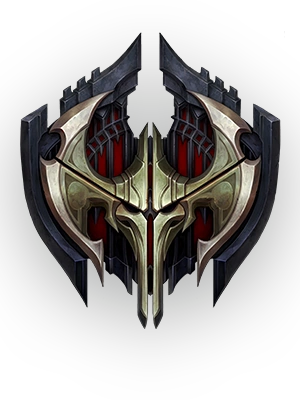
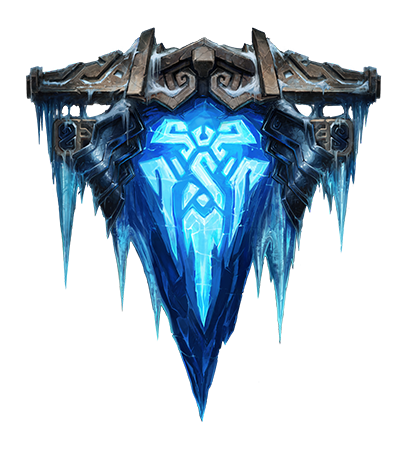
Riot already sorts allegiance this way in one of its own games. In Riftbound, the trading card game, your identity is not a region at all. It is a set of ideological Domains, Fury, Calm, Mind, Body, Chaos, and Order, that cut across the whole map. A philosophy, not an address. The idea that a Runeterran picks a creed instead of a country is not something we are inventing. It is how Riot already thinks about the world.
One thing to keep straight, because it matters for a faction pitch. Runeterra's conflicts are not tidy nation-versus-nation wars, and the current canon is messier than the old map suggests. Noxus's invasion of Ionia is over; Ionia now sits in what Riot calls "an uneasy peace," its real fight now internal between those who want vengeance and those who want to move on. Demacia is "a kingdom in turmoil" after the sudden death of King Jarvan III, with the succession contested and the mage question tearing it open. Piltover and Zaun are not at war at all, but "separate, yet symbiotic societies." The through-line in every one of these is not geography. It is what people believe about power.
That belief is what the world already sounds like when Riot puts it to music. This is "The Call," the 2022 cinematic, regions in open conflict.


The Three Creeds
Speculation. Riot has never announced a faction system, a setting, or a business model for its MMO, and has said nothing about players picking a side. What follows is our design proposal built from Runeterra's existing canon, not a leak or an official plan.
The pitch is a single change to character creation. You do not pick a country. You pick a creed, your answer to the question the whole world is already fighting over. There are three, drawn straight from the factions Runeterra already has.
Power must be leashed. The Rune Wars proved what unchained magic does to the world, and the Binders never stopped believing it. They regulate, license, imprison, and when they have to, they seal power away entirely. To a Binder, every rule is a scar remembering why the rule exists.
This is Demacia's petricite law and its mage-hunters, Piltover's council deciding who gets to buy hextech, and the Freljord's Frostguard keeping something far worse frozen beneath the ice. It is Ryze's wardens, spending lifetimes making sure no one ever assembles the World Runes again.


The tension writes itself: a Binder believes they are the only thing standing between Runeterra and a second apocalypse, and half the people they police think they are just tyrants who found a noble excuse.
Power belongs to whoever has the will to take it. The Unbound look at the Binders' cages and see cowardice dressed up as caution. Strength denied is strength wasted. A rune, a chem-barrel, a stolen spell, these are not threats to be buried, they are tools, and the only sin is being too timid to use them.
This is Noxus in full, from the ruling Trifarix to Darius's legion, where anyone can rise if they are strong enough to hold the ground. It is the Zaun chem-barons selling power by the vial, and it is Sylas, who was caged for being born with magic and decided the cages should come down by force.


This is the creed most likely to be the antagonist of any given story, and the one most likely to be right about the specific person keeping them down.
Power is a covenant, not a prize. The Keepers reject the whole framing of the other two. Magic is not a weapon to lock up or a resource to seize. It is a trust, older than any kingdom, and the job of the living is to hold the balance and hand it on intact. Bind too hard and you become a tyrant. Take too freely and you become the Rune Wars again.
This is the Kinkou keeping the spirit and material worlds in balance, the Illuminators sheltering mages out of compassion rather than control, Ashe's Avarosan trying to unite the Freljord instead of conquering it, and the Solari tending a faith older than the nations below. The Void war belongs to them most of all.


The Keepers sound like the obvious heroes until you remember that "keep the balance" has justified the Solari erasing the Lunari and the Kinkou refusing to lift a finger while Ionia burned.
The obvious pitch is to hand players a country. We think that is the trap WoW fell into, dressed in new colors.
Three Nations (Noxus, Demacia, Ionia). It is legible, and it dies on contact with the map. It repeats Warcraft's core mistake of making geography your team, and it strands ten other regions as scenery. Worse, it does not even match canon: Noxus and Ionia are at peace now, and Demacia versus Ionia has no real quarrel to fight over.
Two Great Powers (Noxus vs Demacia). The honest mirror of WoW. It is clean and it inherits the exact death spiral that made Dark Age of Camelot reach for a third realm in the first place. Whichever empire wins the opening months snowballs, and the other logs off.
Creeds solve both. Because your allegiance is a belief and not a birthplace, two Demacians can end up on opposite sides and a Demacian and a Noxian can end up shoulder to shoulder. The conflict stops mapping to the territory, which means it can never again split the playerbase in half along a border.
Now the part that keeps it a banner and not a wall. Your creed decides your story, your capital, the champions who mentor you, and the side you take in open-world territory conflict and ranked RvR, the parts of the game that are supposed to be a fight. It decides none of the things WoW's wall used to decide. You group, raid, and guild with anyone. Your friend who swore the opposite oath is still in your party. The creed colors who you are without ever controlling who you play with.
And above all three sits the one enemy that does not care what you believe. The Void does not want to rule Runeterra. Riot's own text says it exists to "usher in total oblivion across Runeterra." That is the ceiling the whole server climbs toward together: Binder, Unbound, and Keeper standing on the same wall when something arrives that would end the argument by ending the world. Three sides for each other. One side against the dark.
The Verdict
So, should Runeterra have factions? Yes, without much hesitation. The mistake was never asking players to pick a side. It was building the side out of brick instead of belief, drawing it on a map, and locking the door.
Runeterra hands Riot the cheat code. The conflict is already ideological, already nested inside every region, already sorted by creed in the studio's own card game. Blizzard spent twenty years learning that a faction has to be a banner and not a wall, and paid for that lesson by demolishing the best identity system its genre ever had. Riot gets to skip the demolition and keep the banner. It would be a waste not to.
Should the Riot MMO let you swear to a creed instead of a country?


