Source: Riot Games / League of Legends. Verified against multiple sources; datamines and reports are labelled as such, not stated as fact.

What Happened
Riot put a price on the way champions used to look. It lasted three days.
League of Legends Classic went up at the MSI 2026 finals broadcast and got its real explanation in a July 14 dev blog and dev update video. It launches July 29 alongside Patch 26.15, and it is the old game rather than a skin line: 60 champions in their pre-rework kits, the old runes and masteries, the old items and summoner spells, and a rebuilt Summoner's Rift. The roster is the original 40 plus 20 more that shipped between 2009 and 2013. A public beta has been live since the 14th.
The classic skins are the 2009 to 2013 champion models. Not a new take on the old art, the old art. A handful came free. The other 56 you either earned through the Classic Pass or bought at 500 RP each, about $5 a champion. Outlets ran the arithmetic and landed near $250 for the full set.
Not a new take on the old art, the old art.
The objection took one sentence: players were being charged for what used to be the champion's default appearance.
It didn't help that the pass and the RP price covered the same 56 models. Two ways to pay for one thing, and no way to just have it.


On July 17 the official League of Legends account posted a follow-up video on classic skins, gameplay and champion kits. Brian "FeralPony" Feeney, a game director inside Riot R&D, delivered the reversal in it. All 60 classic skins are unlocked for free, and they are now the default look for every champion that has one.
Riot's "Classic, Mayhem & More" dev update from July 14, which laid out the original plan. (Riot Games)




The Details
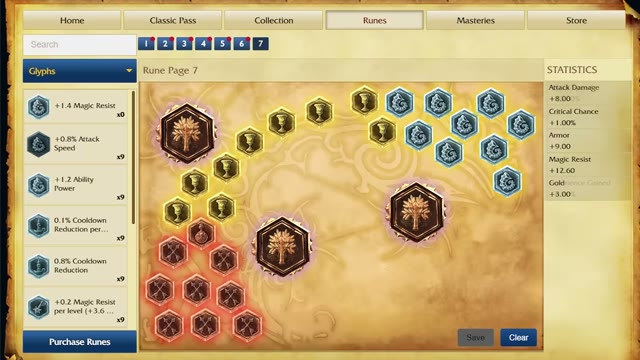
Classic restores the parts of old League that people argue about at length. Flat stat runes you buy and slot across 20 pages before you queue. The Offense, Defense and Utility mastery trees, where 21/0/9 was a thing players said out loud. Those systems are why the skins mattered so much to the pitch: the whole product is sold on being the thing you remember, down to the art.


- League of Legends Classic was revealed at the MSI 2026 finals broadcast and detailed in a July 14, 2026 dev blog and dev update video
- It launches July 29, 2026 alongside Patch 26.15
- 60 champions: the original 40 plus 20 released between 2009 and 2013
- Old runes and masteries, old items and summoner spells, pre-rework champion kits, and a recreated Summoner's Rift
- A public beta has been available since July 14, ahead of the July 29 full launch
- Under the original plan, 56 classic skins had to be earned through the Classic Pass or bought for 500 RP each, roughly $5 apiece
- Outlets calculated that buying the full set outright would have cost roughly $250
- The central player objection was being charged for what used to be a champion's default appearance
- On July 17, 2026 the official @LeagueOfLegends account posted a video update covering classic skins, gameplay and champion kits
- Brian "FeralPony" Feeney, a game director in Riot R&D, delivered the reversal
- All 60 classic skins are now free and set as the default appearance for champions that have one
What This Means for the Riot MMO
Classic is being built inside Riot R&D. That is the same org the unannounced MMO sits in, under the "Unpublished R&D Product" label its job listings carry, and Feeney's title is R&D game director. So this isn't a read across the company from a distance. The group that just walked back a pricing call its audience rejected is the group building the MMO.
Riot has never put a business model on the record for the MMO. The only monetization statements that exist belong to Greg Street, they date to 2022, he said plainly that nothing was final, and he left Riot in March 2023, a year before the project was reset in March 2024. Nobody at Riot has promised you anything about how the MMO charges. What exists is a track record, and it just picked up a data point: three days from reveal to reversal.
The speed matters more than the row. A skin argument on a limited-time mode is one bad week. An MMO cosmetic shop sits under that same pressure every patch for as long as the game runs, and Aion 2 has already drawn the subscription and no-pay-to-win line Riot's MMO gets measured against. What Classic tells us is narrower and more useful: R&D read the reaction and moved in 72 hours instead of waiting out the news cycle.
A skin argument on a limited-time mode is one bad week.
The line it landed on is the one an MMO shop has to find on day one. Selling additions is normal. Selling back the appearance a character already had reads as taking something away, and players priced that difference immediately. Blizzard spent years learning the same thing the expensive way, one store item at a time.
Any nostalgia product carries an expectation problem too, and the unannounced MMO is built on the same bet that people want the old thing back. Sell someone their own memory and they behave like they already own it. That isn't entitlement, it's the deal you make when the pitch is "this is how it was." WoW Classic has refused to die for exactly that reason, and the players it kept are the least tolerant of a shop that charges for the baseline.
- The reversal came out of Riot R&D, the same org the unannounced MMO sits inside
- Riot has still never stated a business model for the MMO. This is track record, not a promise
- Charging for what players read as a default appearance is the exact line an MMO cosmetic shop has to find
- Three days from reveal to reversal says R&D is watching sentiment and will act on it fast
- A battle pass and a per-item RP price on the same content read as double-dipping and did not survive contact
- A nostalgia product invites ownership expectations, and an MMO built on legacy Runeterra content inherits that by default
Your Take
Should the Riot MMO ever sell a cosmetic that replaces a character's default appearance?
Reported from Riot Games / League of Legends and corroborating coverage. The MMO read is ours and clearly speculative. Analysis by RuneGrove.


