
Source: Blizzard's own BlizzCon 2026 videos on the World of Warcraft YouTube channel, the Deep Dive panel and the Go Again hardcore panel. Quotes are the captions, with the clock. The MMO read is ours.

No Realm to Pick
Blizzard's lead engineer told her own realm story, then said the realm list is gone.
The first decision World of Warcraft ever asked of a new player was which server to live on, and Blizzard, the studio that makes the game, has just removed the screen that asked it.
World of Warcraft: Forever is the new version of World of Warcraft, the long-running online role-playing game its players call WoW, built on the original 2004 game and expanded rather than replaced. Blizzard announced it at BlizzCon 2026, its annual fan convention, on September 12 and 13, and the server news came on the second day in a panel called Deep Dive, a 52-minute session on the game's systems that Blizzard posted on September 13. Forever opens its beta on September 17 and launches on November 4.
Ana Resendez, a lead software engineer on the WoW Forever team, told her own story first. She bought the battle chest, the boxed edition of the original game, installed "a mountain of CDs," waited out the updates and hit the realm list. "I didn't want to make the wrong choice," she said. Being from Mexico narrowed it to two realms, Drakkari and Ragnaros, and she and her friends picked Drakkari. Days later a second group of friends turned out to play on Ragnaros. "So that was it. I created an alt in there, but it was not the same."
That is the case against realms in one anecdote, and Resendez said the team had checked it against everyone else's. One trend from WoW Classic, Blizzard's 2019 re-release of the original game, was that players "naturally gravitated towards the same realms," which produced huge realms and long login queues. In 2004 the game "simply couldn't handle enormous numbers of players all logged in into the same realm at the same time." Now, she said, "we can support far more players on a single realm than ever before." So in Forever "you won't select a realm anymore," because, in her word, the game is going realmless.

She was quick to cap the claim. "We're not putting everyone in one giant realm," she said. The new first choice is a rule set, and she framed each one like the mega realm it is, with seven years of learning behind the design. Two numbers matter for what follows: four rule sets, and two names per character.
The Four Rule Sets
Normal, PvP, Roleplay and, after launch, Hardcore, each a closed mega realm with the factions still apart.
"Instead of choosing a realm, just choose from one of the following rule sets," Resendez said, and ran a live survey of the hall. Normal, which Classic players call PvE, "focus on exploration and only fight others when you choose to." PvP, the rule set where fights with other players can happen anywhere contested, is for anyone who wants "every trip into contested territory to come with a little bit of danger." Roleplay is for players who "really want to dive into the fantasy of the game." Hardcore, the rule set where a dead character stays dead, arrives after launch.

The walls stay up in two places. "Factions are still separate," she said, meaning the Horde and the Alliance, the game's two player factions, still cannot group. And "you will only be able to group up the dungeons and raids with the people of your same rule set." Hardcore is "a completely enclosed ecosystem": what you earn there travels out to the other rule sets, nothing travels in. When a hardcore character dies you can transfer it to another rule set, "and now for the first time, you'll be able to transfer to PvP." Collections and the new Legacy system, the account-wide progression the same panel introduced, are shared across every rule set except that one-way door.
Then the smaller change that will outlast most of the bigger ones: "your characters will now have two names." Think of it, she said, as a first name and a last name. Names become unique per region rather than per realm, so the two-part name exists so a new player can still be called something original, and she offered her own example, Anna Forever. The last two items were preferences. Players pick a language, and the game will put them near "other players who share that same preference." And because balance between the two factions matters most where they fight, the PvP rule set gets mechanisms to aim for it, the same approach Blizzard used in Season of Discovery, its 2023 experimental season of Classic.
Familiar Faces
The one thing a big realm loses is the one thing Blizzard says it rebuilt the infrastructure to keep.
The one thing a big realm loses is the one thing Resendez says the team rebuilt the infrastructure to keep. Players gravitate towards bigger realms, she said, and "at the same time, they really care about community and sense of belonging. So, we ask ourselves, why not both?" The answer is not a setting. "We have updated the infrastructure to give you the benefits of large realms with the goal of capturing the essence of the realm."
What that means in play is that the game keeps putting the same people in front of you. Out levelling, questing or exploring, "you may cross path with the same players again and again." You help each other with a quest, race for the same mining node, wave. "And the next day, you might see the same player again and recognize their name."
Over time, strangers become familiar faces, and familiar faces become part of your community.
— Ana Resendez, lead software engineer, the Deep Dive panel, BlizzCon 2026, 27:09, watch
Guilds get the same treatment: "we want you to encounter your guild mates out in the world even before you have grouped up." The goal she closed on is the promise the whole system makes. Nobody should have to choose "between potentially longer queues at launch" and a realm that would not be their forever home, and the target is "the benefits of a large realm while preserving the sense of community."

What she did not say is how. Resendez never used the words layer or shard on stage, and she never gave a number for how many players share a rule set at once or how the game decides which of them you see. The system is described entirely by its outcome. The mechanism showed up two days later, on a different panel, as a confession.
The Three-Minute Warning
The hardcore panel admitted what a world refresh does to a player mid-fight, and described the countdown built to fix it.
Kris Zierhut, a principal game designer on Forever who owns combat, items, classes and talents, told the story on the Go Again panel, a 36-minute conversation about the hardcore rule set that Blizzard posted on September 15. He and a friend were duoing a quest in Loch Modan, a lake district in the dwarven starting lands, hunting troggs up a hillside on a crowded Saturday morning. Every trogg was dead. Then "suddenly some of the players around us disappeared. some other new players appeared and every single location where there could be trogs was fully respawned with every trog there could be and we're right in the middle of it."
He ran, froze a pack in place, jumped off a cliff and blinked away at the bottom. Then he said the quiet part. "We really don't like the experience that represents where because there are too many or too few players in the area where you are, we need to refresh the world around you. And when we do that refresh, suddenly creatures respawn or creatures are there that weren't there before." Classic players have a word for that mechanism, layering, and he never used it on stage. What he described is the effect of it, and it is the effect that lets a rule set hold far more players than one copy of the world could.
The fix is a countdown. When the game needs to move you, "a new UI will pop up and give you a warning," he said, and it reads "in 3 minutes, 2 minutes 59, 2 minutes 58" and so on, with the instruction to get somewhere safe. There is also a button to say you already are, and to be moved now. The feature was built for hardcore, where a surprise respawn ends a character for good, but "it'll happen in the whole game." Nora Mills, a lead software engineer on the team who hosted the panel, credited an engineer named Daniel Schneider for it and said it will be tested in the beta.
no more are you going to lose your characters to this sudden change of the world around you
— Kris Zierhut, principal game designer, the Go Again hardcore panel, BlizzCon 2026, 26:55, watch

What This Means for the Riot MMO
Riot's MMO is being engineered by the man who shipped WoW Classic's realms, and Blizzard just published its seven-year answer to the problem he says is unsolved.
Our read, and it is speculative. Riot Games, the studio behind League of Legends, the five-on-five battle game its whole catalogue grew from, has never said whether its MMO, the online role-playing game it confirmed in 2020, reset in 2024 and has not shown since, will run named persistent servers or one sharded world. RuneGrove wrote that sentence in August, when a dead Classic server came back to life around one paladin, and it was true then. It is still true, and the person who has to answer it has a history with the exact problem Resendez just described.
Orlando Salvatore runs engineering on Riot's MMO, and he shipped WoW Classic. In August he went back in public to the office whiteboard where Blizzard guessed its opening-day player counts, and the point of the story was that the guess was nowhere close. That is the unsolved problem his project is heading toward: how many people show up on day one, and where you put them. Blizzard's seven-year answer, on stage this week, is to stop making the player choose a realm at all, hold a whole rule set in one pool, and rebuild belonging in software. Blizzard did not solve the day-one count. It stopped asking players to guess it for them.
Blizzard did not solve the day-one count. It stopped asking players to guess it for them.
Riot is staffing for it. Its MMO's server work sits in Sydney, in a studio built from the BigWorld server team, whose engineers wrote the technology behind several large online games, and its job ads have named a live server fleet at massively multiplayer scale since August. What none of them name is the shape of the world those servers will hold. The nearest signal is the studio itself: Riot's careers page groups nineteen listings under the name Riot Discovery Studio, and three of them say unpublished MMO in plain text.
| Side by side | WoW: Forever | Riot's MMO |
|---|---|---|
| Server choice | None. Pick a rule set: Normal, PvP, Roleplay, or Hardcore after launch | Not revealed |
| Population model | One mega realm per rule set, far more players per realm than 2004 allowed | Not revealed |
| Community | Familiar faces: the world keeps showing you the same players and your guildmates | Not revealed |
| Names | Two per character, unique per region | Not revealed |
| Factions | Still separate, with balance mechanisms in the PvP rule set | Unrevealed. Runeterra has no two-faction wall, and RuneGrove has argued it is built for three |
| Who is building it | Blizzard, on seven years of Classic learning | Riot Discovery Studio, whose engineering lead shipped WoW Classic |
Runeterra, the world League of Legends is set in and the one confirmed fact about the MMO, already answers the one-world question in its own fiction, and the answer is distance. In Piltover, the inventors' city on the map, the Hexgates are hextech-powered gateways that move goods and people "across vast distances" in an instant and became "the backbone of Piltover's trade." They are the reason the city rules commerce, and they are the exception: everywhere else in the canon is ships and roads. Jayce, the inventor most closely tied to the gates, is a champion because instant travel is a plot point in Runeterra, not a menu option. A world that treats teleporters as a wonder of one city is a world that expects players to run into each other.
The familiar-faces idea has a canonical home too. Navori, the most populous province of Ionia, the island nation on the map that lives in balance with its spirits, is written at village scale: farming villages, esteemed schools, sacred gardens, and a resistance that formed across them when Noxus, the empire that invaded, quartered its officers in seized homes. Irelia, the dancer who became the province's war hero, "came here as a girl to study the traditional silk dances, then returned as a fighter when the war reached her home," in RuneGrove's codex. Everyone in that story knows everyone else by name, and the names come in the shape Blizzard just adopted. Runeterra's people carry a family name and a given name, Xan Irelia, Jericho Swain, and a two-part name that is unique per region is how you write a world where strangers become familiar.
The one wall Blizzard kept is the one Runeterra was never built with. Forever keeps the Horde and the Alliance apart and adds balance mechanisms to hold the PvP rule set even. Runeterra's Freljord, the frozen north of the map, has three great tribes, not two: the Avarosan, who follow Ashe's dream of unity, the Winter's Claw, who take what they need, and the Frostguard, who guard a buried secret. RuneGrove's own design piece argued that two factions broke World of Warcraft and Runeterra is built for three, and nothing in this week's panels changes the count.
Take this
- No realm screen. The first decision a new player makes should not be the one they cannot undo, and Riot's engineer has said in public that the day-one count is the thing nobody can predict.
- Familiar faces as an infrastructure goal. Keep the same players in front of each other and let a community form without a named server to hold it.
- Two-part names, unique per region. It ends the name race and it matches how Runeterra already names people.
- The three-minute warning with an "I am safe, move me now" button. If the world has to move under a player, tell them, and let them go early.
- The hardcore one-way door. What you earn in the hardest rule set flows out; nothing flows in.
Leave this
- The two-faction wall. Forever still cannot let the Horde and the Alliance group, and needs balance mechanisms to keep PvP even. Runeterra's tribes and regions were never a pair.
- The silence on the number. Blizzard never said how many players share a rule set at once, or how the matching works. A studio that reset its MMO to be different should say it.
- Layering as a hidden fact. Zierhut described it, never named it, and the fix is a countdown. A world that moves under the player should be a design, not a confession.

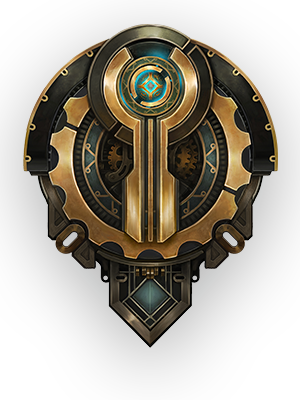

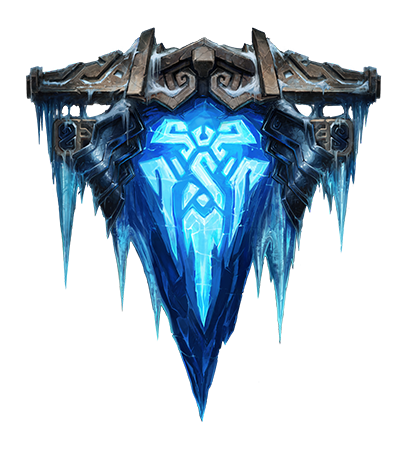
That map is the fiction Riot draws on, not a launch plan. Which regions the MMO opens with, how much of the map it covers, its era, its platform and its price are all unrevealed. Piltover, Ionia and the Freljord are here because the Hexgates, Navori and the three tribes come up above; the crests illustrate the world, not a starting area. For where a launch map's cities might sit, RuneGrove has already mapped the hub furniture the canon painted.
Your Take
Should the Riot MMO skip the server list and put everyone in one world?
What to Watch
Three dated Forever beats, then three more RuneGrove reads on where an MMO puts its players.
World of Warcraft: Forever beta opens
Mills said the world-refresh countdown will be tested in the beta.
World of Warcraft: Forever launches
The first day the realmless rule sets take a launch crowd.
The first new raids unlock
The first dated update on the roadmap Blizzard showed.


Reported from Blizzard's BlizzCon 2026 videos on the World of Warcraft YouTube channel, embedded above with the clock. The MMO read is ours and clearly speculative. Analysis by RuneGrove.


