
The Soul of the Server: Forging Community in Riot's MMO
Riot Games MMO | Deep Dive Analysis
The Billion-Dollar Architecture Question
The ultimate success of Riot Games' highly anticipated MMO won't just hinge on its combat, graphics, or the rich lore of Runeterra. Its long-term fate will be forged in a realm largely invisible to the player: its server architecture. This is more than a technical detail; it's a philosophical choice that will shape the game's social fabric, community health, and its ability to survive in a cutthroat market.
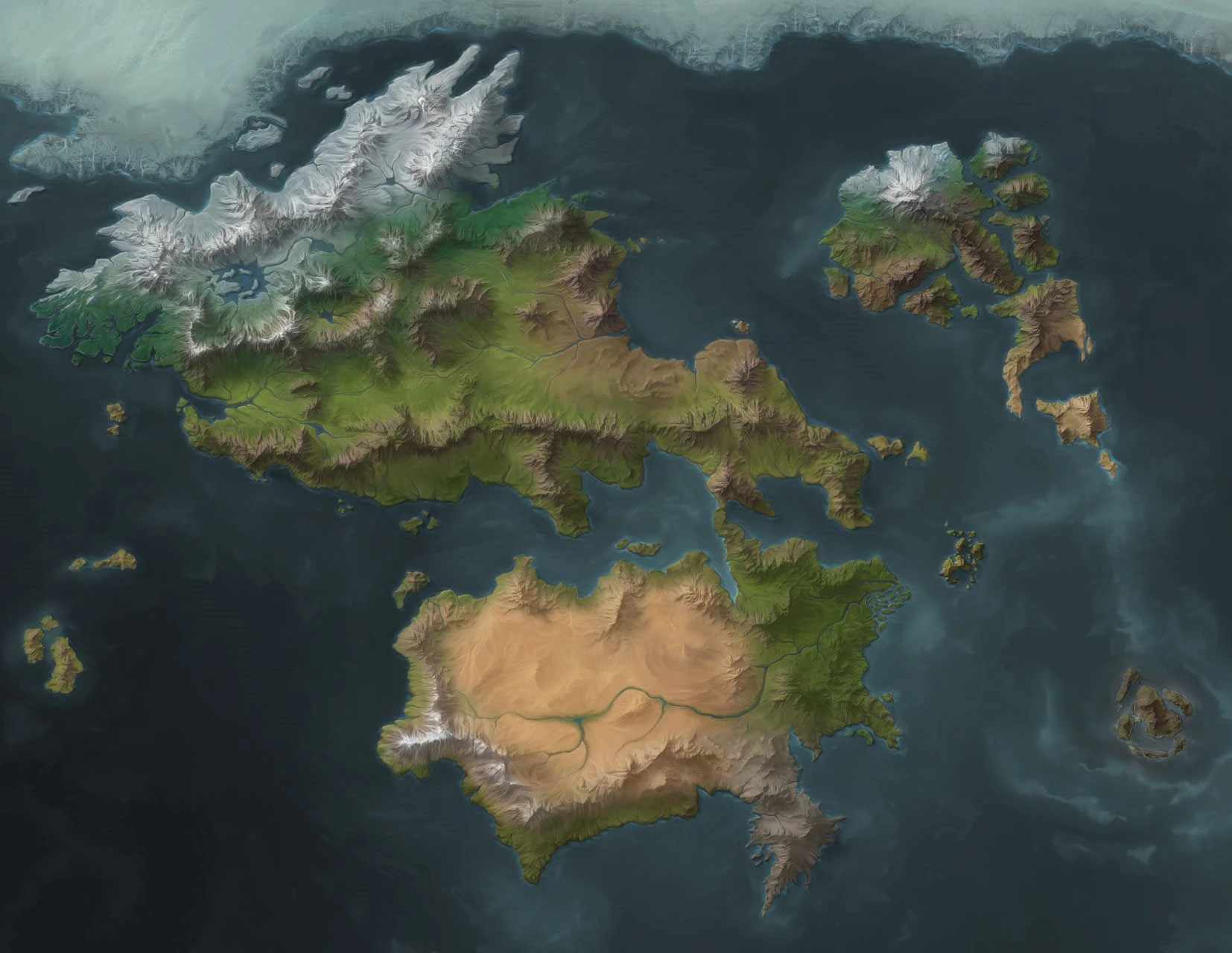
The MMO genre is defined by a deep tension between two design philosophies. On one side, we have the legacy of classic, isolated servers—digital worlds that fostered powerful bonds, lasting reputations, and unique server identities. On the other are modern megaservers and dynamic sharding, which prioritize seamless access and performance, often at the cost of social cohesion.

Riot Games, with its immense resources and global infrastructure from a decade of managing League of Legends, is uniquely positioned to solve this "Megaserver Paradox." This analysis explores the technical challenges, the social consequences of different server models, and the potential paths Riot could take to build a world that is not only massive and stable but feels like a living community—a world that truly remembers its players.
The Ghost in the Machine: Modern MMO Worlds
At the heart of every MMO lies a daunting mathematical reality. The number of updates a server must process scales quadratically with the player count in an area. Doubling the players doesn't double the load; it explodes it, creating two game-breaking problems: server overload and content starvation.

When too many players gather, the server lags or crashes. When resources are finite, too many players mean quest mobs are instantly killed and nodes are always depleted. To combat this, developers have built a sophisticated toolkit.

The Developer's Toolkit
- Sharding: Creating multiple, identical copies ("shards") of a zone and automatically distributing players among them to keep populations manageable. Modern cloud infrastructure allows these shards to be created and destroyed on demand.
- Layering: A temporary, realm-wide form of sharding, famously used for the launch of World of Warcraft Classic to handle the massive day-one player influx. Layers are gradually collapsed into a single world as the population stabilizes.
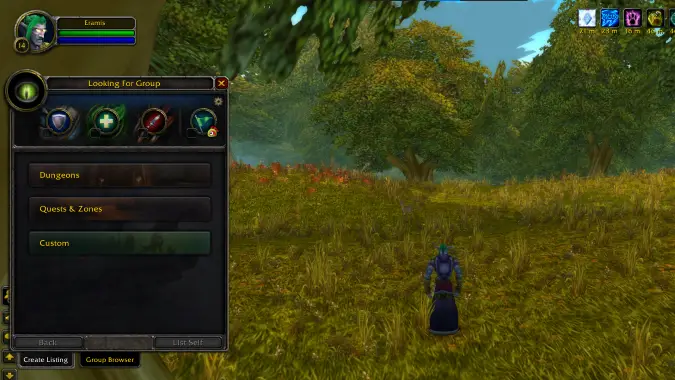
- Cross-Realm Zones (CRZ): The opposite of sharding, CRZ merges players from multiple low-population servers into a single, shared instance of a zone to make the world feel alive.
- Phasing: A narrative tool that alters the world for an individual player based on their quest progression. Players in different phases, even in the same spot, are invisible to each other.


The widespread adoption of these technologies is driven by economics. Elastic cloud computing (like AWS) is far more cost-effective than maintaining physical servers that must be over-provisioned for peak loads. This shift from a visible infrastructure (choosing a server) to an invisible one (automated sharding) prioritizes a frictionless "just play" experience. The unintended consequence is that by removing the choice of a home, the concept of home itself erodes. The seamless experience becomes a placeless one.

Comparison of MMO Server Architectures
| Architecture Type | Primary Technical Goal | Key Social Outcome | Player Experience Pros | Player Experience Cons | Key Game Examples |
|---|---|---|---|---|---|
| Classic Isolated Server | Stability within hardware limits; persistent world state. | Strong, self-contained server identity and reputation systems. | Lasting community bonds; player reputation matters; unique server culture. | Dead servers; login queues; content competition; toxic communities are inescapable. | Vanilla WoW, EverQuest, FFXI |
| Sharding / Layering | Manage high player density; cost efficiency via elastic scaling. | Fragmented, ephemeral player groups within the same server. | Smooth launches; handles crowds; prevents content starvation. | Players/resources disappearing; social disconnect; feels artificial. | Modern WoW, New World |
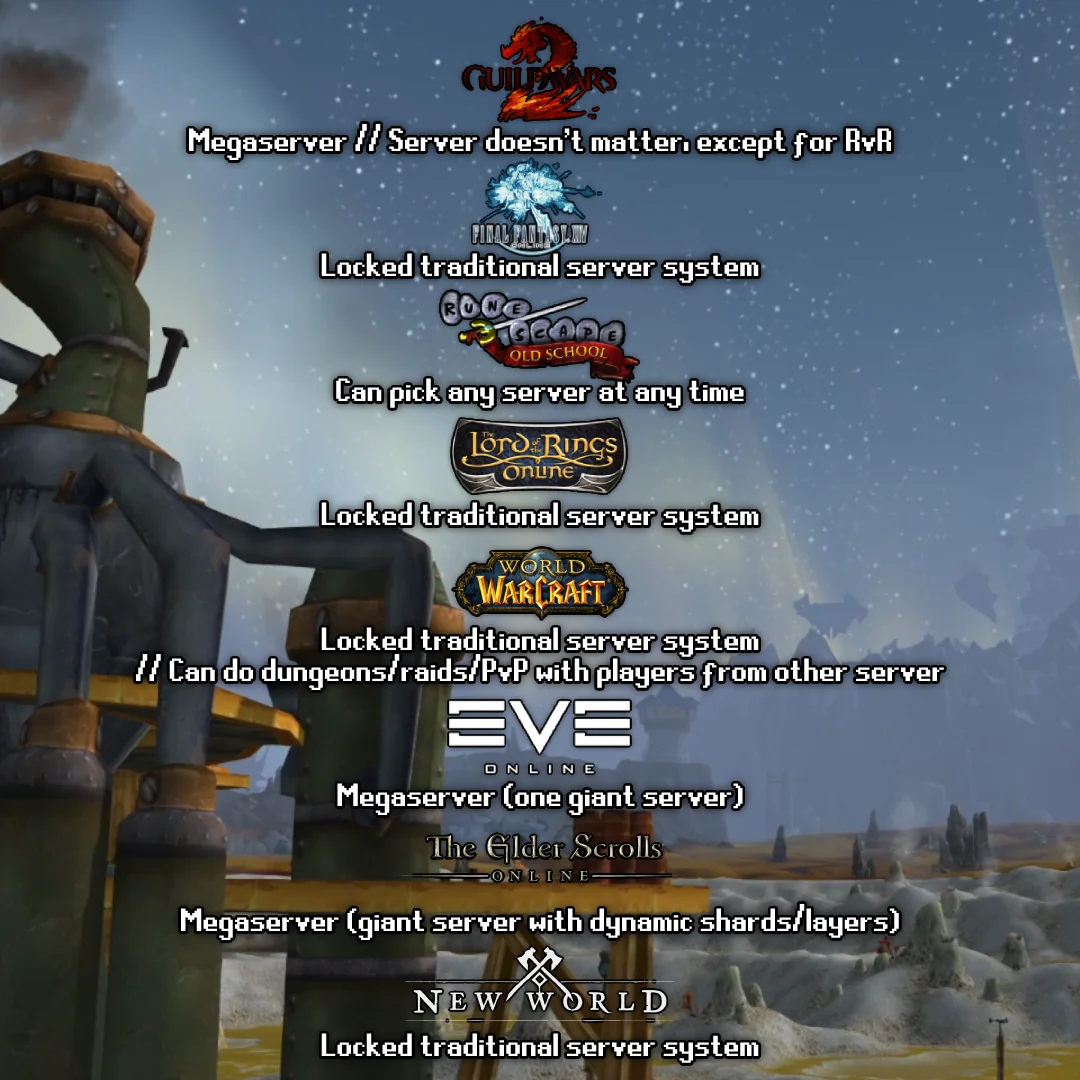
| Megaserver | Eliminate server selection; ensure all zones are always populated. | A large, anonymous, region-wide player pool. | Always people to play with; easy to group with friends. | Loss of server identity; language barriers; no sense of community. | Guild Wars 2, Elder Scrolls Online |
| Single Shard | A single, persistent, unified universe for all players. | Unparalleled persistence, player-driven history, and consequence. | A true shared world; every action is permanent and meaningful. | Extreme technical difficulty; requires specific game design. | EVE Online |
The Cost of Convenience: Eroding Community
The most jarring impact of dynamic sharding is the visible instability it introduces. Players report rare monsters vanishing mid-fight, friends becoming invisible to each other in the same spot, and resource nodes disappearing upon approach. These aren't bugs; they are the system working as intended, making the world feel fragile and fake.

This creates a form of "digital gentrification," where players are arbitrarily moved between shards, severing any nascent social connections and replacing a familiar "neighborhood" of players with a new set of strangers.
From Neighbors to NPCs
In a world populated by a revolving door of anonymous players, there are no social consequences for one's actions. Reputation becomes meaningless. Fellow adventurers cease to be potential allies or rivals and are devalued into temporary, advanced NPCs—tools to be used and discarded. This fosters an environment that is not just anti-social but can be actively toxic, as the systems remove the natural incentives for cooperation that arise from repeated interaction.

This technology also creates a "social uncanny valley." The world appears bustling, but the player's subconscious knows something is wrong. The other avatars look like players but behave like ghosts—appearing and disappearing without reason, unable to be traded with, and rarely communicating. This dissonance creates a deeply unsettling feeling of artificiality.
Legends of the Realm: Vanilla WoW's Server Identity
To understand what's been lost, we must look at the golden age of the isolated server, exemplified by the original 2004 release of World of Warcraft.
Each server was a self-contained digital world, a virtual city-state. Choosing a server was choosing citizenship. This enforced isolation was the critical ingredient for genuine community. In this closed ecosystem, a player's reputation was their most valuable currency. A "ninja looter" would be blacklisted server-wide, while a skilled crafter or reliable tank could become famous. Your name meant something because your actions had lasting consequences.

Over time, each server developed a unique culture. Sargeras was known for hyper-competitive PvP; Moon Guard became a haven for roleplayers. This server identity was a source of pride and a powerful retention tool. The key was not the number of players, but the persistence of that population. Modern sharding, by design, creates 100% population churn, guaranteeing anonymity and preventing these cultures from ever taking root.

The Megaserver Paradox
In response to issues like dead servers and fractured friend groups, many MMOs adopted a "megaserver" architecture. In theory, it's the ultimate solution: no server selection, you can always play with friends, and the world is always populated. The reality, however, is that a megaserver is just a sophisticated load-balancing system that still relies heavily on the same sharding technology. It's often just a buzzword for automated channels.

Case Study: Guild Wars 2 & Elder Scrolls Online
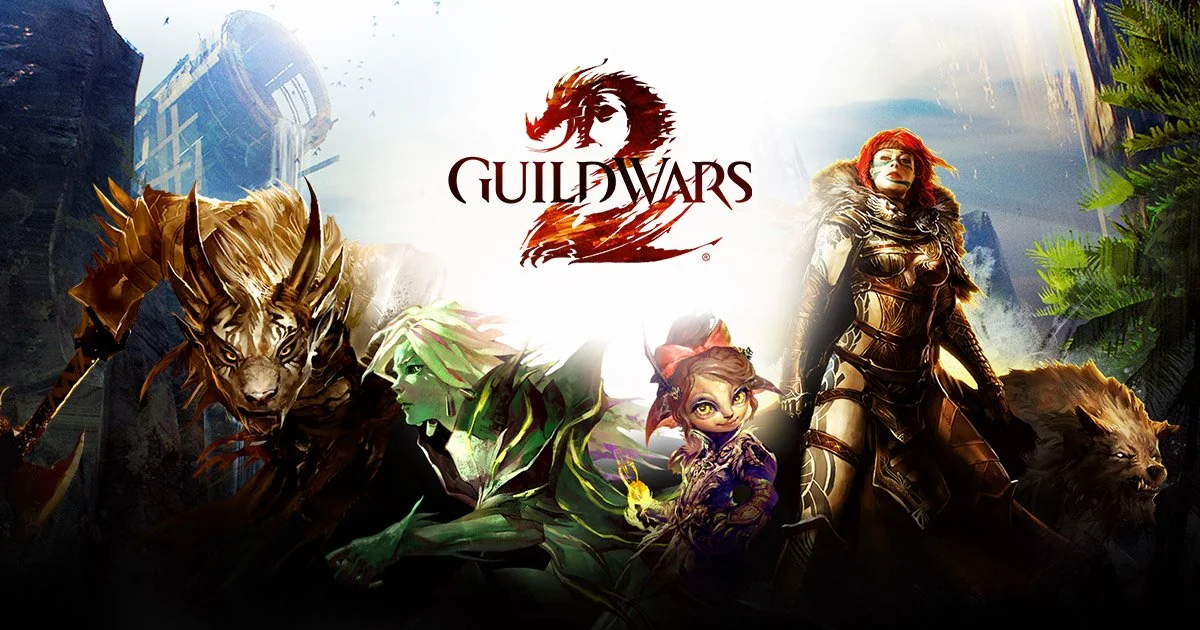
Guild Wars 2 pioneered this tech, ensuring every zone feels active. However, by mixing players from an entire region, it effectively dissolved the unique server communities from the game's early years. The Elder Scrolls Online faces similar challenges, with players noting that community can only exist within formal guild structures. The European megaserver also highlights the problem of language barriers, where players often find themselves unable to communicate with others in their shard.

The Single-Shard Exception: EVE Online
The only MMO to achieve a true, single-universe experience is EVE Online. This is possible because the vast emptiness of space is a natural load balancer. In rare cases of massive fleet battles, CCP Games uses "Time Dilation," slowing down the simulation in that star system to as little as 10% speed. This gives the server time to process everything, a solution untenable for a fast-paced fantasy MMO where thousands might gather in one city.


Ultimately, the megaserver solves a logistical problem but fails the social one. It provides a crowd, but it cannot create a community.
The Runeterra Conundrum
Riot's decisions on server architecture will be a brand-defining statement. Public comments from developers show a keen awareness of this challenge. Former executive producer Greg Street once highlighted the team's group-centered design philosophy.
This will be vague, but our philosophy is if you want to play a single player game, there are great ones out there. Horizon! GoW! Persona! Shout out to Pathfinder WotR! If you want to play a game with a community, with friends, then play our MMO.
More recently, developers acknowledged the difficult trade-offs, stating the most important goal is to capture the essence of community and make player interactions matter.
Riot is no novice in online infrastructure. The company operates Riot Direct, a private global network, and has extensive experience with scalable microservice architectures. However, the dream of a single, non-sharded world for a fantasy MMO remains technologically infeasible for now. The case of Amazon's New World, which still relied on isolated servers with a ~2,500 player cap despite being hosted by AWS, is a powerful cautionary tale.

Potential Hybrid Solutions
Given these constraints, Riot is likely exploring hybrid models:
- The Two-Tiered Model: Offering both modern sharded "Megaservers" and a limited number of "Community" servers that use the classic isolated model. This caters to both crowds but risks splitting the player base.
- Strategic and Temporary Sharding: Using sharding as a surgical tool only when necessary—like for new expansion launches or massive world events—while keeping social hubs and older zones persistent and non-sharded.
- The "Socially-Aware Shard": The most promising path involves leveraging Riot's greatest asset: the pre-existing social graph of its massive player base. A "Socially-Aware" algorithm could prioritize placing players in shards with their guildmates, friends list, recent group members, and even friends from League of Legends or Valorant. This could transform sharding from a community-breaking technology into a community-reinforcing one.
A World That Remembers
The evolution of MMO servers reveals a core dilemma: classic servers forged powerful communities but had crippling logistics, while modern solutions fixed the logistics but stripped away the persistence and accountability that form a virtual world's soul.

The choice Riot faces is not just technical; it's a statement of values. Will Runeterra be a technologically impressive but socially sterile theme park where actions leave no trace? Or will it be a true digital society with a memory, where players build reputations, forge communities, and feel that their presence truly matters?
The true challenge for Riot is to imbue their world with a soul. The server architecture they choose will be the code that determines whether their world can remember.


