
Source: Blizzard's own BlizzCon 2026 videos on the World of Warcraft YouTube channel, the What's Next panel, the Deep Dive panel, the Go Again hardcore panel and the Found Photographs panel, plus Destin's interview with Clay Stone and Nora Mills. Quotes are the captions, with the clock. The MMO read is ours.

The Frozen Cap
Blizzard's pillar is journey before destination, and the operational version is a level cap that never moves.
The most valuable number in an online role-playing game is the one the studio promises never to raise, and Blizzard, the studio behind World of Warcraft, just made that promise for the version of the game it intends to run forever.
World of Warcraft: Forever is the new version of World of Warcraft, the long-running online role-playing game its players call WoW, built on the original 2004 game and expanded rather than replaced. Its team shortens that to WoW Forever, the name it uses on stage, and the same team runs WoW Classic, Blizzard's re-release of the original game. Blizzard announced Forever at BlizzCon 2026, its annual fan convention, on September 12 and 13. The promise came in a panel called What's Next, the 47-minute reveal session Blizzard posted on September 13, as the third of four pillars the team says guide every decision. The pillar is called journey before destination, and the operational version of it is a level cap of 60 that does not move.
While Forever is designed as a long-term home, we're not planning around future level cap increases that invalidate your accomplishments. The professions you invest in matter. The routes you choose matter. And the gear you earn matters.
— Tim, the developer who presented Forever's pillars and whom Stone credits by first name in Destin's interview, the What's Next panel, BlizzCon 2026, 8:04, watch
Then the line that got the loudest laugh of the panel: "Our catchup system is quite simple. Play the game." Level up, run dungeons, make friends, explore, earn your rewards. That is the whole mechanism, stated as a joke and meant as policy. Forever opens its beta on September 17 and launches on November 4, and the roadmap that followed is built on the same idea.
Clay Stone, the associate production director on the WoW Classic and WoW Forever team, said the same thing sitting down. Destin, a YouTube creator who interviewed him and lead software engineer Nora Mills at the show, asked the newcomer's question: when he rolls a second character, can he buy a token or something to catch up? "No plans for anything like a WoW token," Stone said, meaning the modern game's item that turns real money into gold. "The journey really is what the game is."
you get better at the game by playing the game
— Clay Stone, associate production director, Destin's interview, BlizzCon 2026, 10:45, watch

The beta enforces it. Stone told Destin the beta starts with a level cap of 20, raises it to 30 a couple of weeks in and holds there "for the rest of beta," and on launch day everyone starts again from level one, "which means all the content that we've added from level 30 to level 60 will not have been experienced yet." The roadmap Stone showed at the end of What's Next lists new raids unlocking on December 9, then more raids, dungeons, PvP updates and world content, all "in addition to the original vanilla WoW content," including new quests across the 1 to 60 journey "as we add to this horizontally expanding evergreen classic Azeroth."

One box on that roadmap says revamped iconic raid, and Stone used it to make the time period explicit. Forever "takes place at the beginning of World of Warcraft," and "the original iconic raids that you know and love have not opened yet." Horizontal does not mean small. It means the number at the top stays 60 while everything under it grows, and the numbers below tell you how much: 16 points to spend at launch, out of 65 you can earn, in a new account-wide system called Legacy, 600 new crafting recipes, and 27 talent trees Blizzard says are all viable.
The Legacy System
One bank of points, earned by playing the way you already do, spent per character in three trees, capped at 16 at launch so nobody has to catch up.
If the cap never moves, something else has to. Blizzard's answer is the Legacy system, and it came out of watching people die. Ana Resendez, a lead software engineer on the WoW Forever team, introduced it in the Deep Dive panel, the 52-minute session on the game's systems posted on September 13. When hardcore arrived, the rule set where a dead character stays dead, "we love the fact that there were so many people constantly leveling, going through the journey over and over again," she said. The team wanted a way to reward that without the dying, so it built a system "to emphasize the journey over the destination."
You earn Legacy points by completing challenges across several categories: levelling a class past milestones at 25, 45 and 60, or reaching a profession tier like artisan engineering. The point, Resendez said, "isn't to force you to do something out of the ordinary, you know, like killing an enemy player while singing happy birthday." You spend them in three starting trees, professions, adventure and resourcefulness. Well Rested, in adventure, speeds up rested experience and raises its cap. Bountiful Harvest, in professions, pulls more scarce materials from mining, herbalism and skinning. Reagent Economy, deep in resourcefulness, removes the reagent cost from class abilities, and the deep perks "are very deep in the trees. So, you're going to have to make some very tough choices."


The design choice that makes it horizontal is that the points are shared. "The points you earn are shared across all of your alts," she said, and "each character you have will be able to spend the same number of points in their own trees." Roll ten characters to earn faster or pour everything into one, "the choice is yours." Then the cap: at launch you can spend 16 points, however many of the 65 you have earned.
We didn't want people to feel pressure to have to do absolutely all of the challenges or for new players to feel like they have a very long way to catch up.
— Ana Resendez, lead software engineer, the Deep Dive panel, BlizzCon 2026, 16:51, watch
Everything past the cap goes to a reward track. Resendez showed a small bear cub she wants for herself and drew the line in the same breath: "These rewards are intended to be cosmetic or prestige-based and should not provide a competitive gameplay advantage at all." One more change rode along. The gold for your first mount moves from the mount to the riding trainer, the way a later expansion did it, "to preserve that classic moment when you finally earn your right to ride your first mount," as Stone put it in What's Next.

The hardcore panel showed where the idea ends up. Kris Zierhut, a principal game designer on Forever who owns combat, items, classes and talents, described a run that dies at level 26 in the Go Again panel, the 36-minute hardcore conversation Blizzard posted on September 15. "In the past, okay, I lost everything. That's sad." Now the class milestone at 25 has already paid out.
you earn a legacy point when you get to 25 on that class. So, your next run is just a little bit better.
— Kris Zierhut, principal game designer, the Go Again hardcore panel, BlizzCon 2026, 28:57, watch
He named the genre he was borrowing from: roguelikes, the games where every failed run leaves you stronger for the next. Nothing about that idea needs a higher level cap. It needs a bank that outlives the character.
Unsolving the Game
600 recipes, 27 viable trees, six new race and class pairs and new zones in the middle of the route, so the 22-year-old answer key stops working.
The other way to grow sideways is to make the old answers wrong. Zierhut put it in one sentence in the Deep Dive.
We've all been playing classic for 22 years and we know everything. We know what to do. We know those perfect paths and what items to get. What if all that changes? What if you got to solve it again?
— Kris Zierhut, principal game designer, the Deep Dive panel, BlizzCon 2026, 31:01, watch
The changes he listed are the kind that reset a spreadsheet, not a level. Every dungeon boss has had its loot re-examined and "everything is upgraded to rare quality." Hit chance and critical strike chance are unified across melee, ranged and spells. Weapon skill stays but is rebalanced. Healing items now carry bonus damage so healers can quest. Trinkets are specialized to situations, and a new class of items works better in mountains, deserts, cities or caverns, or against particular species. World-drop epics have all been revisited. And there are six new race and class pairs: gnome priests, human hunters, dwarf shamans, orc mages, troll warlocks and undead paladins.

Talents keep their 2006 shape, three trees and seven rows with the big one-point talents at 11, 21 and 31, and add a fourth at 16 in every tree. The talents that only improved a buff are gone and their bonuses are baseline. The stated target is the one that matters for a game that stays at 60 forever: "Our goal was to make sure that every single one of our 27 talent trees is a viable option to bring to your dungeon or raid group." Every class, every specialization, distinct strengths and weaknesses, "no homogenization."
Professions get the same treatment. Josh Greenfield, a senior designer on the team who leads its narrative, counted "over 600 new recipes across all professions and level ranges," with many existing recipes overhauled, food that now gives a stat boost and a small experience buff, and craftable objects for the new campfires from 20 skill points up. "Philosophically, we want trade skills to become an important part of your progression in WoW Forever," he said, "and we are planning to continually add new recipes, materials, and crafted items to the game as the game continues to evolve."
The last lever is the map. In the Found Photographs panel, the 34-minute content and narrative session Blizzard posted on September 15, Evan, the lead content designer on the Classic team, admitted what everyone in the room knew about the 1 to 60 route: "This has been somewhat of a solved thing for some time." Greenfield called it "the comfy kind of kind of butt groove in your leveling process." The new zones exist to break it. They add "a new level band so you don't have to stay in the areas that you're already familiar with," Evan said, and the goal is "to not only explore these stories, but change the way that you level."
What This Means for the Riot MMO
Riot's games have never had a power ladder, so horizontal progression is not a lesson its MMO has to learn but a habit it has to keep.
Our read, and it is speculative. Riot Games, the studio behind League of Legends, the five-on-five battle game its whole catalogue grew from, has never said how progression works in its MMO, the online role-playing game it confirmed in 2020, reset in 2024 and has not shown since. But it has a habit. Every champion in League of Legends starts every match at the same level, and nothing a player earns between matches makes their champion hit harder. What accumulates is mastery, rank and cosmetics, which is why a skin you cannot buy was the biggest reward story Riot shipped this summer. Riot's games are horizontal by construction. Blizzard needed 22 years to arrive at a rule Riot's games have never broken.
Blizzard needed 22 years to arrive at a rule Riot's games have never broken.
The MMO is the first Riot game where a vertical ladder is even possible, and the genre's pull toward one is the thing Riot's co-founder reset the project over. Marc Merrill wrote in March 2024 that the first vision "just wasn't different enough from what you can play today," and RuneGrove has already read the Ultima Online designer's account of why every MMO since WoW feels the same against that line. Level inflation is on that list. It was also the sixth of the seven problems Preach Gaming named in retail WoW, where the fix he wanted was a cap frozen at 60. Blizzard just froze it.
| Side by side | WoW: Forever | Riot's MMO |
|---|---|---|
| Level cap | 60, with no planned increases | Not revealed |
| Catch-up | None. "Play the game" | Not revealed |
| Paid shortcut | No WoW Token planned, per Stone | No business model on the record. Every Riot game to date sells cosmetics only |
| Account-wide progression | Legacy points shared across alts, 16 spendable at launch, 65 earnable, cosmetic or prestige rewards beyond | Not revealed |
| Professions | 600 new recipes, trade skills as progression | Unrevealed. Runeterra's canon already holds a crafting tree |
| Direction of growth | Horizontal: new zones inside the 1 to 60 journey | Not revealed |
Blizzard is not the only studio to reach this conclusion this year. In August RuneGrove covered a 12-year-old MMO that ended infinite levels with a hard ceiling at 75 and rebuilt its endgame around sideways goals, and in July a quarter-million survey answers from WoW Classic players asked for more raids and no flying, which is a request for more world at the same height. The genre is converging on the number Riot's games started with.
Runeterra, the world League of Legends is set in and the one confirmed fact about the MMO, has the pillar written into its geography. Mount Targon is the tallest mountain on the map, and the climb is the whole story of the region. It rises in tiers. The Ring of the Mountain is "the ground where any climb toward the mountain's heights begins," in RuneGrove's codex. The Upper Slopes are "the central stage of the long ascent rather than a destination in themselves." And the summit is a place where "the path to the peak is an impossible climb, and few who attempt it survive."
What waits at the top is not a level 61. A climber who survives may be chosen by an Aspect, one of the celestial powers of the mountain, and remade once. It happens "roughly once in a generation." Leona, Diana and Pantheon each made the climb, and the codex records them as three ascents, not three ranks. Pantheon's mortal host, Atreus, was judged unworthy by the Aspect of War and later "reclaimed its power through sheer human will," the first mortal to wield an Aspect's power on his own terms. That is mastery as the reward, which is Resendez's Legacy track with a mountain under it, and RuneGrove has already mapped why the crossing at the top only opens inward.
Professions have a canonical home too. On a mountain in the Freljord, the frozen north of the map, the Hearthblood were "master craftspeople" who gathered at the forge of Ornn, the demigod of the forge, "to create the finest tools, the sturdiest structures, and the tastiest ales the world had ever known." His highest praise was one word, "Passable," and they kept working anyway. A profession that is a culture is a profession that is progression, and RuneGrove has sketched two of them from the canon already: a Freljord spear that is a complete crafting profession and Demacia's crafting tree, from the kingdom that outlawed magic and built a trade instead.
Take this
- A cap that never moves, said out loud. The promise is the feature; a studio that reserves the right to raise it has not made it.
- One bank of points, earned by playing the way you already do, capped so a new player never has a long way to catch up. Resendez's 16 of 65 is a number worth stealing.
- Rewards past the cap that are cosmetic or prestige only. Riot has run its entire catalogue on that rule.
- Unsolving as a design goal. New zones inside the route and a re-examined loot table beat a bigger number every time.
- Professions as progression. 600 recipes is a statement that crafting is a ladder of its own.
Leave this
- The alt treadmill as the only sideways axis. A system Resendez says favours "an army of alts" quietly asks for more hours, and Riot has never said whether its players even have alts.
- A roguelike frame that needs death to make sense. Legacy points pay out best when a character is lost. Runeterra's climb does not need a corpse to make the next attempt matter.
- An answer key to unsolve. Blizzard has 22 years of solved routes to break; Riot has none, so its mysteries have to be designed in from the first zone. Nothing in Riot's public record says how.

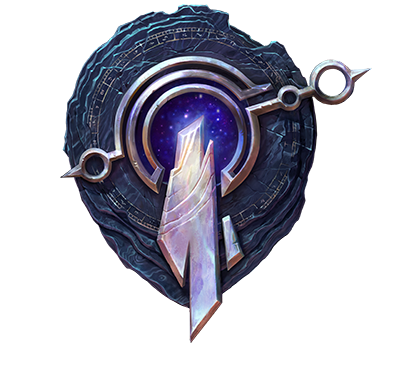
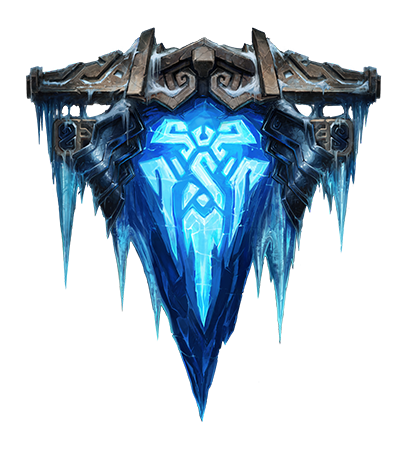

That map is the fiction Riot draws on, not a launch plan. Which regions the MMO opens with, how much of the map it covers, its era, its platform and its price are all unrevealed. Mount Targon, the Freljord and Demacia are here because the climb, the Hearthblood and the crafting tree come up above; the crests illustrate the world, not a starting area. For the friction side of the same argument, RuneGrove has already made the case that the Riot MMO should take the hint from League Classic.
Your Take
Should the Riot MMO ever raise its level cap after launch?
What to Watch
Three dated Forever beats, then three more RuneGrove reads on what a level is for.
World of Warcraft: Forever beta opens
Level cap 20, rising to 30 a couple of weeks in, per Stone.
World of Warcraft: Forever launches
Everyone starts again from level one.
The first new raids unlock
The first dated beat on the roadmap, at the same level cap.


Reported from Blizzard's BlizzCon 2026 videos on the World of Warcraft YouTube channel and Destin's interview, all embedded above with the clock. The MMO read is ours and clearly speculative. Analysis by RuneGrove.


