
Source: Blizzard's own BlizzCon 2026 videos on the World of Warcraft YouTube channel, the What's Next panel and the Deep Dive panel, plus Destin's interview with Clay Stone and Nora Mills. Quotes are the captions, with the clock. The MMO read is ours.

The Toggle
Blizzard put the transmog argument on its own stage, then gave both camps an off switch that only changes what they see.
Every online game that lets you dress up has to decide what the stranger across from you gets to see, and Blizzard, the studio behind World of Warcraft, just decided the stranger gets a vote.
World of Warcraft: Forever is the new version of World of Warcraft, the long-running online role-playing game its players call WoW, built on the original 2004 game and expanded rather than replaced. Blizzard announced Forever at BlizzCon 2026, its annual fan convention, on September 12 and 13, and put transmog on stage twice. Transmog, short for transmogrification, is the system that lets a player wear the look of one piece of armor over the stats of another, and the modern game has had it for years. Forever opens its beta on September 17 and launches on November 4.
Clay Stone, the associate production director on the WoW Classic and WoW Forever team, took it first, in a panel called What's Next, the 47-minute reveal session Blizzard posted on September 13. WoW Classic is Blizzard's re-release of the original game, and the community that plays it had spent a year using the name Classic Plus, its shorthand for an expanded version of the original game, for the thing Blizzard was about to announce. Stone played a clip of a creator reading a community survey on what Classic Plus should be, and the creator's conclusion was that the results proved nobody knows what they want. Stone let the laugh land and then put the question straight: "Is it too much to ask for both?"
His answer is a switch. Transmog, he said, "is entirely opt-in. If you want to turn it on, it's on and everyone you see in the world can look their very best." Then the other half, for people like him: "for classic players, especially those of us who enjoy world PvP, many of us want to see other players for who they truly are and what they've accomplished. So, turn it off. And it's clown suits for everyone." World PvP, the game's term for fights between players out in the open world, is where your armor was how you sized up the person about to attack you.
The detail came the next day in a second panel called Deep Dive, a 52-minute session on Forever's systems, from Josh Greenfield, a senior designer on the team who leads its narrative and is known to the Classic community by his handle, Aggrend. His framing matched Stone's. "We recognize that this system is not for everyone," he said. "Many players appreciate seeing their gear progression and others reflected in how they actually appear."

There are two ways out. Talk to an NPC, one of the computer-controlled characters standing around a town, and switch it off. Or pick it at the door: on first login Forever shows a mode selector with a handful of presets, and "if you select the classic mode, the visibility of other players transmog will be disabled as soon as you enter the game." His goal line is the one worth keeping.
The goal here is to allow you to play the game as if transmog does not exist at all. And you should be able to do just that.
— Josh Greenfield, senior designer, the Deep Dive panel, BlizzCon 2026, 8:09, watch
Blizzard's own engineers argued about it before the players could. Nora Mills, a lead software engineer on the WoW Forever team, told Destin, a YouTube creator who interviewed her and Stone at the show, that she "was somewhat of a naysayer" who did not want transmog in her version of Classic Plus. The team talked its way to the toggle: if switching it off means it cannot disrupt her game, and she can still glance at another player and read what they earned, then "where we landed hits the sweet spot." She also admitted she collects appearances she never intends to wear.
The Loot Rule
A dungeon drop now gives its look to everyone who could have rolled on it, so nobody rolls for the look.
The part that changes how groups behave is smaller than the toggle and better. Greenfield asked the question every dungeon group has had. A rare leather helm drops in Stratholme, the undead-infested city that is one of the original game's five-player dungeons, and it looks like a bandit mask. "Do I have to worry about someone who doesn't need that as an upgrade, but just wants it for the mog to roll against me? The short answer is no."
Any bind on pickup uncommon or rare gear that drops in dungeons will grant its appearance to all eligible looters when it's looted.
— Josh Greenfield, senior designer, the Deep Dive panel, BlizzCon 2026, 8:59, watch
Bind on pickup means the item locks to whoever picks it up and cannot be traded afterwards. Under Forever's rule the appearance is not the item. The look goes into the collection of everyone in the group who could have used it, at the moment it drops, and the item itself goes to whoever needs the stats. The rogue who wants the upgrade never has to fight the warrior who wants the picture. Raids are the exception on purpose. Groups there "have an organized loot system," Greenfield said, and an epic's appearance "will be granted to the person who looted and binds the item only to preserve the uniqueness and prestige of epic appearances."

That is the whole design in one move: the common look is free and shared, the rare look is a trophy. It also retires one of the oldest arguments in the genre. Loot drama over appearances belongs to the same family of problem RuneGrove wrote up when Blizzard's modern game ended the race to tag a boss with its lairs, and it sits next to the complaint Preach Gaming, a long-running World of Warcraft creator, filed against the modern game, that gear is effectively the only currency it pays out. Forever's answer is to make that currency copyable whenever it is only a look.
The Restrictions
Same armor type only, a silhouette that matches your level until 60, PvP ranks that still gate their sets, and one switch for the art of the whole world.
Players who keep it on get the modern system with, in Greenfield's words, "a few slightly more classic modifications and restrictions." You may only transmog an equipped item to the same type, so plate to plate and cloth to cloth, and a paladin healing in a cloth robe needs another cloth chest to change it. Saved outfits can mix appearance types per slot, which exists so an upgrade found in the field does not wreck the set. And there is a level rule.

We want your silhouette to be relative to your level.
— Josh Greenfield, senior designer, the Deep Dive panel, BlizzCon 2026, 10:53, watch
A low-level character cannot wear a high-level look. At level 60, the game's maximum, every level restriction goes and any valid item in the collection is fair game, except PvP gear, the armor sets earned through ranked fighting against other players, which still asks for the rank. Two things survive whatever you choose: you can always hide your own helm and cloak, and other players' helm and cloak choices still show, "regardless of if either party is opted out of the system or not."
Stone's section of What's Next makes clear the toggle is one of a set. Forever ships both the original 2004 character models and the higher-detail models the modern game uses, and the choice is "completely toggleable gamewide," he said: "your character, the NPCs, other player characters together, unified in either HD or SD." The team also went back and restored the original animations onto the high-detail models, which he summed up as "No bouncy dwarves in this game." Appearance in Forever is a setting the viewer controls, not a fact about the person being looked at.

What This Means for the Riot MMO
Riot's games are paid for by appearances, so the one Forever system that lets a player hide everyone else's look is the one Riot cannot copy before it decides its business model.
Our read, and it is speculative. Riot Games, the studio behind League of Legends, the five-on-five battle game its whole catalogue grew from, has never put a business model on the record for its MMO, the online role-playing game it confirmed in 2020, reset in 2024 and has not shown since. What Riot has is a track record: every game it runs is free to play and paid for by cosmetics, the skins that change how a character looks and nothing else. RuneGrove went through the only evidence there is on what the MMO will cost in August, and the evidence was a refund. That record is why Forever's toggle is a harder question for Riot than it was for Blizzard.
Blizzard's transmog is a collection inside a subscription game. Nobody pays per look, so letting a stranger switch your look off costs Blizzard nothing. If the Riot MMO is paid for the way every other Riot game is, the appearance layer is the store, and a store whose products can be hidden by the person standing next to the buyer is a different product from the one Riot sells today. Riot is already staffing that store. Its careers page lists a staff software engineer for social and store systems on its unannounced game in Sydney, asking for experience with "in-game purchasing flows, entitlement systems, and third-party platform integrations," and RuneGrove covered the Los Angeles listing for the engineer who will architect it in August.
| Side by side | WoW: Forever | Riot's MMO |
|---|---|---|
| Other players' looks | A toggle. An NPC or the Classic preset hides everyone else's transmog | Not revealed |
| A dungeon drop's look | Goes to every eligible looter; an epic binds its look to the looter | Not revealed |
| Level rule | Your silhouette matches your level until 60 | Not revealed |
| Who pays for a look | Nobody, per look. Appearances are collected in play | No business model on the record. Every Riot game to date is free and paid for by cosmetics |
| Art of the world | Original or high-detail models, one switch for everyone you see | Not revealed |
Runeterra, the world League of Legends is set in and the one confirmed fact about the MMO, already treats gear as a credential rather than a costume, which is the case for Forever's silhouette rule. In the Freljord, the frozen north of the map, the Iceborn are the one bloodline that can hold True Ice, a magic so cold that a bare touch kills anyone else, and weapons made of it can only be carried by them. Sejuani, the warmother who leads the Winter's Claw tribe, swings a True Ice flail that would maim a stranger who picked it up. That is a look nobody can fake, because the look is the proof.
Mount Targon, the mountain region where celestial powers called Aspects choose mortal hosts, does the same thing with an order. The Solari, the sun-worshipping order that rules the mountain, put their holy warriors in gold: the Ra'Horak, in RuneGrove's codex, are "golden-armored soldiers who defend the Sun and Her chosen." The gold is not a reward tier. It says which side of an old religious war you stand on, and the Lunari, the moon-worshippers the Solari hunted into hiding, do not get to wear it. Demacia, the kingdom on the map that outlawed magic, is the sharpest version. RuneGrove has already written up how the state punishes people by taking their gear, because in Demacia power is a thing you carry.
Riot has also shipped exactly one appearance that behaves like Forever's epic rule. In August, League of Legends brought back a skin you cannot buy, granted only to a team that wins an 80-player bracket, and RuneGrove called it the clearest thing Riot has shipped in years on how a reward should work. Blizzard binds an epic's look to the person who looted it to preserve its prestige. Riot bound a skin to a trophy. The two studios agree on what makes a look worth having, and disagree, so far, on who gets to see it.
The two studios agree on what makes a look worth having, and disagree, so far, on who gets to see it.
Take this
- The mode selector at first login. One screen, a handful of presets, everything changeable later. It is the cheapest way to let two audiences share one world.
- Appearance to every eligible looter on dungeon drops. It ends the need-roll for looks before it starts, and it costs the economy nothing.
- The silhouette rule. A look that tells a stranger your level is information, and Runeterra's own gear already works that way.
- The prestige carve-out. One tier of look that only the person who earned it can show, which is the rule Riot already used for its bracket skin.
Leave this
- A world-wide off switch for other players' looks, until the business model exists. Riot sells looks; a toggle that hides them is a pricing decision in disguise.
- Alternate-universe looks in the open world. Forever's first pillar is the world as the main character, and RuneGrove's readers have already asked which Mordekaiser walks into town. A pop-star skin in Demacia answers it the wrong way.
- The subscription assumption. Blizzard can give looks away because the subscription is the product. Nothing Riot has said supports one, and its track record runs the other way.

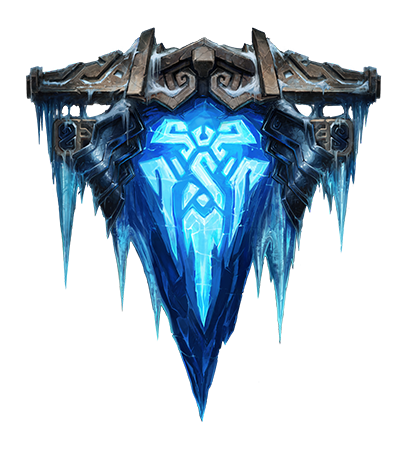
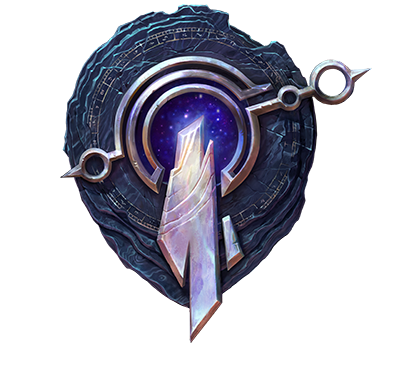

That map is the fiction Riot draws on, not a launch plan. Which regions the MMO opens with, how much of the map it covers, its era, its platform and its price are all unrevealed. The Freljord, Mount Targon and Demacia are here because their gear rules come up above; the crests illustrate the world, not a starting area.
Your Take
Should the Riot MMO let you switch off other players' cosmetics?
What to Watch
Three dated Forever beats, then three more RuneGrove reads on what a look is worth.
World of Warcraft: Forever beta opens
Stone said beta "starts this Thursday" on September 13. Transmog and the Classic preset are testable from day one.
World of Warcraft: Forever launches
Everyone starts at level one, per the Destin interview.
The first new raids unlock
The first dated update on the roadmap Stone showed.


Reported from Blizzard's BlizzCon 2026 videos on the World of Warcraft YouTube channel and from Destin's interview, all embedded above with the clock. The MMO read is ours and clearly speculative. Analysis by RuneGrove.


