

The City You Hear Before You See
When Riot sat down to write daily life in the Noxian capital, it didn't start with the throne or the war college. It started with what the city sounds like after dark, through the ears of a working painter named Maura on her way to a commission:
"Desert marching songs from the Zagayah enclave drifted from their tented pavilions by the water, and the martial clashing of blades echoed from a nearby Reckoner's arena. Drakehounds corralled in an iron-walled enclosure howled as they caught the scent of slaughtered livestock from the northern kill yards. The cries of widowed spouses, grief-stricken mothers, or nightmare-wracked veterans were a nightly chorus to accompany the roars of drunken soldiers and the promises of street hawkers who plied their trade best in the darkness. No, the nights in Noxus were never silent."
From Art is Life, the short story that follows Maura across the capital at night.
That's the densest street-level writing Riot has given any city in Runeterra. Immigrant enclaves with their own music. Reckoner fighting pits. Industrial kill yards. A night economy of hawkers. Even the grief is part of the soundscape.
Now hold that paragraph next to what our Atlas entry says about the fortress all those streets wrap around: "The dark fortress at the heart of Noxus, and a hidden conduit of souls." The loudest living city Riot has written is arranged in rings around a building that collects its dead. Those two facts don't sit comfortably together, and this piece argues they were never meant to. They're one system, and the noise is the part of it you're allowed to hear.

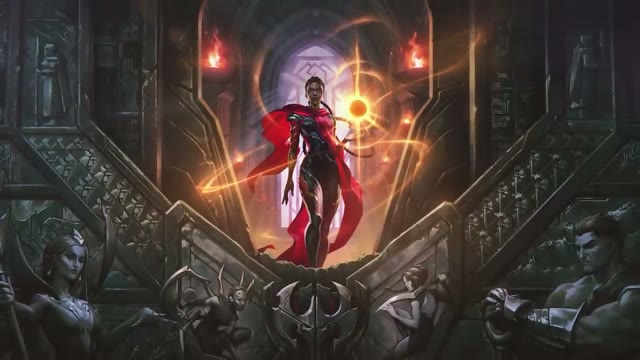
"The Immortal Bastion, at the heart of Noxus, is far more ancient than the empire itself. It is said that it was constructed on the order of the dread revenant Mordekaiser, and parts of it have been razed and rebuilt over the centuries, such that there are layers to its streets, and some districts now lie below ground. Few dare walk these streets after dark without guards to protect them."
Riot's own gallery caption, Noxus: Layers of History.
Read that last line again. The city literally buried parts of itself and kept building. Whole districts lie underground, and the ones who avoid them after dark are the same citizens filling arenas and taverns two streets over. Every layer of daily life sits on a layer of history nobody wants to excavate.
A City That Pays You in Your Name
Why is the capital this loud? Because its social contract is a ladder, and climbing it is a public act. This is the deal Noxus offers every people it conquers, in Riot's own words:
"As Noxus expands and defeats neighboring cultures and cities, it offers the conquered people a choice; swear loyalty to Noxus and be judged solely on your worth, or be destroyed. This is not subterfuge or any kind of ruse; the Noxians are as good as their word, and many who have embraced their conquerors' way of life find their prospects greatly improved."
Riot's gallery caption, Noxus: Culturally Inclusive.

Judged solely on your worth. That single clause explains the Zagayah pavilions by the water: conquered peoples don't get ghettoized into silence in Noxus, they get a quarter, a trade, and a shot. It explains the Reckoner arenas, where worth is measured nightly in front of a crowd. And it explains why the canon insists the ladder isn't only for soldiers:
"It is not just physical or martial strength that Noxians admire—those who demonstrate expertise in politics, craftsmanship, trade, and magic all help to create a stronger Noxus."
Riot's gallery caption, Noxus: Life is a Battle.


Maura's painters' circle is that clause made flesh. Five artists share one studio, pool commission money, and get locked out by the owner when they come up short. When a mysterious letter offers Maura a portrait commission, her studio-mate Tahvo seethes, because he "had always believed himself to be the best painter in their little circle," and in Noxus being second-best is a wound. Even the buildings keep score: Maura reads a wall of good stonework and guesses "an experienced hand, perhaps that of a warmason." Craft signs its work here, which is why reputation is the real currency, and why a city that trades in reputation needs witnesses. The noise is the sound of a million people performing their worth.
The ladder is real. The gallery above says so through Darius, who rose "from nothing to become one of the empire's most powerful leaders," per Old Blood, New Blood. But the same caption ends on the crack this whole piece walks through: "some fear that the greatest threat to Noxus comes not from its enemies, but from within."
Riot Scored the Streets Before the Throne
None of this is accidental flavor. When Riot rebuilt Noxus for the 2025 season, its composers shipped a behind-the-scenes documentary about scoring the region, and the brief they describe is exactly the street-level city Maura walks through, not the empire's parade ground.


The quotes are explicit. The team wanted to get "away from what we've always associated with Noxus: very rigid, sort of militaristic vibes," and to bring in "something a little more unrefined." They booked a 14-piece ensemble with sackbuts, big drums, a Bulgarian choir, and a baroque violin strung with animal gut, chosen because "even when it's playing a delicate passage, there's like a violence to it." And the reason they reached for Tuvan throat singing is the thesis of this article's first half, in a composer's own words: "This can help us represent the people on the streets of Noxus rather than in the Empire."
Then comes the tell. Given a whole season to score, two of the cues point straight beneath those streets. The Black Rose theme got the choir treatment because, as the documentary puts it, "It's very eerie, and it sounds like an ancient cultist type of vibe." And the piece written for the people themselves is a chant about a dead king. The composers imagined the mortal warlord Sahn-Uzal with followers "chanting his name while he's fighting someone else," and out of that came the track title "His Name is Sahn-Uzal." The full story of that documentary lives on our page for it.
The District Where the Soundtrack Stops
Back to Maura's walk, because the story's geography is doing deliberate work. The night noise she moves through cuts out all at once when she crosses into Mortoraa, the old-money Iron Gate district: "This part of Noxus was deathly quiet." On her way in, she passes a piece of neighborhood-scale daily life that most readers skim:
"Maura saw a tall shrine at the end of a side street, where three armored figures knelt before the obsidian wolf within its pillared vault. They looked up in unison, and Maura hurried on, knowing it was unwise to attract the notice of men who prayed in the dark with swords."
From Art is Life.
The wolf isn't decoration. In Runeterra's death canon, that's the half of Kindred this empire claims: "through the shadowed streets of Noxus, Wolf leads the hunt." Demacians hope to take Lamb's arrow; Noxians expect to be run down, and they build side-street shrines to the running-down. Death worship is a neighborhood amenity here.
Then Maura reaches a circular plaza, an extravagance of open space in a city where "people lived cheek by jowl," and its centerpiece fountain stops her cold:
"Hammered from crude iron, it represented a headless warrior encased in thick war-plate, and bearing a spiked mace. Water spilled from the neck of the statue, and Maura felt a chill as she realized who it was intended to represent."
From Art is Life.
A headless suit of armor with a spiked mace, in the garden district of the empire's oldest money. Maura's patron turns out to be Vladimir himself, a noble old enough to have helped oust the original owner of that armor, decorating his plaza with the empire's founding secret like a garden ornament. The quiet district remembers what the loud ones forgot. That's why the story routes a working artist past a wolf shrine and a headless iron king on the way to a night commission: daily life in Noxus is a walking tour of its buried history, if you know what you're looking at.
The Building the Fountain Is Quoting
Here is what that statue depicts, per our Atlas entry for the Immortal Bastion:
"Hidden in forbidden districts, behind gateways ringed with angular Ochnun inscriptions and littered with fragments of bone, the fortress functions as a great conduit. It draws the souls of the dead down into a well that plunges into the bedrock of Noxus, feeding them to Mitna Rachnun, the death realm Mordekaiser built beyond the veil. Suspended within that well hangs the empty husk of the Iron Revenant's armor, a reminder that the Bastion was always as much a machine of souls as a seat of rule."
Our Atlas of Runeterra entry, built from Riot's canon.
The seat of government is a soul intake. It predates the empire that governs from it. Mordekaiser raised it in his second life, and his biography explains what the harvest was for. In his first death, the warlord Sahn-Uzal found no reward waiting, only "an empty, gray wasteland, shrouded by ethereal fog and plagued by discordant whispers." So when he clawed his way back into iron and conquered again, he engineered a better afterlife out of his subjects:
"There, in the once empty wasteland, all those who had died under his latest reign were waiting. Perverted by dark sorcery, their spirits would never fade. The strongest became his devout, eternal army, bound to his will… but even the weak were given purpose. From the subtle matter of their souls, Mordekaiser would forge a new empire. They would be the building blocks and mortar of his Afterworld."
From Mordekaiser's biography. The short story The Final Reign opens with the finished product: "Mitna Rachnun, his Afterworld, is complete."

The flavor text on that card ties the whole loop to the building: "Bound to his armor kept in the heart of the Immortal Bastion, Mordekaiser has forged a throne of his own making in the Grey Realm. For every one who would seek to destroy him, there are more who will serve him in both life and death."
The Meritocracy Ends at the Well
Now the two halves of this piece collide. Above ground, the empire's one promise is that you will be judged solely on your worth. Below the waterline, here's the intake paperwork, from the flavor text of Legion of the Severed:
"It matters not what form souls took before their imprisonment in the Grey Realm. There, individuality has little value. Faceless and fearless, the Legion serves the Iron Revenant all the better for its uniformity."
Card flavor text, Legion of the Severed, Legends of Runeterra.

That's the contradiction in two sentences. Noxus pays you in your name, and the machine underneath strips the name back off. The empire that files everyone by worth delivers its dead to a realm where worth is construction material.
Runeterra has a word for the ones who come back anyway. Our Revenant encyclopedia entry defines them as "beings who have returned from death, or transcended it, through sheer force of will, dark magic, or unique circumstances rather than the Black Mist of the Shadow Isles," and notes that unlike mist-raised undead, "revenants retain full consciousness and agency." Noxus has produced the two most famous ones in existence: Mordekaiser below, and one it parades in daylight. Of Sion, the entry says:
"In Noxus he is both weapon and symbol: his undying fury embodies the empire's reverence for strength and perseverance, yet his violence is as dangerous to allies as to enemies."
Our Revenant entry; the full account is in Sion's biography.
One glorious dead man gets hauled back up and given banners. The rest go down the well. And the cards around the Revenant family sketch what waits for them there, each one a different clause of the same contract:

Lost Soul is what the harvest looks like deployed: "The Demacians crawled to their ramparts to find death itself descending upon their walls. Though they were able to fell some of the Gray Legion, the dark tide of war soon proved unstoppable."

Bladepierced Revenant shows what eternity does to a mind. His flavor text is one long paranoid monologue: "They smiled to my face and ate from my table, even as they meant to put a sword through my back… You will die like the rest of them: screaming your apology!"

Deathgrasp Cultist is the machine’s living congregation: "In the eyes of his followers, the Iron Revenant is the only hope for those who seek oblivion. Peace through domination—these cultists welcome it with open arms."
Everyone Who Matters Already Knows
Modern Noxus isn't ignorant of any of this at the top. It's governed around it. When Swain took the empire, one of his first standing orders concerned the fortress itself, and the short story Thorns of the Black Rose shows the policy from the inside: "Ever since the usurper Swain seized control, he has kept the Immortal Bastion locked down." The narrator calling him "usurper" is LeBlanc herself, walking a mark through the sealed depths.
Her mark is the piece's best window into how the hidden war recruits from daily life. General Brannin Granth is a decorated hero about to be celebrated in a public triumph, the culture's highest currency, and he's furious about it, because "We didn't win the Gates of Mourning—the Legion did." The empire's own reward system generates the resentment, and the Black Rose harvests it the same week. His guided tour ends at doors most citizens never learn exist:
"He does not see the open gateway before him, nor the angular Ochnun inscriptions that surround it. He does not see the fragments of bone that litter the flagstones beneath his boots."
From Thorns of the Black Rose.
Meanwhile the faction's other operations run through the market square. In Everywhere, and Everyone, a Black Rose sister tails the hemomancer through the capital's most ordinary space: "With his hood drawn up, Vladimir crosses the marketplace, keeping a wary eye upon the towers at the Immortal Bastion's center." Even a noble buying nothing in a market is a move in the war. And the two sides say it out loud in their recorded lines. Mordekaiser greets LeBlanc with "Ah, the Black Rose. I remember your petty manipulations." Lord Mallat, the last of the sibling cards, is the seal's defender in the flesh. His flavor text scolds a would-be hero: "It took centuries of planning to seal away that dreadful warmonger—and your pathetic friends intend to defeat him with 'joy'? You foolish girl." And his attack line is three words of allegiance: "Thorns of the rose."

You can hear the war under the city in the game files:
The architect checks on the road home
Mordekaiser: “Speak, herald. Is the path ready?”
Deathgrasp Cultist: “Your road is laid out, sire, paved in bone.”
The Black Rose probes the cult
Lord Mallat: “You've seen his plans, haven't you?”
Deathgrasp Cultist: “I have. It is beautiful beyond anything.”
What eternity in the Grey Realm buys you
Bladepierced Revenant: “I must have vengeance!”
Mordekaiser: “And I have given you eternity to claim it!”
Reward and punishment, priced the same
Mordekaiser: “Do not fail me, Mallat.”
Lord Mallat: “Are your rewards and punishments so different?”
The Grand General has seen the well himself
Swain: “I have already walked the halls of death, in the Immortal Bastion.”
Official in-game voice lines from our database. Tap a line to hear it.
Loud on Top, Sealed Below
So, to answer the question this piece opened with: the noise and the machine were never two facts. Noxus Prime is loud because its culture pays out in reputation, and reputation needs an audience. And the same culture is death-facing at every scale, from the wolf shrine on a side street to the triumph for a dead-tired general, because the city has always lived over a building that makes death a destination. Riot wrote the intake and the culture as one organism. An MMO should build them that way.
Look at what the daily-life canon already hands a designer, for free:
- Enclave quarters with their own music. The Zagayah pavilions aren't set dressing; Riot literally recorded a street-level score and told us which instrument represents the people. A hub where each conquered culture keeps its sound is an audio design brief that already exists.
- Reckoner arenas. A nightly fighting-pit circuit is a dueling-and-spectator loop with canon attached, sitting in the middle of the capital.
- A commission economy. Maura's studio lives job to job: pooled rent, patrons, letters with very specific instructions. That's a crafting work-order system with named stakes, and warmason stonework extends it to building.
- Triumphs. Scheduled public honors with political subtext, the kind of server event players attend for the spectacle while factions recruit in the crowd, exactly as the Black Rose does to Granth.
- Wolf shrines. A death rite at neighborhood scale, which quietly teaches every player the city's relationship with dying before the plot ever says the word "Mordekaiser."
Because the well is real, every one of those systems can double as the endgame's front porch. Die famous in Noxus and the city throws you a parade; the machine below files you anyway. The game never has to announce that. It has to let a player retrace Maura's walk: notice one district where the sound design cuts out, find the fountain with no head, follow the bone fragments to a gateway with angular inscriptions, and realize the loudest hub on the server has been standing on its own raid entrance the whole time. Our earlier hub-cities read argued Riot's capitals come pre-built; Noxus Prime goes one better. Its culture is the content, and its content is the cover story.
Dig, or Seal?
In the Riot MMO, should players be able to dig at what is under the Immortal Bastion from day one, or should Riot seal it for endgame?
None of this is confirmed. Sources: our Atlas of Runeterra entry for the Immortal Bastion, Riot's published short stories and biographies, Legends of Runeterra card text and voice lines from our database, and Riot's official music documentary. A RuneGrove lore read.


