
Source: Blizzard's World of Warcraft developer Q&A, posted to the World of Warcraft YouTube channel on September 17. The stream shipped without captions, so the quotes below are transcribed from its audio, trimmed of fillers and never reworded, each with the clock and a link into the video at that second.

The Ban
Blizzard will not allow the gold-for-loot raid in Forever, and the reason is the social pillar.
Blizzard has banned the way a lot of World of Warcraft raids actually pay out. Blizzard is the studio that makes World of Warcraft, the long-running online role-playing game its players call WoW, and World of Warcraft: Forever is the new version of it, built on the original 2004 game and expanded rather than replaced. On September 17 the studio posted a 95-minute developer Q&A, took player questions from its forums and social media, and gave the Forever team the second half.
The question that mattered came from a player the host called WoW Punk, and it was put to Josh Greenfield, who leads the content and narrative direction on Forever. Will GDKP be allowed? GDKP is short for gold dragon kill points, the raid format where every item that drops is auctioned to the people in the group and the pot of gold is split between them at the end. It is how a large part of the game's raiding population has been paid for years.
The short answer is that no, we are not going to allow GDKP.
— Josh Greenfield, content and narrative lead, the developer Q&A, September 17, 1:16:09, watch
Then he gave the reason, and it is the same sentence this series has been quoting all week.
I think the most important aspect of that to us is our first pillar, which is to nurture and protect social experiences.
— Josh Greenfield, content and narrative lead, the developer Q&A, September 17, 1:16:21, watch

That pillar is the one Blizzard put on stage at BlizzCon, the annual fan convention the studio runs, and it has now decided a travel system, a campfire and a raid economy. We wrote up the campfire that only buffs you if you sit still for a minute and the flight path the team keeps long on purpose. This is the same rule pointed at money.
The Gold Buyers
Two reasons for the ban: it swallows guilds, and it prices out the newcomer. Then an unusually blunt line about enforcement.
Greenfield gave two reasons for the ban. The first is what the format does to guilds once enough people use it.
It has a sort of tendency we've noticed in the regions where it has been popular for longer to reach a level of ubiquity that it can kind of overtake the traditional guild structure.
— Josh Greenfield, content and narrative lead, the developer Q&A, September 17, 1:16:46, watch
The second is what it does to a new player. In a game where loot is bought, the people with gold get the loot, and everyone else needs gold to compete for it.
If you're kind of the traditional carry or someone that has a lot of resources and has been playing for a long time, it's great for you. You get a raid and you're going to make some money on the side, but the barrier to entry for newer players is often times they have to buy gold to buy into it.
— Josh Greenfield, content and narrative lead, the developer Q&A, September 17, 1:17:24, watch

The last word on it was the enforcement, and it was blunter than studios usually are about their own record. Real money trading is the trade of in-game gold for real cash, and buying gold has always been against the rules. Greenfield said the rules have not bitten hard enough.
We are going to very aggressively punish gold buyers. Being frank, we've been probably too lenient on gold buyers, and it's been a little bit easy to get around some of our actions before. And we are taking this very seriously.
— Josh Greenfield, content and narrative lead, the developer Q&A, September 17, 1:19:35, watch

He also said what replaces the auction. Forever will run its economy with the levers a live team has: watching what is scarce, changing what drops, and turning the supply of a consumable up or down as a phase demands it. His example was the potions a raid burns through, and the loot boxes whose contents the team can re-weight when a resource runs dry.
The Other Answers
Add-ons built into the client, two raid sizes forever, one difficulty, and a surname for every character.
The rest of the Forever half answered things BlizzCon left open. Nora Mills, the lead software engineer on Forever, took the add-on question. Add-ons are the third-party interface modifications WoW players install to track cooldowns, damage and boss timers, and in the modern game they are close to mandatory. Forever is shipping the common ones in the client.
We also very much don't want players to feel like they need add-ons in order to play the game.
— Nora Mills, lead software engineer, the developer Q&A, September 17, 1:21:30, watch
She listed a damage meter and a cooldown manager as already in, with a swing timer possibly to come, and then gave the reason, which is the most quotable line in the back half of the stream.
It can lead to some amount of gatekeeping, if we go too hard on just sort of allowing add-ons to be a critical part of your player experience.
— Nora Mills, lead software engineer, the developer Q&A, September 17, 1:22:56, watch

Tim Jones, the lead game designer, answered the raid questions. Forever will not use flexible raid sizes. It will run two raid ecosystems side by side, permanently.
Every single tier that we will ever do will have both a 10-player raid and a 20-player raid.
— Tim Jones, lead game designer, the developer Q&A, September 17, 1:24:23, watch
A 40-player raid, Onyxia's Lair, arrives at launch as an extra rather than a third permanent track. There is no cross-faction play, because the team wants to keep the two factions at war with each other. And then the hardest line of the three.
We are taking a hard stance on, across both dungeons and raids, the instance is a single difficulty. There's no heroic difficulty.
— Tim Jones, lead game designer, the developer Q&A, September 17, 1:27:05, watch


Two smaller answers are worth keeping. Every character in Forever takes a surname as well as a first name, which Mills called a role-play-forward way to keep player identity in a game with no realms. And the realmless design we wrote up from BlizzCon is not regionless: players are hosted in their own region, so an Australian group keeps Australian servers, and an American player who joins their group takes the ping.
What This Means for the Riot MMO
Riot has said nothing about gold or carries; the nearest statement on the record is four years and one reset old.
Our read, and it is speculative. Riot Games, the studio behind League of Legends, the five-on-five battle game its whole catalogue grew from, has said nothing about gold, trading, carries or real money trading in its MMO, the online role-playing game it confirmed in 2020 and reset in 2024. The setting is the one confirmed fact: Runeterra, the world League of Legends is set in.
The closest thing on the record is four years old. In January 2022 the game director of the day, Greg Street, was asked about the business model and said the team was not ready to talk about it, adding that it would "almost certainly be consistent with Riot's other games where it's our hope that players spend money because they want to not because they feel like they have to." He left Riot in March 2023 and the project was reset in 2024, so treat it as a description of the company rather than a promise about this game. Our longer read on that is here.
What makes the Q&A useful is that it treats the carry economy as something the design creates rather than something players do wrong. The gold auction grows because a raid drops items people want and the game gives them a way to price them. Blizzard's answer was to remove the mechanism, then promise enforcement on the money that feeds it. RuneScape, the long-running online game, deleted 298 microtransactions and lost 40 percent of its revenue the next day, which is the other half of this lesson: an economy decision has a bill attached, and the studio pays it. Blizzard just decided that who can afford the raid is a design question, not a policing question.
Blizzard just decided that who can afford the raid is a design question, not a policing question.
| Side by side | WoW: Forever | Riot's MMO |
|---|---|---|
| Buying loot | The gold-for-loot raid is banned outright | Not revealed |
| Gold buyers | Punished aggressively, after an admitted period of leniency | Not revealed |
| The economy | Actively monitored, with drop rates as the lever | Not revealed |
| Interface tools | Damage meter and cooldown manager ship in the client | Not revealed |
| Difficulty | One version of every dungeon and raid | Not revealed |
Runeterra will not lack for gold. Bilgewater is the lawless port city built into the cliffs of the Serpent Isles, and in RuneGrove's codex its Slaughter Docks are the economic engine of the place: sea monsters hauled in by crane and butchered, oils and bones and hides traded across the world, "monster bounties earned, heavy purses of gold handed to captains and crews, and coin spent in quayside taverns and gambling dens that pay their cut to Sarah Fortune." Sarah Fortune is the bounty hunter Miss Fortune, who took the port from its pirate king. A cut of every purse already goes to somebody in that fiction.
The same map has the version Riot should worry about. We wrote in July about Renata Glasc, the chem-baron who plans to own the gates that all east-west trade passes through, because whoever controls the trade controls the world. A world with that much commerce in it will grow a carry market the week it opens. The question the Q&A asks Riot is whether the answer is written into the systems before launch, or left to a ban wave afterwards.
Take this
- Decide the carry economy before launch. Blizzard is banning the format in a game that has not shipped, which is the only time you can do it without taking something away.
- Name the pillar that breaks the tie. The same sentence about protecting social experiences now decides travel, campfires and loot. A rule that decides nothing is decoration.
- Ship the tools in the client. A damage meter and a cooldown manager in the box means a new player is not waiting to be adopted by someone who knows which add-ons to install.
- Be blunt about your own enforcement record. "We've been probably too lenient" buys more credibility than a policy page.
Leave this
- A ban without the plumbing. Removing the auction does nothing if gold can still be bought; the enforcement promise is the load-bearing half, and it has no numbers attached yet.
- One difficulty, copied blindly. Forever can ship a single version of every dungeon because its audience asked for exactly that. A new MMO courting a broad audience is not in that position.
- Telling players how to play, in general. Blizzard drew this line on its own pillar and said out loud that it never really wants to. That is a limited licence, not a habit.

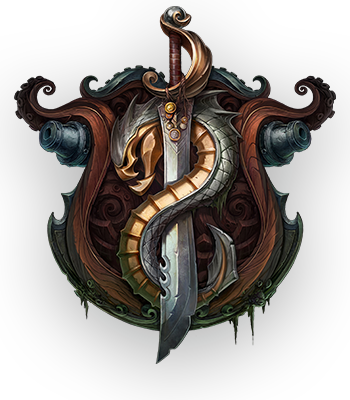
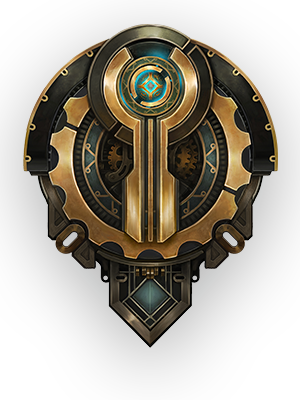
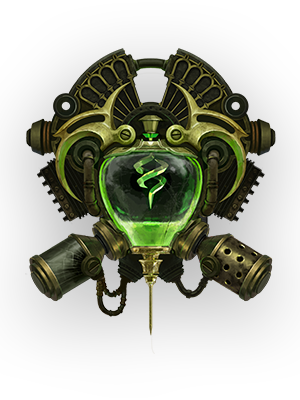
That map is the fiction Riot draws on, not a launch plan. Which regions the MMO opens with, its economy, its era, its platform and its price are all unrevealed. Bilgewater, Piltover and Zaun are here because the docks and the gates come up above; the crests illustrate the world, not a starting area.
Your Take
Should the Riot MMO ban buying your way through a raid before it launches?
What to Watch
Three dated Forever beats, then three more RuneGrove reads on pillars, realms and economies.
World of Warcraft: Forever beta opens
The first live test of an economy the team says it will monitor actively.
World of Warcraft: Forever launches
A full population, no gold auction, and an enforcement promise with a date on it.
The first new raids unlock
The 10-player and 20-player ecosystems arrive together, at one difficulty.


Reported from Blizzard's developer Q&A on YouTube, embedded above with the clock. Quotes are transcribed from the broadcast, which shipped without captions. The MMO read is ours and clearly speculative. Analysis by RuneGrove.


