Source: Massively Overpowered. Verified against multiple sources; datamines and reports are labelled as such, not stated as fact.
What Happened
Broadsword put Game Update 8.0 on the test server with three overworld difficulty settings a player changes at will.
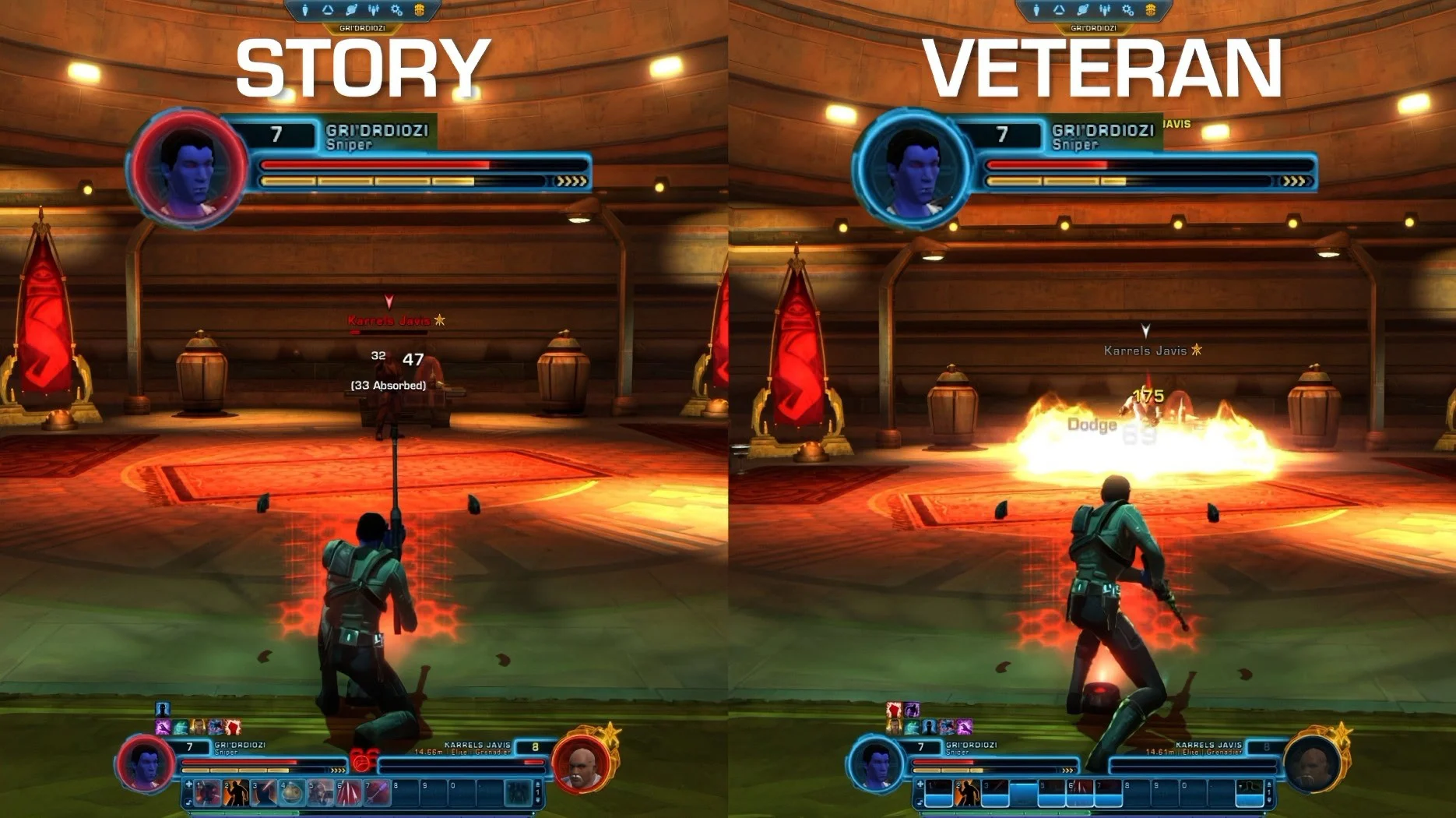
Two players can stand on the same planet, in the same fight, and one of them can be reading damage numbers in the 30s and 40s while the other reads 175 off the same enemy. Same pull, two different games.
That is Star Wars: The Old Republic on its test server right now. Broadsword ran its summer SWTOR stream on July 30, 2026 and pushed the first Game Update 8.0 PTS phase live the same day. The headline feature is overworld difficulty: three settings called Story, Veteran and Master, changed at will while you are out on a planet.
The official SWTOR post describes Veteran as balanced around launch-era difficulty and says that on Master, elite enemies by themselves are a true threat. SWTOR launched in December 2011, so launch-era is a specific target rather than a vibe.
You can make your game harder while fighting the exact same enemy as somebody else who is playing on a lower difficulty.
— Eric Musco, Broadsword, on the July 30 stream, per Massively Overpowered's recap
Per the stream recap, the toggle moves your personal damage received, healing received and XP gains. It does not touch the damage you deal. Enemy health bars still drop at the same rate for everyone in the fight, so a group never has to re-plan a pull because one person is playing on a different setting.


What the Dial Actually Touches
Overworld planets only, scaling what you take rather than what you deal, with XP attached as the reason to turn it up.
The scope is the tell. The setting applies to overworld planets only. Not flashpoints, not PvP, not group content. Those are the places where loot and rating have to mean the same thing for everyone at the table, and Broadsword left every one of them alone.
That instinct is well earned. Blizzard fired an employee this month over a Mythic+ boss that died at 90% health, which is what it looks like when a number in instanced content stops being trustworthy. PvP has the same problem with worse manners, which is why the studios rebuilding open-world PvP into seasonal matchmade brackets are pulling it further away from the overworld, not closer.
XP scaling is the other half of the design. Attach nothing to the dial and Master becomes a setting you try once for pride and never touch again. Attach progression to it and turning it up becomes a decision rather than a dare.
The same PTS phase carries the first boss of Children of Nul, a new three-boss operation aboard Darth Nul's ship, playable in Story and Veteran modes. Galactic Season 11 begins on August 18, 2026, and Game Update 8.0 itself is targeted for holiday 2026.
December 2011
SWTOR launches
The build Veteran mode now points at when it says launch-era difficulty.
July 29, 2026
Riot ships League of Legends Classic
A restored 2013 build running next to the modern game, in its own client.
July 30, 2026
Game Update 8.0 hits the PTS
Three overworld difficulty settings, plus the first boss of Children of Nul.
August 18, 2026
Galactic Season 11 begins
Holiday 2026
Game Update 8.0 targeted
What This Means for the Riot MMO
Riot has confirmed the setting and nothing else, so a difficulty dial is a design question here, never a spec.
League sorts its players onto a ranked ladder that runs from Iron to Challenger, and matchmaking makes sure the two ends of it never meet. An MMO does not get that luxury. Everyone walks into the same world, and the same hillside has to be worth the evening of a player who has been there ten years and a player who installed it last night.
SWTOR's answer is not separate servers and it is not separate zones. A dial on the world changes what the world does to you and leaves what you do to it alone. A veteran and a newcomer stand in the same fight, and neither of them is wasting the hour.
Riot is already running a cruder version of this experiment on itself. On July 29, 2026 it put League of Legends Classic live, a restored 2013 build with its slower, harsher systems, running next to the modern game. That is the fork in its purest form: two clients, two populations, pick one.
A dial on the world changes what the world does to you and leaves what you do to it alone.
A MOBA can absorb that. An MMO cannot make the same trade on day one, because a second client is a second population and a shared world with half the people in it is worse than either version alone. The man who built Ultima Online spent this month arguing that every MMO since WoW feels the same. Splitting one world into two builds is not the way out of that.
The alternative studios reach for when the world empties is worse. One developer shipped raids where 14 of your 15 raiders are bots, which solves the population problem by removing the people. Keeping everybody in one world, at their own setting, is the version that still has other players in it.
| SWTOR, Game Update 8.0 | Riot's MMO | |
|---|---|---|
| Setting | The Star Wars galaxy, planet by planet | Runeterra, and that is the whole confirmed list |
| Who picks difficulty | Each player, changed at will out on a planet | Not revealed |
| What scales | Damage received, healing received, XP gains | Not revealed |
| What never scales | The damage you deal | Not revealed |
| Where it stops | Flashpoints, PvP and group content stay fixed | Not revealed |
| Time on the problem | Live since December 2011 | Not revealed |
Runeterra is the only confirmed fact about Riot's MMO. Which regions it opens in, how much of the map you will ever walk, the era, the platform, how it charges you: none of that has been revealed, and guessing at it is not reporting. The map further down is the fiction the game draws on, not a starting zone.
What that fiction has been doing for years is carrying wildly mismatched power inside one continuous world.  Ryze, the Rune Mage, crosses half of it on foot in Call of Power, Riot's 2018 cinematic.


Watch where the camera puts him. He is never the biggest thing on screen. A bronze colossus walks past and his only move is to get out of the way. The world is not scaled to him and it never stops to ask what level he is, which is precisely the feeling a game loses the moment it starts sorting people onto separate servers by how hard they want their evening to be.
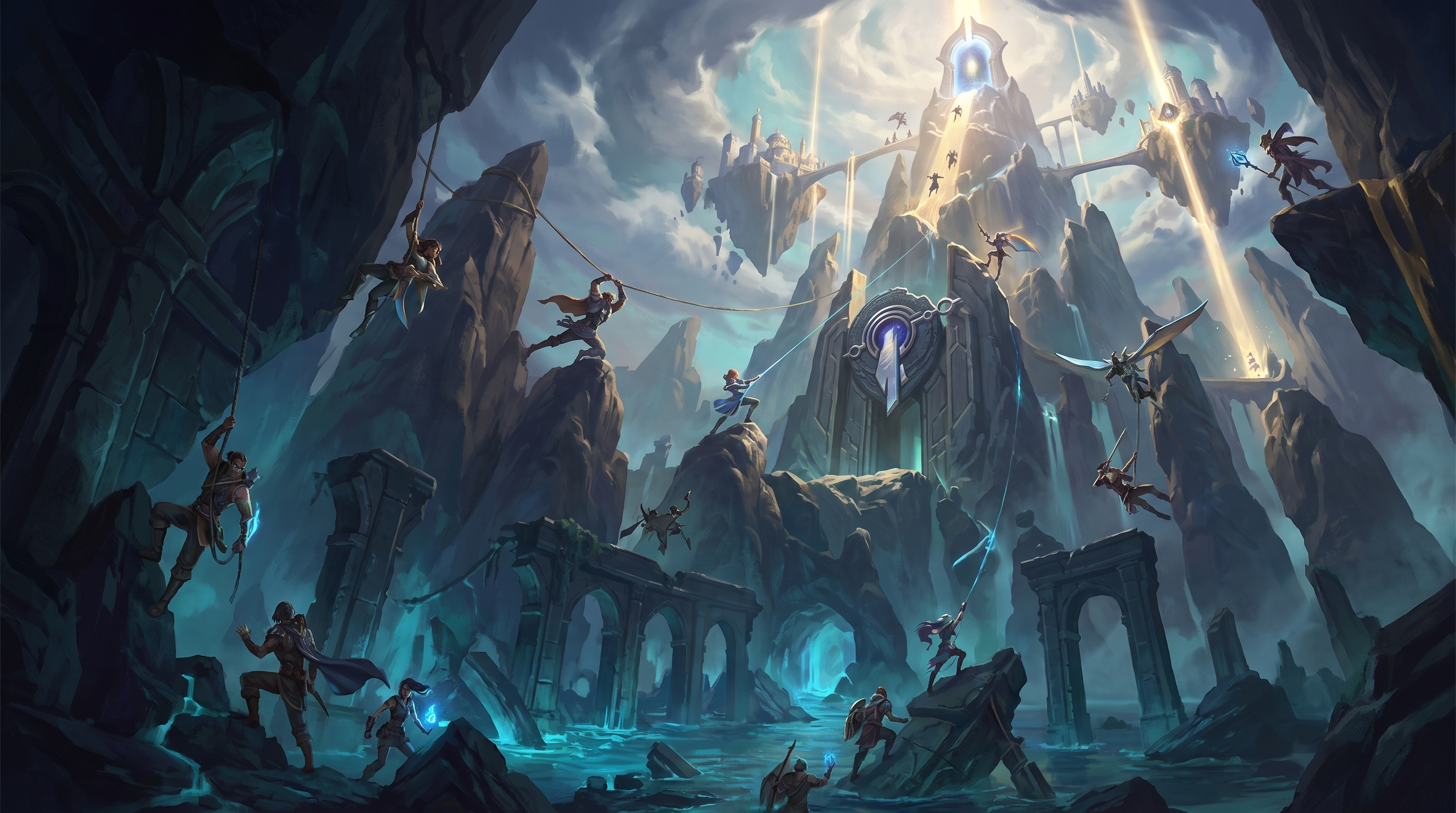
Our own atlas reads the same way. The Howling Abyss in the Freljord and the Immortal Bastion in Noxus are places before they are content. Canon marches foot soldiers, exiles and Ascended through both without retuning the room for any of them.
The World Rune Archives out in Shurima is the same trick at smaller scale: a room that means something completely different to  Nasus than it does to somebody who found it on a map yesterday. A world written like that has already decided it wants one door with a setting behind it.

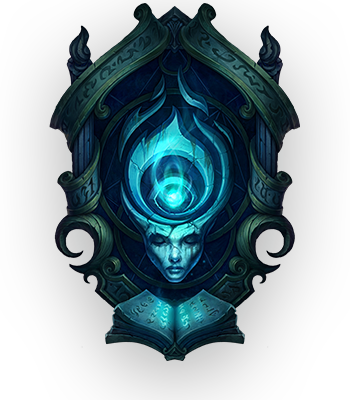

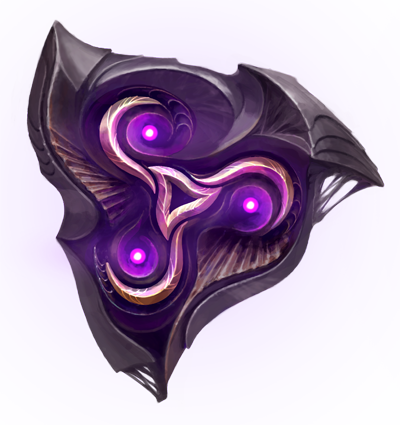
The crests above are the fiction, not a launch region list. Nobody outside Riot knows which of them you will be able to walk into, or how much of that map exists as playable space at all.
- A per-player setting keeps one shared population instead of forking it across easy and hard servers
- Scaling damage taken and healing received but never damage dealt keeps time-to-kill legible, so a group still reads the same fight
- Overworld-only is the honest boundary: instanced and ranked content is where rewards have to stay comparable
- League Classic split an audience across two clients. A launching MMO cannot afford the same split
- XP scaling is what turns the dial from a bragging setting into a real choice
Your Take
Should Riot's MMO let each player set their own open-world difficulty?
What to Watch
Two dated SWTOR beats, and the RuneGrove pieces this one argues with.


Reported from Massively Overpowered and corroborating coverage. The MMO read is ours and clearly speculative. Analysis by RuneGrove.